
Plusieurs entreprises peuvent intervenir sur un même chantier sans partager le même compte. Avec Techtime, chaque société conserve son propre environnement, ses équipes et son organisation, tout en accédant au projet commun. Le planning, les activités, les documents, les photos et les comptes rendus peuvent ainsi être partagés entre les intervenants autorisés. Une solution pensée pour la gestion collaborative de chantier et la coordination multi-entreprises dans le BTP.
Sur un même chantier, plusieurs entreprises doivent coordonner leurs interventions tout en conservant leur propre organisation. Entreprise générale, architecte, artisans, sous-traitants ou bureaux d’études ont chacun leurs équipes, leurs documents et leurs informations à gérer, mais travaillent autour d’un même projet.
Techtime permet de créer un chantier partagé entre ces différentes entreprises sans les regrouper dans un compte commun. Chaque société conserve son propre compte et son propre environnement Techtime. L’entreprise générale ou l’architecte peut inviter ses partenaires à rejoindre le chantier, qui devient alors accessible depuis l’environnement de chaque entreprise participante.
Chacune peut ensuite renseigner les informations qui la concernent, notamment ses heures, ses documents et ses comptes rendus. Le partage d’information de chantier se fait ainsi autour d’un projet commun, tout en préservant l’autonomie de chaque entreprise.
Ce fonctionnement apporte une réponse concrète à la coordination multi-entreprises dans le BTP : les différents intervenants travaillent dans leur propre environnement, mais disposent d’un même chantier pour organiser leur collaboration et suivre les informations utiles au projet
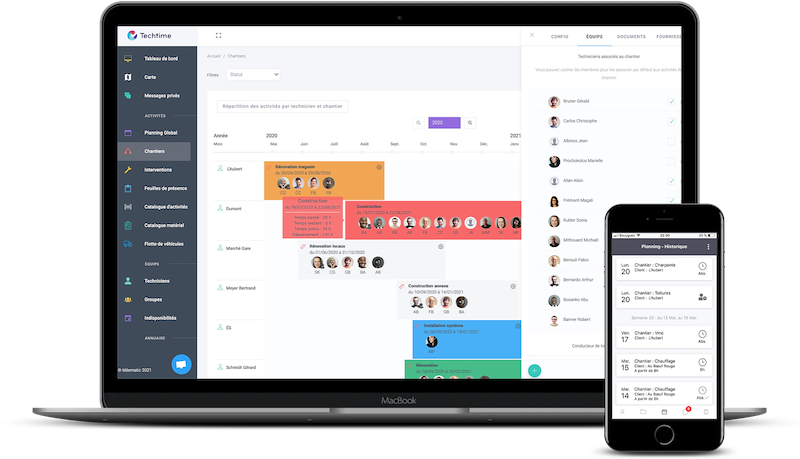

Dans Techtime, une entreprise invitée sur un chantier partagé ne se contente pas de consulter les informations du projet. Elle participe au chantier depuis son propre environnement et peut intervenir sur les éléments qui la concernent.
Selon ses droits, elle peut notamment créer ou modifier ses activités, organiser son planning, consulter les informations utiles au chantier et partager des documents, des photos ou des comptes rendus. Chaque entreprise reste ainsi autonome dans son organisation tout en participant au même projet.
Lorsque plusieurs entreprises travaillent ensemble, les informations peuvent rapidement se disperser entre fichiers Excel, emails, appels téléphoniques et documents transmis séparément. Il devient alors plus difficile de savoir quelle information est à jour et quelles entreprises sont concernées par une modification.
Techtime rassemble les informations du chantier dans un espace commun accessible aux entreprises participantes. Le planning, les activités, les documents et les informations terrain peuvent ainsi être consultés au même endroit par les personnes autorisées.
Cette centralisation simplifie la coordination multi-entreprises et limite les ressaisies ou les transmissions manuelles d’informations entre les différents intervenants.
Le principe n’est pas de faire travailler toutes les entreprises dans le compte de l’entreprise générale ou de l’architecte. Chaque société conserve son propre compte Techtime, ses équipes et son organisation interne.
Elle peut donc gérer ses autres chantiers indépendamment tout en retrouvant, dans le même environnement, les projets qu’elle partage avec ses partenaires. Cette logique est particulièrement adaptée aux artisans, TPE et PME du BTP qui participent régulièrement à des chantiers pilotés par d’autres entreprises.
La gestion collaborative du chantier ne remplace donc pas l’organisation de chaque société. Elle crée un point de coordination commun entre les entreprises qui travaillent sur le même projet.
Sur un chantier réunissant plusieurs entreprises, la difficulté ne consiste pas seulement à partager des documents. Il faut permettre à chaque intervenant de suivre le projet, d’organiser ses propres activités et de contribuer aux informations communes sans perdre son autonomie.
Techtime permet cette gestion collaborative du chantier en reliant plusieurs entreprises autour d’un même projet. L’entreprise qui pilote le chantier peut inviter ses partenaires. Une fois l’invitation acceptée, le chantier devient accessible depuis l’environnement Techtime de chaque société participante.
Chaque entreprise conserve son propre compte Techtime, ses utilisateurs, ses équipes et ses autres chantiers. Elle ne devient pas un simple utilisateur du compte de l’entreprise générale, de l’architecte ou du maître d’œuvre.
Elle retrouve le chantier partagé directement dans son propre environnement et peut y accéder avec les droits qui lui ont été attribués.
Cette organisation permet de coordonner plusieurs entreprises sur un même chantier tout en préservant le fonctionnement interne de chacune.
Selon ses droits, une entreprise participante peut consulter ou renseigner les éléments qui concernent son intervention : activités, planning, documents, photos, heures réalisées ou comptes rendus.
La collaboration ne repose donc pas uniquement sur la consultation d’informations transmises par l’entreprise qui pilote le chantier. Chaque partenaire peut contribuer directement au projet depuis son propre environnement Techtime.
Cette approche facilite la coordination entre artisans, sous-traitants, entreprises générales, architectes et autres intervenants lorsque plusieurs corps de métier travaillent simultanément ou successivement sur un même chantier.
Lorsque les interventions sont liées entre elles, une modification de planning, un retard ou une nouvelle information peut avoir des conséquences sur plusieurs entreprises.
En centralisant le chantier dans Techtime, les participants disposent d’un point de référence commun pour suivre l’organisation du projet et les informations utiles à leurs interventions.
Pour organiser plus largement vos équipes, vos chantiers et vos interventions, découvrez notre logiciel de planning BTP.
Lorsqu’un chantier implique plusieurs entreprises, l’information doit pouvoir circuler sans dépendre d’une succession d’emails, d’appels ou de fichiers envoyés séparément. Techtime permet de centraliser les informations du chantier et de les rendre accessibles aux entreprises autorisées depuis leur propre environnement.
Chaque société conserve ainsi son organisation, tout en disposant des éléments nécessaires pour intervenir sur le projet commun.
Le chantier partagé devient un point de référence commun pour les entreprises participantes. Elles peuvent y retrouver les activités, le planning, les documents, les photos et les comptes rendus associés au projet.
Cette centralisation limite la dispersion de l’information entre plusieurs outils et facilite la consultation des éléments utiles au chantier.
Lorsqu’une entreprise ajoute ou met à jour une information dans le projet partagé, les autres intervenants autorisés peuvent accéder à la version disponible dans Techtime sans avoir à rechercher le dernier fichier reçu ou le dernier échange par email.
Le partage d’information de chantier ne concerne pas uniquement le planning. Les entreprises peuvent également mettre à disposition les documents nécessaires à leurs interventions, ajouter des photos prises sur le terrain et rédiger des comptes rendus liés au chantier.
Ces contenus restent associés au projet auquel ils se rapportent. Les personnes concernées peuvent donc retrouver plus facilement les informations utiles sans multiplier les canaux de communication.
Pour une entreprise générale, un architecte ou un sous-traitant, cela permet de disposer d’un même espace de référence pour suivre les éléments transmis au cours du chantier.
Toutes les entreprises présentes sur un chantier n’ont pas nécessairement besoin d’accéder aux mêmes informations. Techtime permet d’organiser les accès afin que les partenaires disposent des éléments utiles au projet partagé tout en conservant leur propre environnement de travail.
Le partage du chantier ne signifie donc pas que toutes les données de chaque entreprise deviennent communes. La collaboration porte sur les informations nécessaires au projet auquel elles participent.
Lorsqu’une activité est ajoutée, qu’une photo est prise sur le terrain ou qu’un document est associé au chantier, l’information peut être retrouvée par les utilisateurs concernés dans le projet partagé.
Techtime permet ainsi aux différentes entreprises de travailler à partir d’informations centralisées et actualisées, ce qui facilite le suivi du chantier lorsque plusieurs intervenants doivent coordonner leurs actions.
Au fil du chantier, les activités, documents, photos et comptes rendus constituent un historique utile pour comprendre l’évolution du projet et retrouver les informations déjà renseignées.
Cette continuité est particulièrement importante lorsqu’un chantier mobilise plusieurs entreprises sur plusieurs semaines ou plusieurs mois : les informations restent rattachées au projet plutôt que dispersées entre les outils propres à chaque intervenant.
La coordination d’un chantier impliquant plusieurs entreprises commence par un principe simple : tous les intervenants doivent pouvoir travailler autour du même projet sans être obligés d’utiliser le compte d’une seule société.
Avec Techtime, l’entreprise qui organise le chantier crée le projet, invite ses partenaires puis définit les informations et les accès nécessaires à la collaboration. Chaque entreprise rejoint ensuite le chantier depuis son propre environnement Techtime.
L’entreprise qui pilote le projet commence par créer le chantier dans Techtime. Elle peut renseigner les principales informations du projet, notamment les dates prévues, les activités à réaliser et les premières ressources mobilisées.
Le chantier devient ainsi le point de référence commun sur lequel les différents intervenants pourront ensuite collaborer.
Une fois le chantier créé, l’entreprise organisatrice peut inviter les sociétés qui doivent intervenir sur le projet : artisans, sous-traitants, architectes ou autres partenaires.
Le partenaire reçoit l’invitation puis rejoint le chantier depuis son propre compte Techtime. S’il ne possède pas encore de compte, il peut en créer un avant d’accepter l’invitation.
Le chantier partagé apparaît alors dans son propre environnement de travail.
Le partage d’un chantier ne signifie pas que toutes les données de chaque entreprise deviennent visibles par tous.
Les accès peuvent être organisés en fonction des besoins du projet afin que chaque partenaire consulte ou modifie les informations qui le concernent. Les entreprises participantes conservent ainsi leur autonomie tout en travaillant sur un même chantier.
Les intervenants autorisés peuvent consulter le planning et, selon leurs droits, créer ou modifier les activités qui les concernent.
Ils peuvent notamment renseigner les dates, les ressources mobilisées ou les informations nécessaires à la réalisation d’une intervention.
Cette organisation permet à chaque entreprise de préparer son travail tout en tenant compte des autres interventions prévues sur le chantier.
Au fur et à mesure de l’avancement, les participants peuvent mettre à jour les informations du projet. Une activité terminée, un nouveau document, une photo prise sur le terrain ou une modification du planning peuvent ainsi être intégrés au chantier partagé.
Techtime permet également de notifier les utilisateurs de certains événements liés au projet, par exemple l’acceptation d’une invitation ou l’ajout d’une nouvelle activité.
Les entreprises disposent ainsi d’informations actualisées pour coordonner leurs interventions et adapter leur organisation lorsque le chantier évolue.
Chaque entreprise continue à gérer ses propres équipes et son activité, tandis que le chantier partagé conserve les informations communes au projet.
L’entreprise générale, l’architecte ou l’entreprise qui coordonne les travaux peut ainsi suivre l’organisation générale du chantier. De leur côté, les artisans et sous-traitants disposent des éléments nécessaires pour préparer et suivre leurs propres interventions.
La coordination du chantier repose donc sur un projet commun, mais sans supprimer l’indépendance des entreprises qui y participent.
Le partage de chantier entre entreprises peut répondre à différentes organisations. L’entreprise qui coordonne le projet n’est pas toujours la même et les partenaires ne jouent pas tous le même rôle. Techtime permet de conserver ce fonctionnement tout en réunissant les intervenants autour d’un même chantier partagé.
Une entreprise générale peut créer le chantier puis inviter les entreprises qui doivent intervenir successivement ou simultanément : électriciens, plombiers, peintres, plaquistes, carreleurs ou autres corps de métier.
Chaque sous-traitant retrouve le chantier dans son propre environnement Techtime et accède aux informations qui lui sont utiles. Il peut suivre ses activités, consulter le planning, retrouver les documents du projet et, selon ses droits, renseigner directement l’avancement de ses interventions.
L’entreprise générale conserve de son côté une vision globale du chantier. Elle peut ainsi mieux coordonner les différents métiers et identifier les conséquences d’un décalage de planning sur les interventions suivantes.
Un architecte ou un maître d’œuvre peut également utiliser le chantier partagé pour coordonner les entreprises qui participent au projet.
Les artisans disposent des informations nécessaires à leurs interventions depuis leur propre compte Techtime. Ils peuvent consulter le planning du chantier, accéder aux documents partagés et contribuer aux informations du projet sans être intégrés au compte de l’architecte.
Le chantier devient ainsi un espace commun entre le pilotage du projet et les entreprises qui réalisent les travaux.
Un artisan peut être invité sur un chantier qu’il n’a pas créé lui-même. Après avoir rejoint le projet, il le retrouve dans son environnement Techtime aux côtés de ses propres chantiers.
Il peut organiser les activités qui le concernent, préparer son intervention et consulter les informations partagées par les autres participants autorisés.
Cette organisation est particulièrement adaptée aux artisans et PME du bâtiment qui travaillent régulièrement comme partenaires ou sous-traitants sur des projets pilotés par d’autres entreprises.
La coordination devient particulièrement importante lorsque plusieurs métiers dépendent les uns des autres. Une intervention électrique peut par exemple devoir précéder la pose de certains équipements, tandis que des travaux de finition ne peuvent commencer qu’après l’achèvement d’autres activités.
Le planning partagé permet aux entreprises concernées de visualiser l’organisation du chantier et d’adapter leurs propres interventions lorsque le projet évolue.
Techtime facilite ainsi la collaboration entre les différents métiers du BTP sans imposer à toutes les entreprises une organisation ou un compte commun.
Lorsqu’un chantier nécessite l’intervention d’un bureau d’études ou d’autres partenaires techniques, les documents et informations nécessaires peuvent être associés au projet partagé.
Plans, fichiers, photos et comptes rendus restent ainsi rattachés au chantier et accessibles aux personnes autorisées. Les intervenants disposent d’un point de référence commun au lieu de dépendre uniquement de documents transmis séparément.
La particularité du fonctionnement de Techtime tient à cette articulation : plusieurs entreprises peuvent participer activement au même chantier tout en conservant chacune leur propre compte, leurs équipes et leur organisation.
Le partage ne consiste donc pas seulement à donner accès à un planning ou à envoyer des documents à des utilisateurs externes. Il permet à plusieurs structures indépendantes de contribuer au même projet depuis leur propre environnement Techtime.
Pour les artisans, sous-traitants, architectes et entreprises générales, cette organisation crée un point commun pour la coordination du chantier, le partage d’information et le suivi des interventions, sans transformer les différents partenaires en utilisateurs d’un compte unique.