


In brief
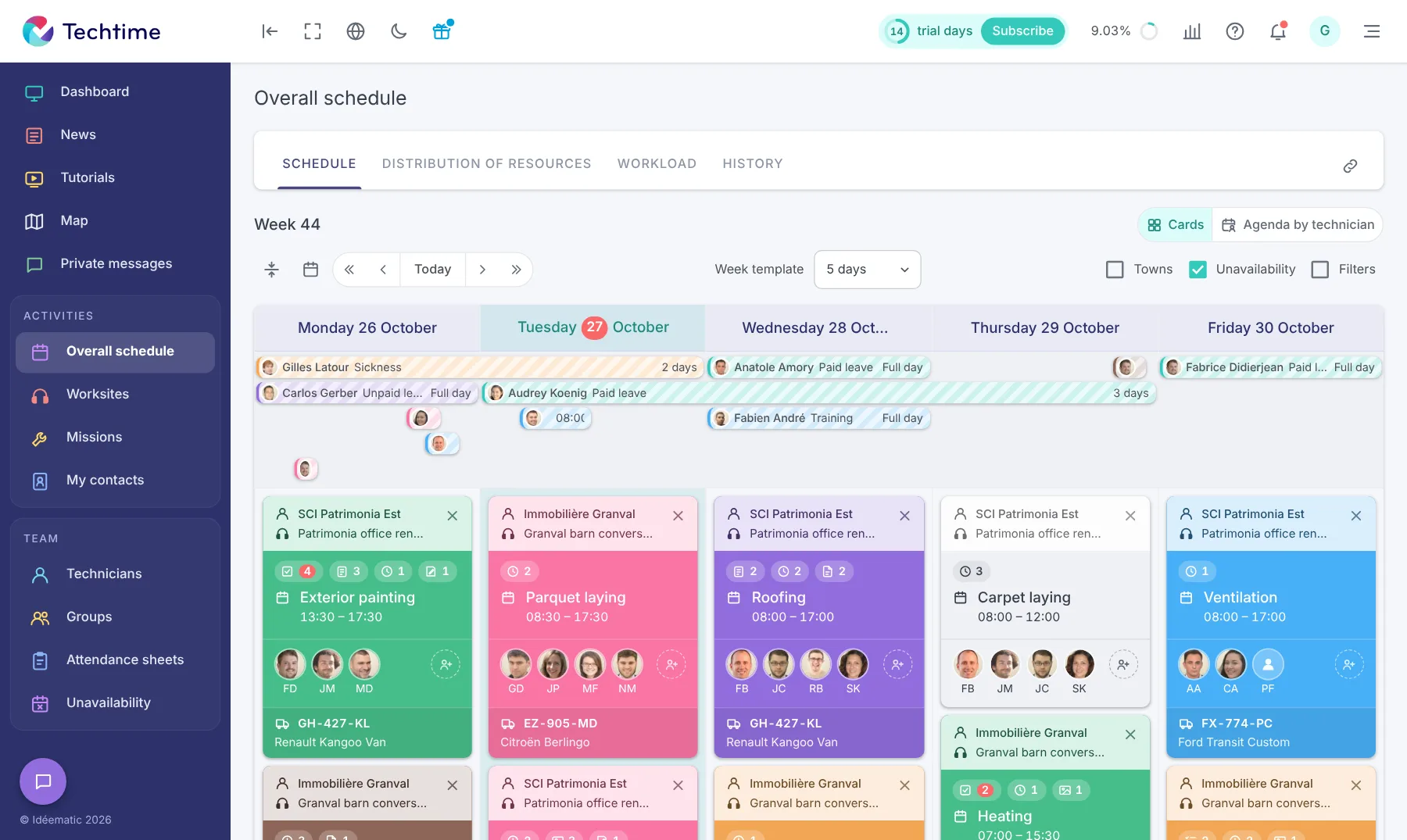
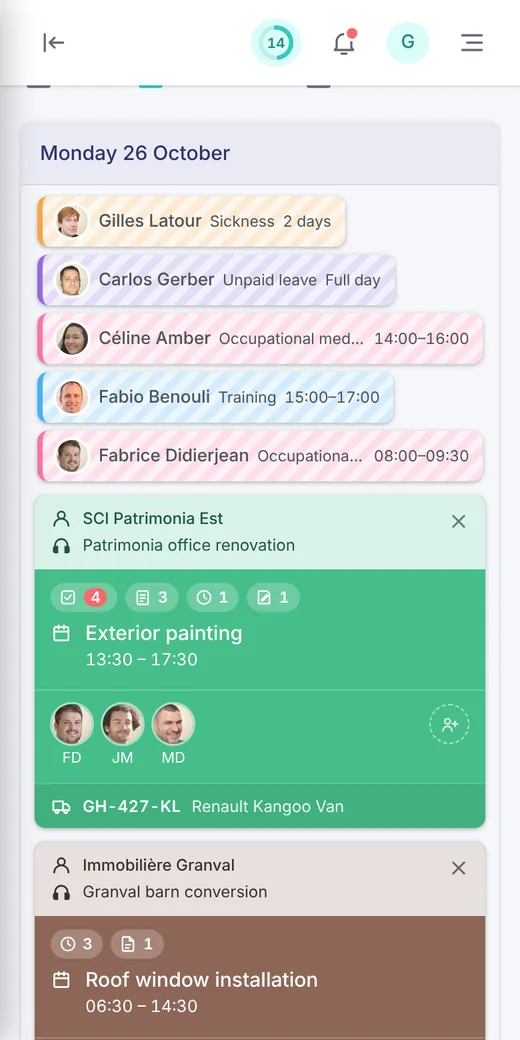
Techtime was born at Idéematic, an Alsace-based digital agency, at the request of building tradespeople who could not find a simple tool to know who does what, for whom, when and how. The application was designed with them, in needs-analysis workshops run in partnership with the French Building Federation of the Bas-Rhin, then prototyped to offer an intuitive experience. Its architecture allows it to evolve continuously alongside tradespeople and adapt to each company.
Tradespeople, their talents and their know-how
Our digital agency Idéematic has existed for 12 years, and its founders have been in the field for much longer… Our main passion has always been to design applications close to their users and their needs. In other words, we have always wanted to put IT and digital technology back at the service of people. Because it is human values that we stand for, people’s know-how and people skills.
Tradespeople, including those in the building trades, are a fine example. Years of experience enable them to offer you their craft in the service of your needs and projects. At Idéematic, we love tradespeople because they contribute directly to what can be real stakes for you.
And it is their talents that you need. So tradespeople must be able to devote all their attention and all their time to them.
Techtime’s goals
As an agency that tackles business problems, we started receiving requests from building professionals who could not find a practical solution to their simple need to answer the questions: Who does What, for Whom, When and How. As a result, these tradespeople were spending far too much time trying to organise their worksite and job activities.
So our starting principle was that for a tradesperson to be able to “improve your life”, we had to simplify theirs.
That is exactly where we started. A tradesperson must be able to organise and track their activities very simply and very practically so they can focus on their added value: their know-how.
The “Techtime” project was born of the desire to offer an organisational solution that gives tradespeople back the time they need to keep the best possible control over their production.
Identifying the needs
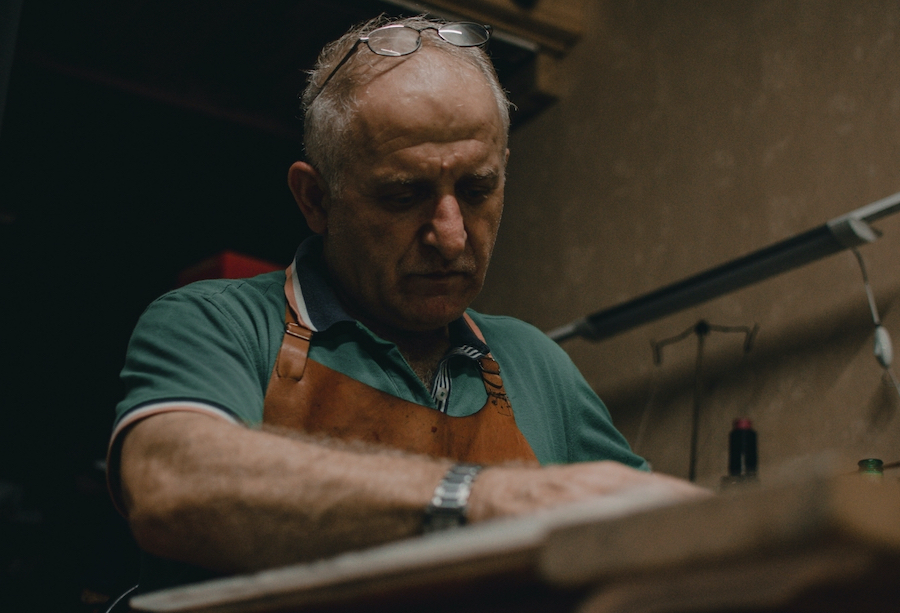
To succeed in this challenge, Techtime had to be designed for and with building tradespeople!
We could not settle into the position of IT people imagining software for these future users without taking a genuine interest in their trades! It seems so logical, and yet… A good designer is a humble person who must first take an interest in people, their trade, their context, their stakes and their problems. They must map all of this in order to devise a strategy and the structure to address it, and then make it all happen, like an architect. That is what we did, in partnership with the French Building Federation of the 67.
In fact, our trade shares a common vocabulary with theirs.
Like tradespeople, we talk about architecture, tools, scalability (scaffolding), works, delivery, missions, functions, labour, projects, construction, libraries, columns, colours and so on.
So the first phase was to sit down around a table with these tradespeople, roofers, timber framers, painters, welders… to listen and understand what they were missing and therefore what they needed.
We organised needs-analysis workshops in which, step by step, we identified all the ingredients that would make it possible to develop the features of the Techtime software.
Technicians and teams
Activities and jobs
Customers and worksites
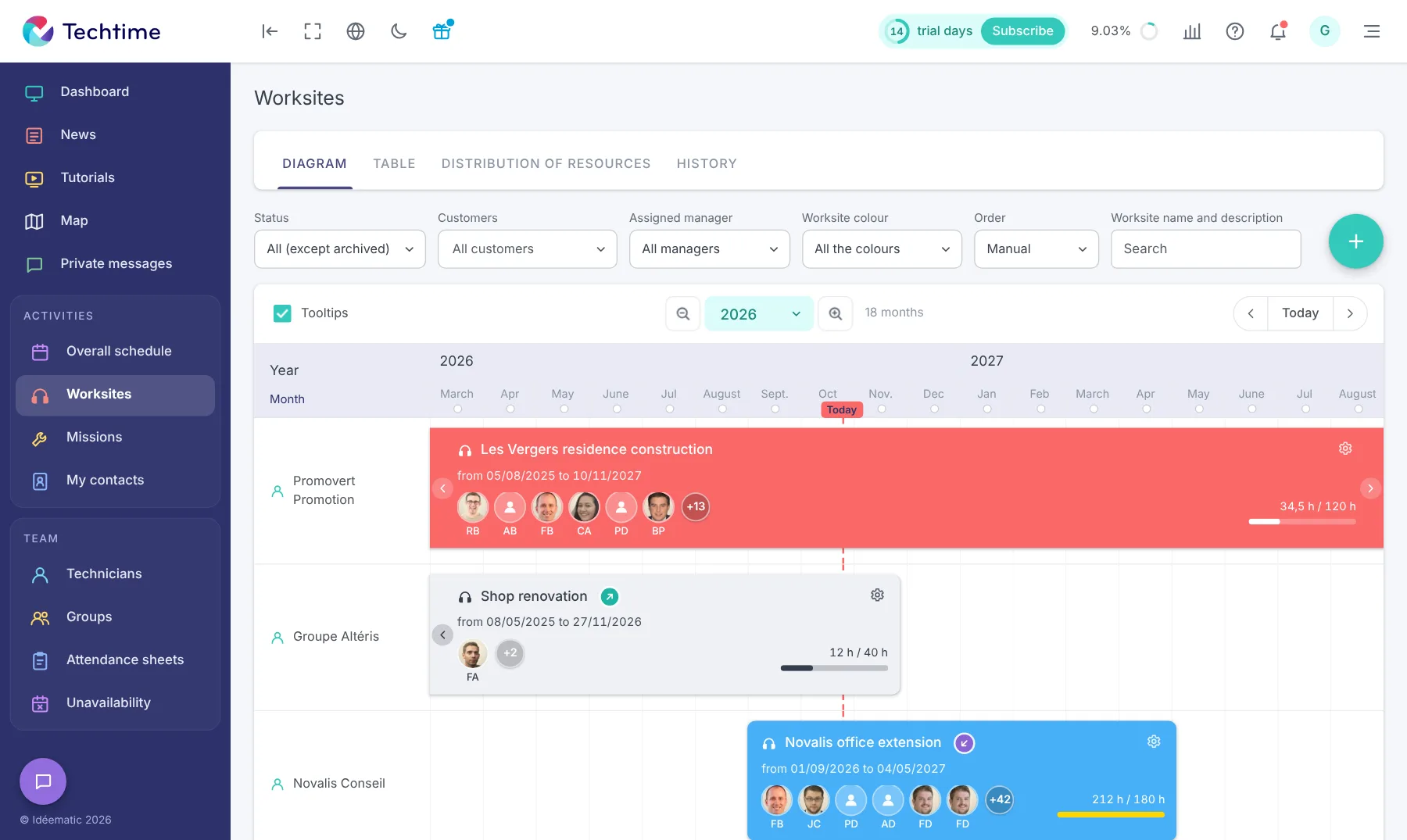
The schedule
Instructions and documents
The user experience

A cleverly designed building leads visitors to move freely and intuitively through its spaces. They intuitively find what they came for, in the shortest possible time. The place was designed for them, which makes it practical and rewarding.
It is exactly the same for a well-designed web or mobile application! It responds functionally and pragmatically to what it was built for. But ideally, it lets users not only find what they are looking for, in terms of features or information for example, but also go further, faster and more efficiently.
Our dream is for Techtime to become the most practical tool for these tradespeople after the hammer!
- 1RequestsFrom building tradespeople
- 2WorkshopsNeeds analysis with the FFB 67
- 3PrototypeAn intuitive experience
- 4EvolutionContinuous cycles
Cycles of continuous evolution
Tradespeople evolve and their application must be able to keep up, because it is not the user who should have to get used to their digital tool, but the application that should follow them day to day and evolve according to their expectations.
Techtime’s architecture was therefore designed to transform over time, quickly and skilfully, to support today’s and tomorrow’s tradespeople day to day.
Techtime is not just a tool, it is a working environment in which each company remains in full control of its project. Techtime helps structure the organisation of their worksite and job activities and so has the potential to become a common reference in this area.
For our development teams, this means staying as passionate as they are close to tradespeople, so they can keep sensing what could become superpowers for them in organising and tracking activities and teams in the field.
Finally, while Techtime offers features common to every area of the building trade, it can also adapt specifically to the context of each area and each company. Options will soon be appearing that are sure to appeal to the tradespeople we champion every day, in our own way!
Frequently asked questions
Who created Techtime?
Techtime was devised by the digital agency Idéematic, in response to requests from building tradespeople who could not find a practical solution for organising their worksite and job activities.
How was Techtime designed?
With the tradespeople themselves: roofers, timber framers, painters and welders took part in needs-analysis workshops, in partnership with the French Building Federation of the Bas-Rhin.
Can Techtime adapt to my company?
Yes. Its architecture was designed to evolve over time, and the application can adapt to the specific context of each trade and each company.