


Rising materials prices, higher labour costs: inflation is hitting the building sector very hard. Many professionals are struggling with its effects on their construction projects. Self-employed contractors are especially vulnerable. In this difficult context, how can you control and better manage your construction costs?
In brief
To control construction costs during inflation, estimate costs taking expected inflation into account and reassess them regularly, include a price adjustment clause in contracts, diversify and negotiate your supplies, stock strategic materials and optimise the design with architects and engineers. New technologies also help: BIM for costing and coordination, IoT for tracking resources and equipment in real time, and AI for anticipating price fluctuations.
Good practices for managing construction costs during inflation
Several strategies and techniques can be used to reduce the effects of inflation on construction projects while maintaining impeccable quality. Here are some good practices to adopt.
Estimating, regularly reassessing and monitoring construction costs
First of all, you need to estimate the initial construction costs taking expected inflation into account, then reassess them regularly if necessary. This can be done by monitoring construction cost indices or by calling on experts. The necessary adjustments are then built into the budget. All expenditure must be carefully checked. Any variance must be identified so that action can be taken.
The importance of contracts
Inflation can make long-term contracts less advantageous. If they are based on prices fixed at a given time and the costs of performing the contract rise, profitability disappears. That is why it is possible to include a price adjustment clause. Prices can then be adjusted in line with inflation, based for example on cost indices defined in advance.
Managing the supply chain
To control construction costs, supply chain management must be very rigorous and constantly adapting. This means negotiating advantageous contracts with suppliers, diversifying sources of supply, considering varying the types of materials used, etc.
Planning and stocking materials
Some materials essential to construction are scarce, even in short supply, and ever more expensive. In this context, and since global supply chains ground to a halt during the pandemic, companies have relied on a stocking strategy. They try as far as possible to take advantage of prices before they rise and to avoid their worksites being forced to stop.
Optimising the design
Working with architects and engineers, it is possible to move towards less costly construction and fit-out solutions. The contractor can consider using another construction system, but also choose alternative materials, reduce non-essential floor areas, etc.
- 1EstimateAnd reassess costs
- 2ContractPrice adjustment clause
- 3SourceNegotiate and diversify
- 4StockBefore price rises
- 5OptimiseThe design
Using new technologies to control construction costs
New digital tools help to better manage and reduce construction costs, even during inflation. Here is a selection.
BIM (Building Information Modelling)
BIM is a technology and a collaborative tool used to create 3D models of buildings. By centralising all the information needed to run a construction project properly, it helps manage costs more effectively throughout a building’s life cycle, in several ways:
First, its precise modelling makes it possible to plan exact quantities of materials and to estimate the budget very rigorously.
It also makes it possible to explore different building design options and simulate their future performance. This means you can adopt the most economical solution, both in the choice of materials and of the construction system, without compromising quality.
BIM also encourages better coordination between the different teams and disciplines working on the models. It thus avoids or limits potential conflicts and problems during construction, and the extra costs of resolving them.
BIM also ensures optimisation of the supply chain, logistics and shorter delivery times.
IoT (the Internet of Things)
IoT allows physical objects to be connected and exchange data in real time. To do this, sensors are built into them. In construction, they can be built into equipment, materials and building structures.
Thanks to this technology, it is possible to track the use of resources on a worksite in real time and therefore optimise their use and avoid waste or losses. But that’s not all.
The devices installed warn of possible equipment malfunctions and thus make it possible to anticipate breakdowns. They also improve stock management, give real-time visibility of stock levels and so support sound purchasing decisions. These can take price fluctuations linked to inflation into account as far as possible.
To help prevent absences and boost team productivity, sensors can be built into gloves, helmets or vests to provide information on teams’ working habits and health.
AI
While inflation cannot be controlled, artificial intelligence can be used to control spending, in particular through management software that integrates it. Using predictive analysis, it can identify trends, forecast fluctuations in construction costs and so support better financial planning and optimal allocation of resources. It can also help optimise project design and construction processes, improve supplier contracts and risk management.
Exact quantities, compared options, better coordination
Resources, stock and breakdowns tracked in real time
Predictive analysis of cost fluctuations
Inflation cannot be controlled, but good practices and new technologies make it possible to be proactive, to better manage and reduce construction costs, and so to offset it.
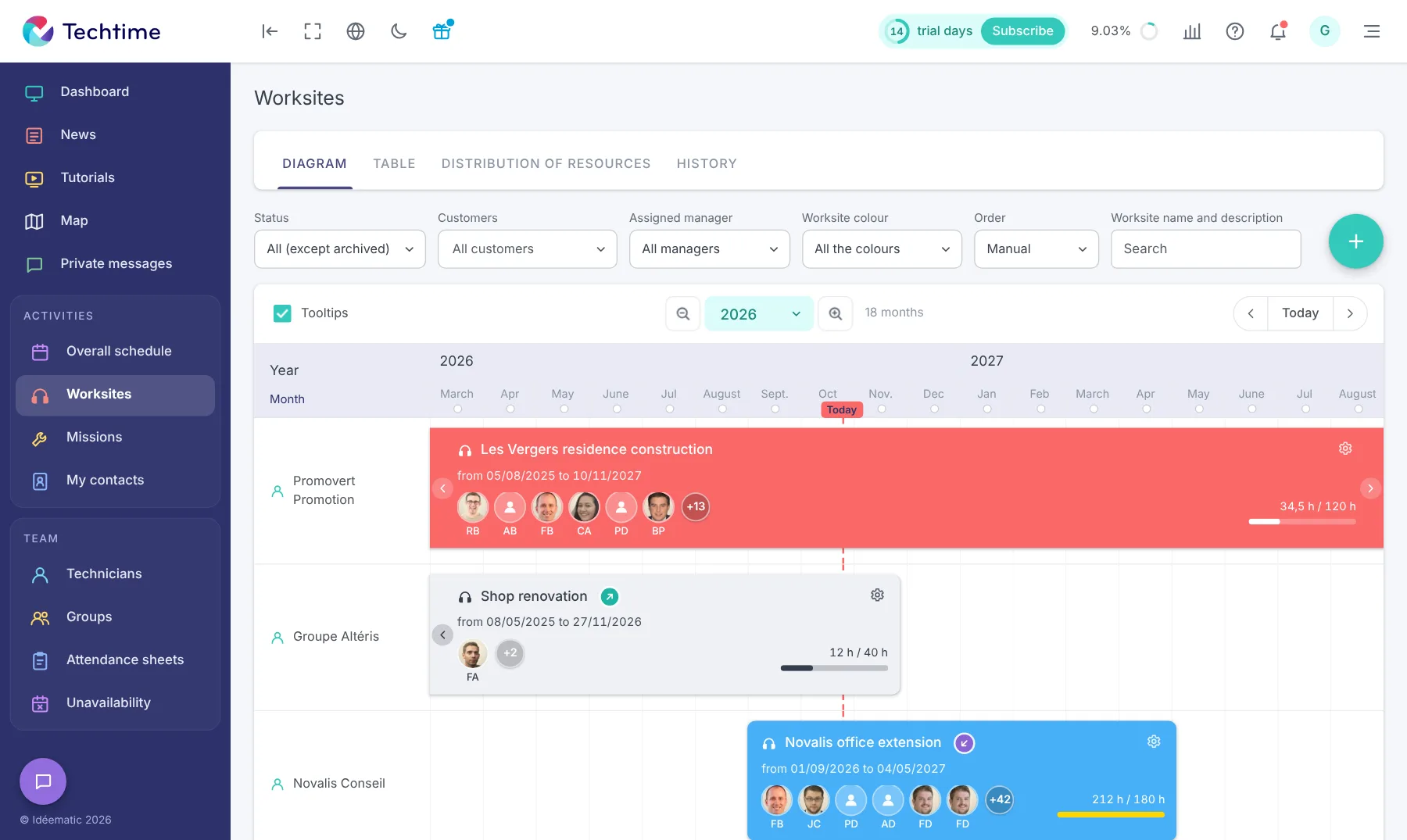
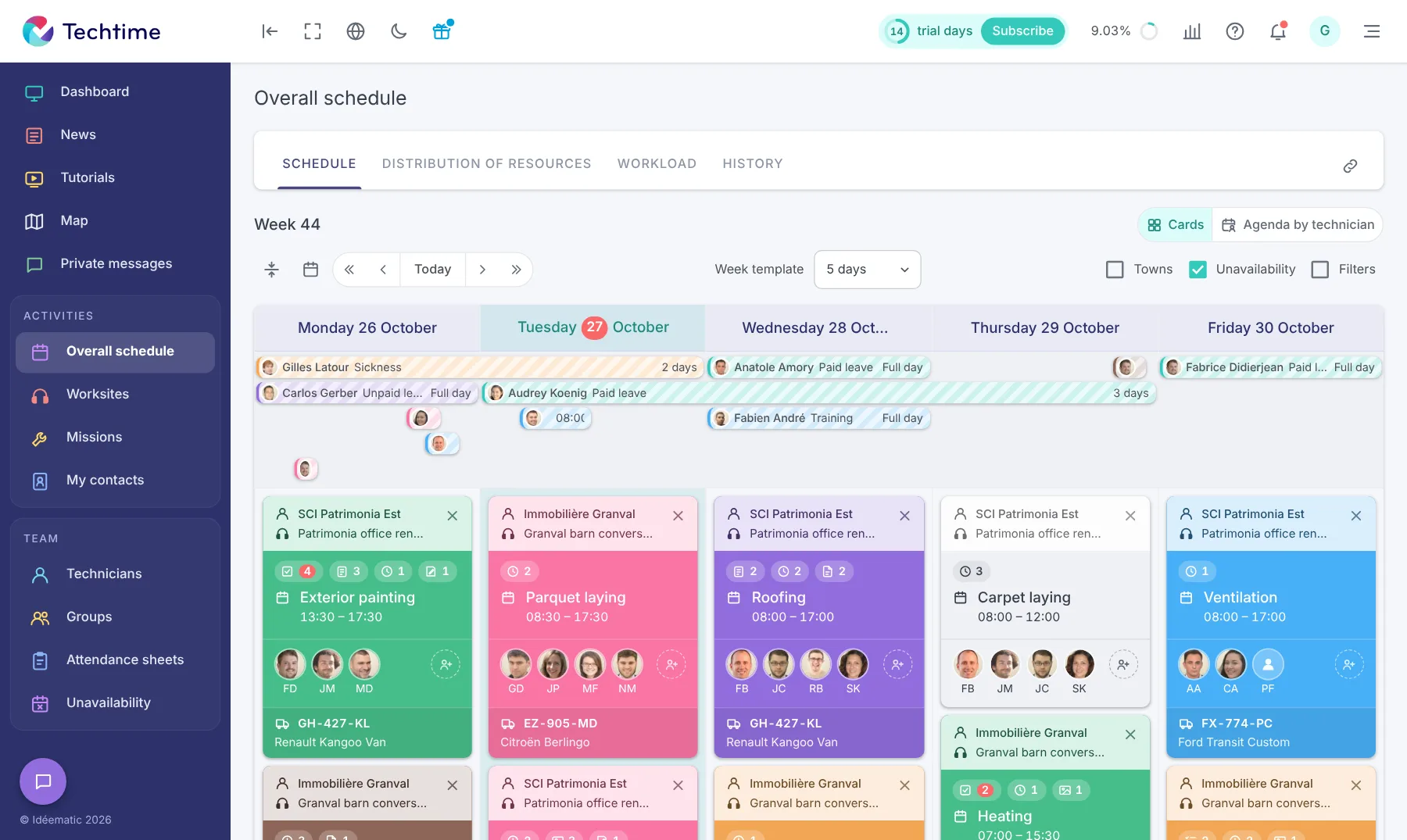
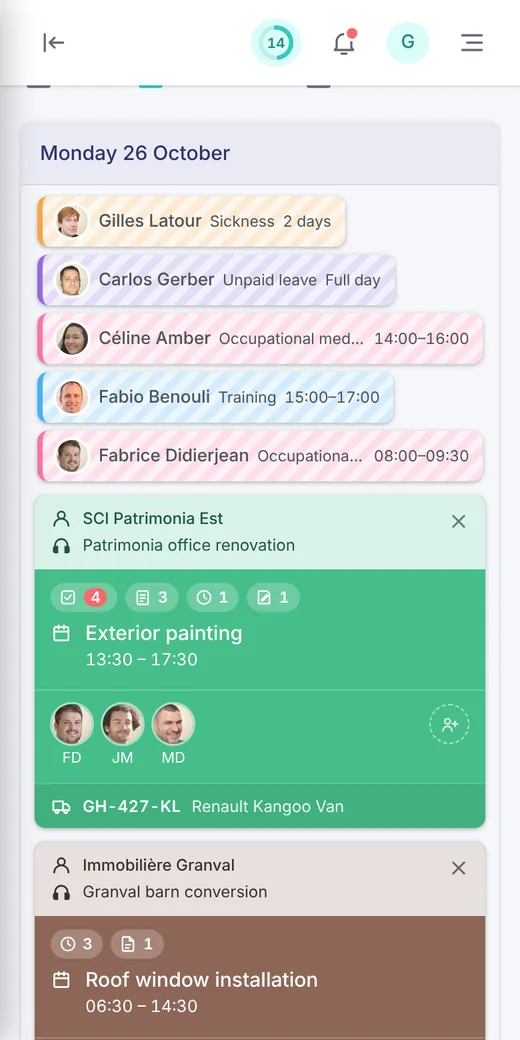
Techtime can help you every day to plan and organise all your construction projects. The app was specifically designed to meet the needs of construction professionals.
Frequently asked questions
How can you limit the impact of inflation on a worksite?
By estimating costs with expected inflation, monitoring construction cost indices, negotiating and diversifying your supplies, stocking essential materials and optimising the project design.
What is a price adjustment clause?
A contract clause that allows prices to be adjusted in line with inflation, based for example on cost indices defined in advance. It protects the profitability of long-term contracts.
How does BIM help reduce construction costs?
Its precise modelling makes it possible to plan exact quantities of materials, compare different design options and coordinate teams better, which limits conflicts and extra costs.