


Are you a construction project manager or in charge of a worksite? Managing your teams’ worksite schedule well is essential to delivering your projects. It ensures optimal resource allocation and on-time delivery, and improves your company’s productivity. But in the building sector, with its many specific challenges, it isn’t always easy!
To help you, here are the 8 key steps to managing your field staff’s schedule well.
In brief
To manage your worksite teams’ schedule well, there are eight steps: set objectives, break down and sequence tasks, estimate and allocate resources, draw up a realistic schedule, monitor and update it, communicate with teams, build in a margin for risks and review each project. In construction, the task is complex: weather, permits, subcontractors, interdependent tasks, material shortages and variable hours. Dedicated scheduling software saves time.
8 steps to managing your worksite team’s schedule successfully
The complexity of construction projects makes scheduling them tricky, but above all essential. Here are the steps that will help you manage your worksite team’s schedule well.
- Setting objectives: deadlines to meet, specific constraints, deliverables expected by the client, etc. The teams’ objectives must be defined clearly and carefully.
- Identifying and sequencing tasks: each project is divided into several smaller, and therefore more manageable, tasks. It is important that each has an identifiable start and end and that the interdependencies between them are taken into account. Once the tasks have been defined, they must be organised. The idea is to define the optimal order of execution to ensure the work is done efficiently.
- Estimating and allocating resources: it is essential to identify the resources each task requires: suitable labour, equipment, materials, etc. Don’t forget to specify the category of worker required and the skills essential to each position.
- Drawing up the worksite schedule: all the information gathered will enable you to produce a detailed timeline for the worksite project. It will include the start and end dates of each task and the key events. It must be realistic and achievable. Dependencies between tasks must be taken into account.
- Monitoring and updating the schedule: the project’s progress against the initial schedule is monitored constantly. Completion dates are compared with planned dates and any delays must trigger measures such as adjusting resources.
- Communicating with teams: communication with your worksite teams is essential. The schedule is shared with them well before the worksite starts so they can organise themselves. Then, throughout the project, they are kept informed of progress and of any changes or problems.
- Managing risks: it is important to build some leeway into your schedule for the unexpected, and suitable plans in case it happens.
- Reviewing how your teams’ schedule was managed: each completed project is an opportunity to take stock, learn lessons about what worked well or less well and what can be improved in future.
- 1ObjectivesDeadlines, constraints, deliverables
- 2TasksBreakdown and sequencing
- 3ResourcesLabour, equipment, materials
- 4ScheduleA realistic timeline
- 5MonitoringContinuous updating
- 6CommunicationSchedule shared in advance
- 7RisksMargin for the unexpected
- 8ReviewLessons for next time
Managing your teams’ schedule is a delicate, time-consuming task. To help you, you can use various tools such as an Excel-type spreadsheet. But there are more targeted solutions, dedicated software, that will save you time!
The complexity of managing teams in the building sector
Staff scheduling is essential in companies in every sector. In the building sector, it is particularly complex. Why?
Construction project managers can face various difficulties, such as:
- Dependence on external factors: weather conditions, but also permits and regulatory approvals, can cause delays to the worksite schedule.
- The number and variety of people involved in the field: in addition to scheduling the company’s own employees, you have to take into account the presence of multiple subcontractors and suppliers. Coordinating all these stakeholders is a challenge. If one falls behind, the whole project is affected.
- Project complexity: construction projects are often very delicate, in particular because they involve interdependent tasks. They are also subject to changes and the unexpected.
- Difficult resource management: materials, skilled labour, equipment, etc. Resource management is complex in construction. And to make matters worse, shortages of many materials, which cause delays on worksites, as well as inflation, have been particularly problematic since the pandemic.
- Flexible hours: between on-call periods, overtime, rest periods and absences due to bad weather, arranging and managing working hours in construction is tricky.
- Risk management: the building sector carries inherent risks: accidents on site, delays in material deliveries, etc.
- Communication and collaboration: on a worksite, teams are numerous, varied and sometimes scattered. Ensuring effective communication between them is no small task.
- Meeting deadlines: in a construction project, deadlines must be met. The pressure is high and there can be many unexpected events disrupting the worksite schedule.
- Weather, regulatory permits
- Subcontractors and suppliers
- Material shortages and inflation
- Interdependent tasks
- On-call duty, overtime, bad weather
- Scattered teams, tight deadlines
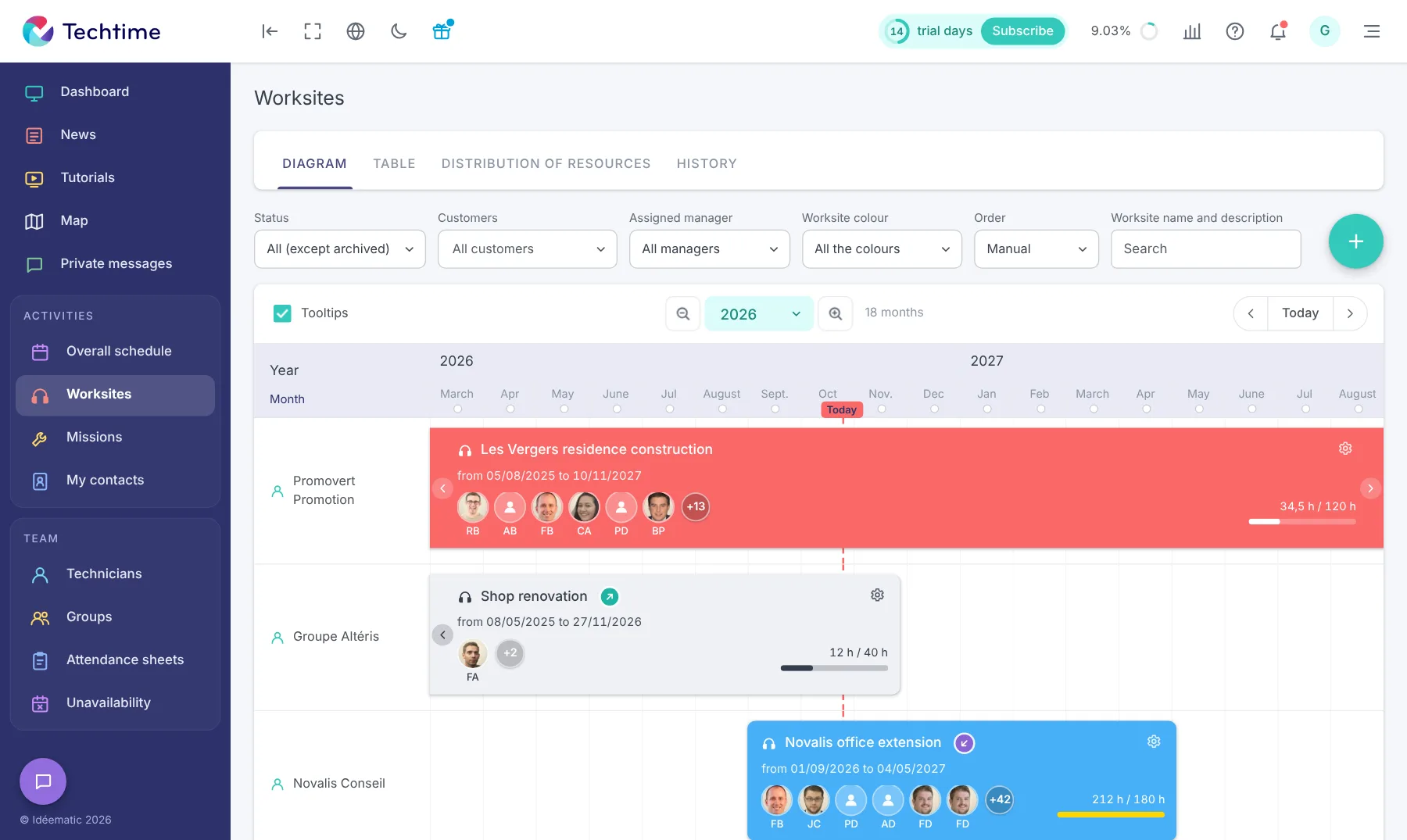
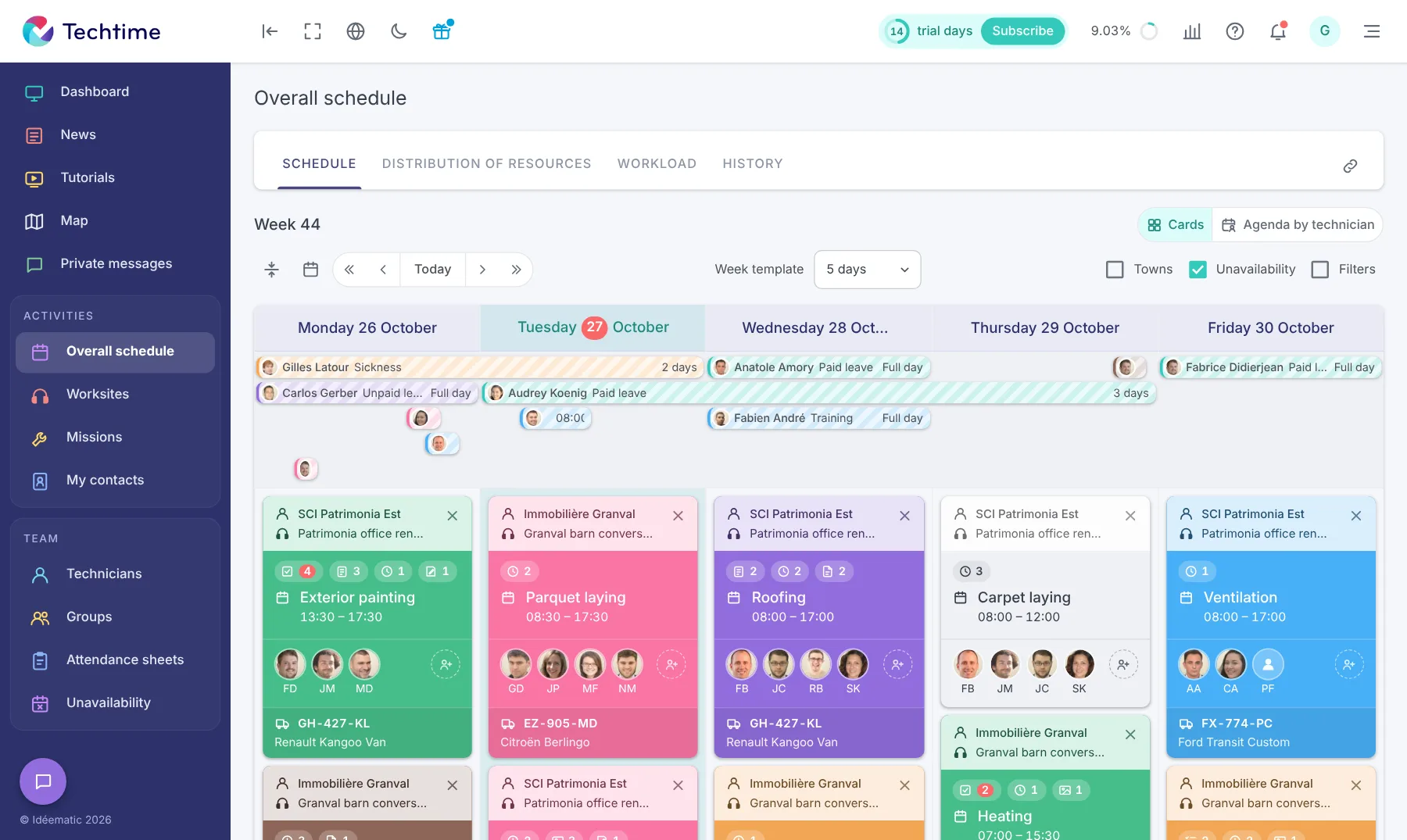
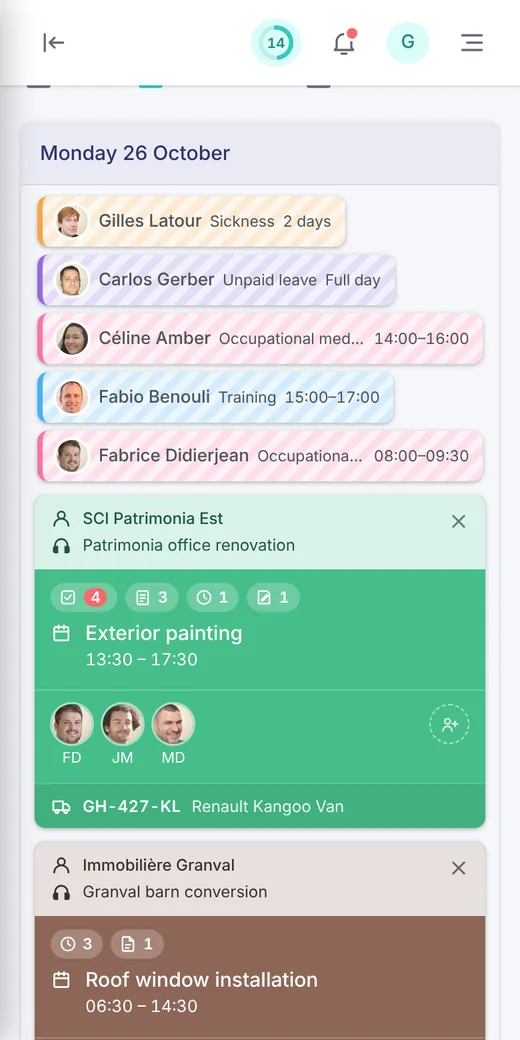
Scheduling worksite teams is complex and can become a real headache. You have to juggle many variables and take into account multiple interdependencies between tasks and resources. To make your work easier, scheduling tools exist. Some, like Techtime, have been designed specifically for managing field staff in the construction sector.
Frequently asked questions
How do you draw up a worksite schedule for your team?
Set the objectives, break the project down into tasks and put them in order, identify the resources required, then draw up a detailed timeline with the start and end dates of each task, taking their dependencies into account.
Why is team management complex in construction?
Because it depends on external factors such as weather or permits, on many subcontractors and suppliers, on interdependent tasks, on resources that are hard to obtain and on variable hours (on-call duty, overtime, bad weather).
Which tool should you use to manage your worksite teams’ schedule?
An Excel-type spreadsheet may be enough at first, but software dedicated to construction, such as Techtime, saves time by centralising the schedule and sharing it with field teams.