


Noise, vibration, dust, waste, traffic problems… worksites are often synonymous with nuisance, especially noise. Limiting it is essential to protect local residents’ peace and quiet, workers’ health and good relations with everyone involved in the project. That means focusing on prevention and adopting certain practices.
In brief
Limiting noise from a worksite protects the health of your teams, the peace and quiet of local residents and the project schedule: noise is regulated and can lead to fines, conflicts and delays. From 80 decibels, it becomes harmful to hearing. Good practice: map noise sources in advance, choose well-maintained electric or hybrid equipment, keep noisy activities away from homes, train staff, inform local residents and monitor noise levels in real time.
Why reduce noise from a worksite?
Complying with worksite noise regulations
Between drills, jackhammers and moving machinery, construction sites are often very noisy. This noise is a source of stress and fatigue for local residents and teams and can eventually cause health problems (hearing loss, high blood pressure, etc.). As part of its general duty of safety towards its staff, the construction company must assess the risks and put measures in place to address them. In France, worksite noise is also subject to the regulations on neighbourhood noise, and prefectoral or municipal orders may specify certain points such as worksite operating hours. If you do not comply, you risk fines.
Note: from 80 decibels, noise is harmful to hearing, and from 95 dB it can cause irreversible damage (hammer drill, circular saw, etc.).
Regulations may also require an environmental impact assessment for certain worksites. It examines the impact of the works and their foreseeable effects on the environment, and also on human health.
The economic impact of worksite noise
Noise can cause conflicts with neighbours and therefore lead to worksite delays (or even suspension) and financial losses in the event of legal action, etc. Anticipation is the best approach: you need to know which measures to take to reduce noise before starting the works. This task falls to the client, who handles it as early as possible before the worksite starts.
Producing a noise map
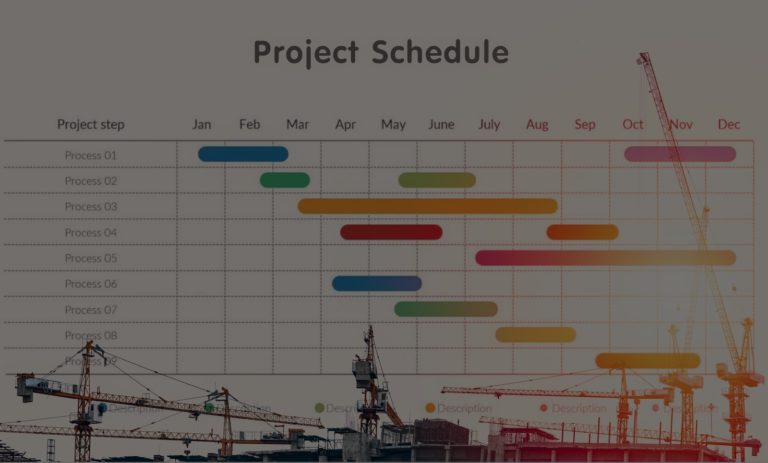
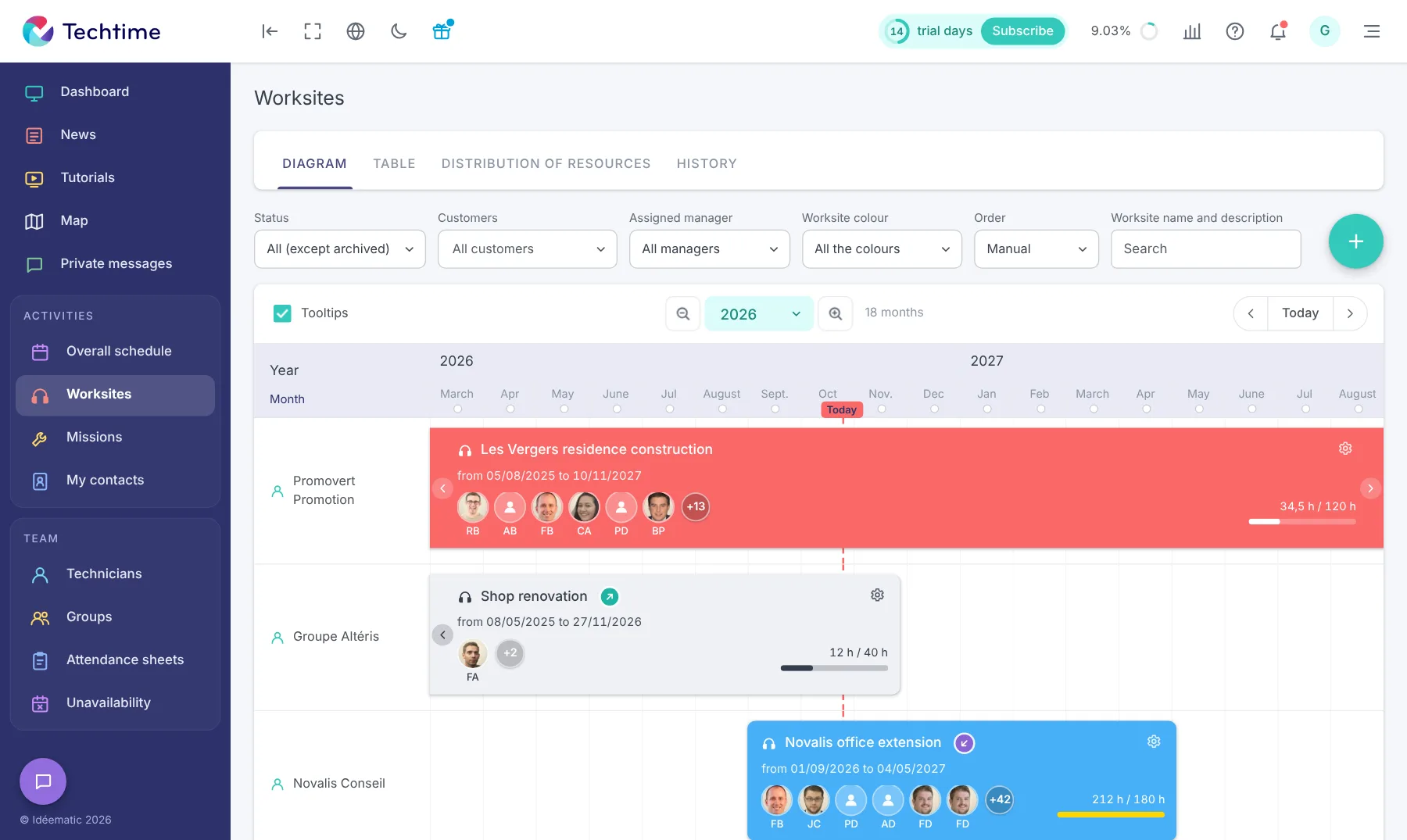
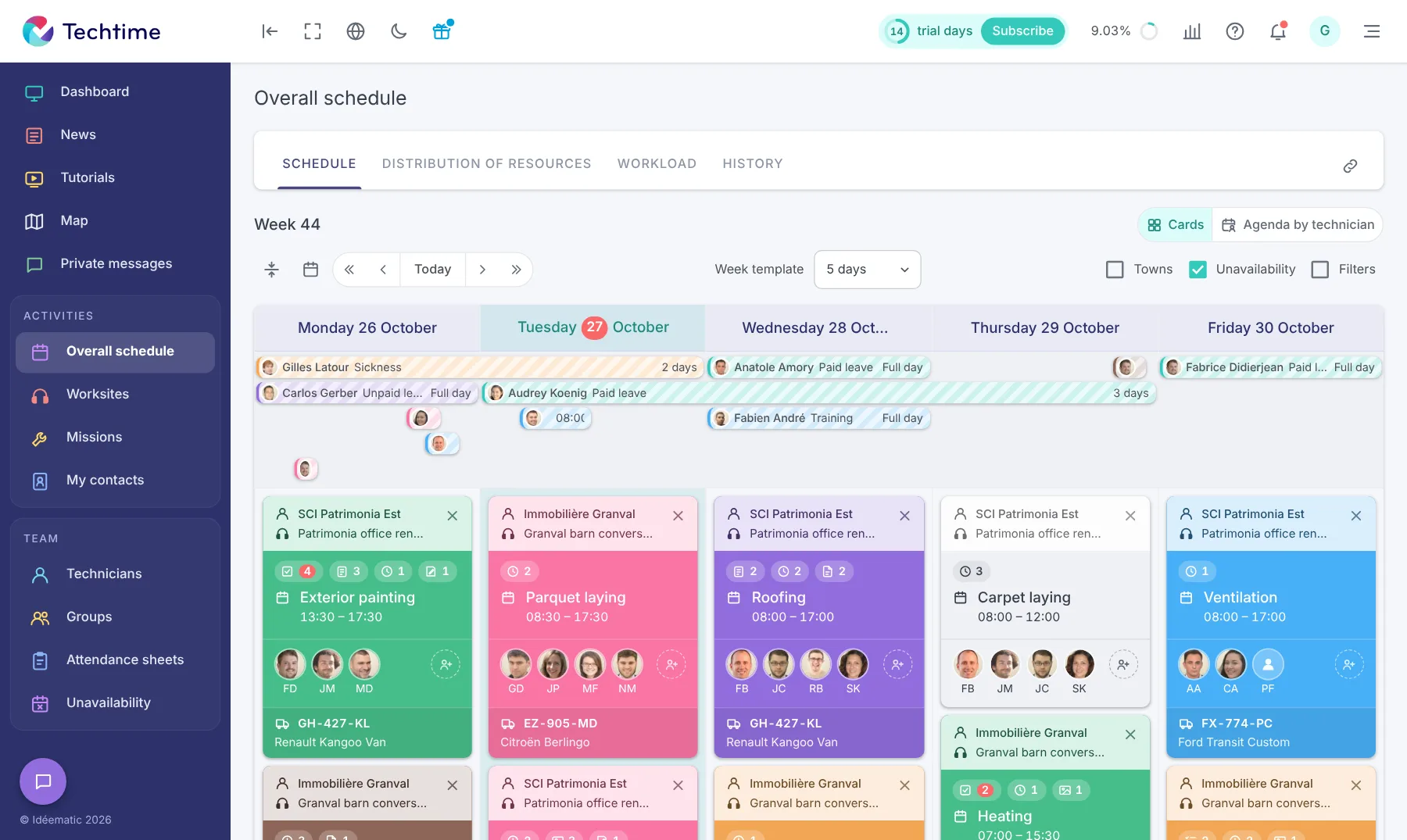
But before taking measures, a preliminary study is usually needed. Although the noise level of worksite activities can be a nuisance, it is not the only criterion to consider. Exposure time, the people exposed and their sensitivity must also be factored in. A worksite plan brings all these elements together. Noise sources are identified and located for every phase of the project. Local rules on permitted working hours for noisy activities are also included. A schedule is then drawn up accordingly.
Choosing suitable equipment and techniques
To start with, it is important to consider the noise and vibration emitted by equipment before buying it. Electric or hybrid equipment is quieter than pneumatic machinery. In addition, your equipment fleet must comply with European and French regulations on sound power. Make sure you maintain it properly, as worn-out equipment is often the cause of noise.
You can also enclose the noisiest machines, fit exhaust silencers, vibration dampers, etc. You can also opt for quieter construction systems or demolition methods. Jackhammers, for example, are noisier than drilling rigs!
Laying out the worksite
To protect the neighbourhood, you can also try to place noisy activities away from residential areas. Installing screens, hoardings and enclosures made with acoustic insulation is also a good option.
Training staff
Site teams play a crucial role in managing noise. They must do everything they can to limit noise and know how to use their equipment as well as possible without overdoing it.
Communicate
It is important to communicate with and keep local residents, shopkeepers and local authorities informed about the works. Transparency helps avoid many conflicts because the worksite is better accepted. Communicate about deadlines, the measures taken to reduce nuisance, etc. Meetings can gather feedback from everyone involved in the project and address concerns.
Monitoring and follow-up
To avoid any overspill, a real-time noise monitoring system on and around the worksite is very useful. It lets you act quickly if regulatory noise thresholds are exceeded and adjust settings on the ground. These systems usually work with connected sensors.
Regularly checking the equipment fleet also lets you see whether everything is working properly and well maintained.
- 1MapNoise sources, hours, schedule
- 2EquipQuiet, well-maintained equipment
- 3Lay outAcoustic screens and hoardings
- 4TrainSite teams
- 5CommunicateWith local residents and authorities
- 6MonitorReal-time connected sensors
Limiting worksite noise requires a proactive and responsible approach. Preliminary study, prevention, training and communication are the watchwords for a trouble-free project.
Frequently asked questions
From how many decibels is noise harmful?
From 80 decibels, noise is harmful to hearing. From 95 dB, as with a hammer drill or circular saw, it can cause irreversible damage.
What rules apply to worksite noise?
In France, worksite noise falls under the regulations on neighbourhood noise. Prefectoral or municipal orders may specify operating hours, and the company must assess the risks for its staff. Non-compliance exposes it to fines.
Who should anticipate worksite noise?
The client, as early as possible before the start. A preliminary study identifies noise sources, exposure time and the people exposed, then a schedule is drawn up accordingly.