


According to the French Ministry for the Ecological Transition, the average price of a new house ranges from €1,587 to €2,055 per m². These figures were updated in 2023 (source). Prices depend on who carries out the works, whether an architect or a builder under the French CCMI scheme (1990 law). Construction companies, for their part, are bracing for a 5.5% fall in turnover by volume (French Building Federation). Despite these gloomy prospects, how do you calculate worksite prices and margins to ensure your construction company grows?
In brief
To set the price of a worksite, first calculate direct costs: labour, supplies and equipment. Multiply them by the overheads coefficient to get the cost price, then by a profit and contingency coefficient, often between 30 and 40%, to get the pre-tax selling price. Finally, add VAT: in France, 20% in most cases, 10% for improvement or maintenance work and 5.5% for energy renovation.
1Estimate your worksite quote using direct costs
Direct costs cover all the expenses needed to construct a building. They are the sum of labour costs, supplies and equipment.
This is a first step in assessing your break-even point before margin. By calculating your direct costs correctly, you will put a fair, competitive selling price on your quote. This strategy will help you make a profit.
What is the cost of labour in construction?
Labour accounts for 30% of the cost of a worksite (source). Each tradesperson on a construction site has their own hourly rate or cost per square metre. This price depends on several factors such as location, level of competition, the tradesperson’s reputation or the timing of the work. You can look them up in price libraries such as Batiprix or BatiChiffrage.
Here are the average rates of some construction trades in France in 2024, according to Obat :
| Trades | Hourly rate |
|---|---|
| Bricklayer | €35 to €70/hour |
| Carpenter | €40 to €60/hour |
| Roofer and zinc worker | €45 to €70/hour |
| Earthworks contractor | €60 to €80/hour |
You need to add employer’s social charges and your company’s overheads to this pay. Travel costs to the worksite must also be taken into account. Knowing your tradespeople’s output, you can work out the labour cost as follows:
Labour cost = number of hours × number of tradespeople × hourly cost
How do you assess the cost of materials in construction?
The cost of materials includes your suppliers’ prices, your number of orders and the price of tools you can reuse. You can include equipment hire costs. As raw material prices change periodically, we recommend putting a short validity period on your quote. Don’t forget to negotiate volume discounts or price reductions if you regularly work with a particular supplier.
Good to know: how do you apply the right VAT rate on your worksite quote?
Worksite tradespeople are often micro-entrepreneurs, but their services may still be subject to VAT. In France, the standard rate of 20% applies in most cases, except for two specific types of work:
- Improvement, fit-out or maintenance work qualifies for an intermediate rate of 10%.
- Energy renovation work, or work resulting from it, is subject to the reduced rate of 5.5%.
2Determine the worksite’s gross margin to set a break-even point
Your company’s gross margin lets you achieve optimal turnover without underselling your work to clients. It is the difference between the selling price and the cost price of the work (source).
How do you determine your worksite’s cost price?
The cost price (excluding VAT) equals direct costs multiplied by your company’s overheads coefficient. Overheads fall into two types of costs:
- Fixed costs such as structural costs, professional insurance, machinery maintenance, stock renewal or marketing expenses.
- Variable costs that change with your volume of activity. They include buying new materials, worksite constraints, travel costs, etc.
How do you calculate the selling price of your work?
The pre-tax selling price equals the cost price multiplied by the profit/contingency coefficient (source). This coefficient represents the profit margin you want to add, taking into account contingencies in your costs or business management. Most professionals aim for between 30 and 40%. To get a price including VAT, simply add the VAT.
- 1Direct costslabour + supplies + equipment
- 2Cost price× overheads coefficient
- 3Pre-tax selling price× profit and contingency coefficient
- 4Price incl. VAT+ VAT
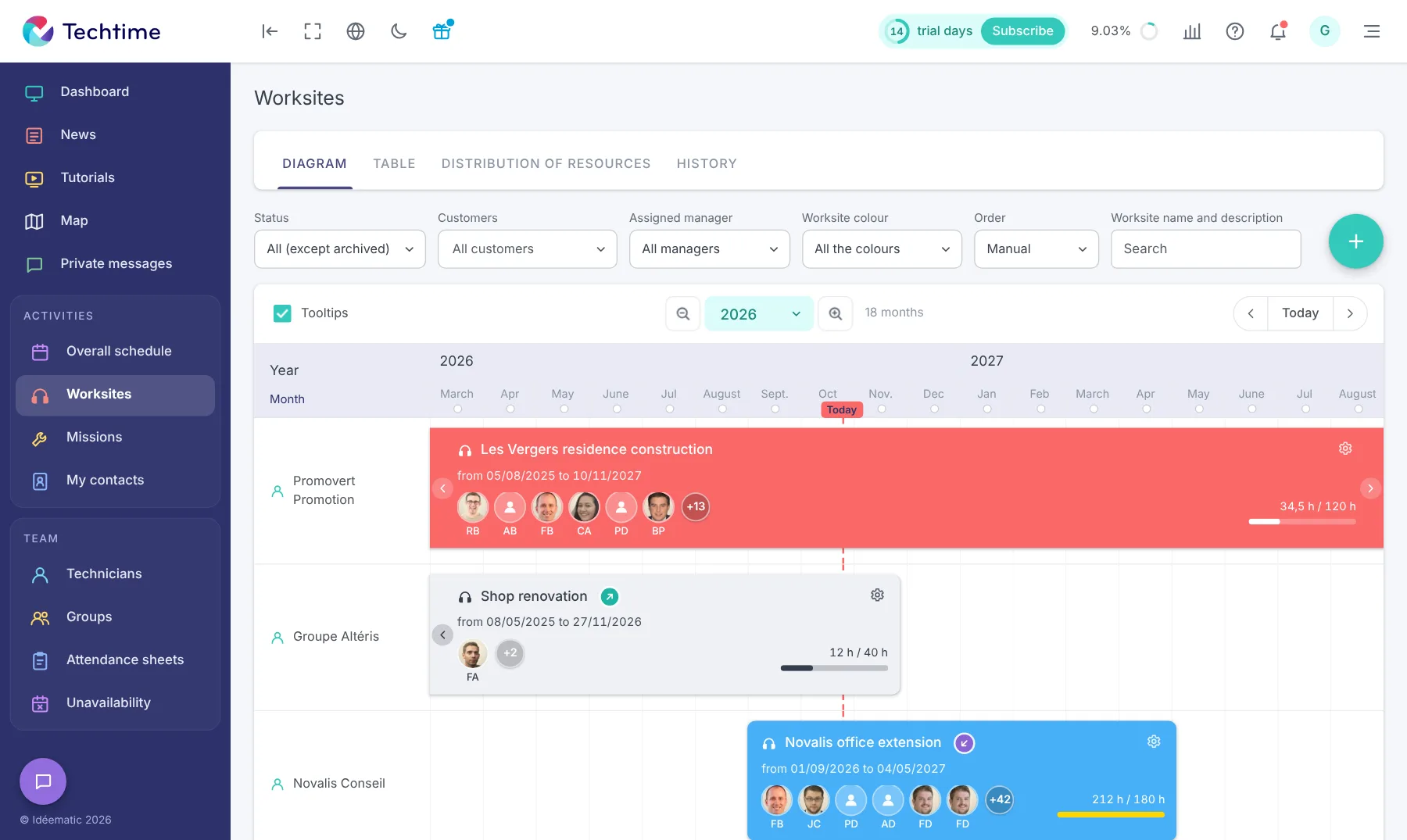
3Calculate worksite prices and margins with construction tracking software
A sufficient gross margin enables your building company to make a profit. All these calculations must be precise to avoid unpredictable results. With a price base applicable to all worksite services, an Excel spreadsheet cannot help you.
That is why we recommend construction tracking software such as Techtime. You get three benefits with this system:
- You optimise your teams’ scheduling before sharing it transparently with your customer. You can then stick to the prices and margins calculated at the outset.
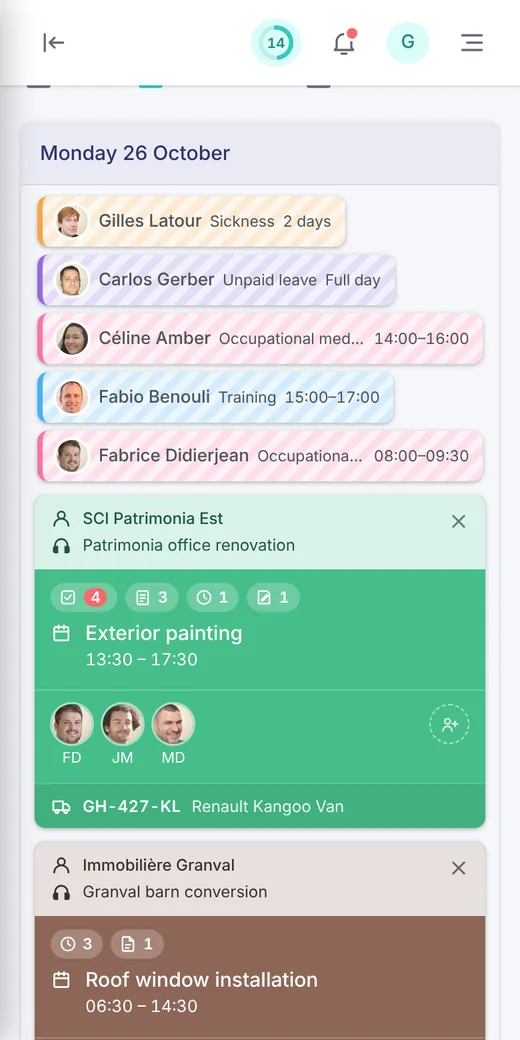
- You have a catalogue of the equipment and vehicles needed for the worksite. Choosing the right equipment helps avoid unnecessary expenses.
- You manage your tradespeople’s activity and availability to match the margins expected by the customer.
Worksite prices and margins are calculated from the pre-tax selling price of the work, which is derived from its cost price and direct costs. Struggling with these calculations, or need support to get back into profit? Don’t hesitate to contact our experts in supporting business owners (success guaranteed).
Frequently asked questions
How do you calculate the labour cost of a worksite?
Multiply the number of hours by the number of tradespeople and the hourly cost, then add employer’s charges, overheads and travel costs. Labour accounts for around 30% of the cost of a worksite.
How do you go from direct costs to the selling price?
The pre-tax cost price equals direct costs multiplied by the overheads coefficient. The pre-tax selling price equals the cost price multiplied by the profit and contingency coefficient. Then simply add VAT to get the price including VAT.
What margin should you apply on a worksite?
Most professionals aim for a profit and contingency coefficient of between 30 and 40%, which takes into account the desired margin and contingencies in costs or management.