


Several bodies in France have noted a decline in the quality of new homes in recent years. This applies as much to apartment buildings in the Île-de-France region (IHEAL housing institute) as to houses. The French consumer protection authority (DGCCRF) found 58% of building companies not complying with standards. Yet a building’s quality is essential for the safety and comfort of its residents. To avoid losing time on your project, discover how to optimise quality control on your worksite.
In brief
Quality control on a worksite checks, under the client’s responsibility, that the construction complies with standards and the specifications. It helps detect the most common defects (roof, ceilings and floors, walls) before they go unnoticed. To optimise it: make checklists accessible to everyone, follow up inspection plans and resolve defects together. A worksite tracking app centralises photos and notes in real time.
1What is quality control on a construction site for?
Quality control of a construction is part of worksite inspection. It is carried out under the responsibility of the client or the quality control manager (also known as the QC Manager).
Various inspections are organised as planned or unannounced visits. The client may appoint a technical inspector to carry out contractual checks. This assessment is mandatory to certify the safety and compliance of the project with current standards and with the specifications.
Each inspection focuses on a speciality or a worksite resource such as concrete, earthworks, roads or the building’s foundations. Several project stakeholders are entitled to request this procedure, whether construction companies or the client (source). Technical documents (memos, reports, purchase orders, etc.) and architect’s drawings must be made available to the inspector. The client accompanies them for half a day, giving them easy access to the premises inspected.
This inspection is essential for detecting any construction defects that could make the building unfit for use or dangerous. The insurance company AiA, in partnership with a clients’ association and a construction research institute, published a survey in 2018. The three most common defects are:
- the roof (damp and mould problems);
- ceilings and floors (creaking parquet, plaster falling from the ceiling);
- walls (poorly finished joints or defective bricks can cause cracks).
Damp and mould
Creaking parquet, falling plaster
Poorly finished joints, defective bricks, cracks
Yet the more time passes, the more these defects slip under the expert’s radar. Unless intentional fraud by the contractor can be proved, the limitation period is 10 years. Beyond that, the occupants bear the cost of repairs.
After the visit, the inspector draws up the quality control plan. This document brings together several mandatory items of information:
- the organisation chart summarising each team member’s tasks and responsibilities;
- the documentation gathering operators’ programmes and certifications;
- the identity of the quality control manager and their responsibilities;
- the letter authorising work to be stopped;
- the identification of the works and the companies carrying them out;
- the inspection phases for the works or materials used;
- data on the tests carried out during quality control.
2How can you optimise quality control on your worksite?
Quality control of your building is maintained throughout your project. The aim is to reduce the risk of errors that can cost you time and money. Of all the ways to improve processes, we have selected three main ones.
Making checklists available for every inspection
Checklists (or quality control lists) are checklists dedicated to inspecting every element of the construction. These elements must meet standards that guarantee the safety and quality of life of future residents. Rather than simple lists to tick, you can add further information on the description of items to make the inspector’s job easier. Make these lists accessible to all project stakeholders to improve worksite quality (source).
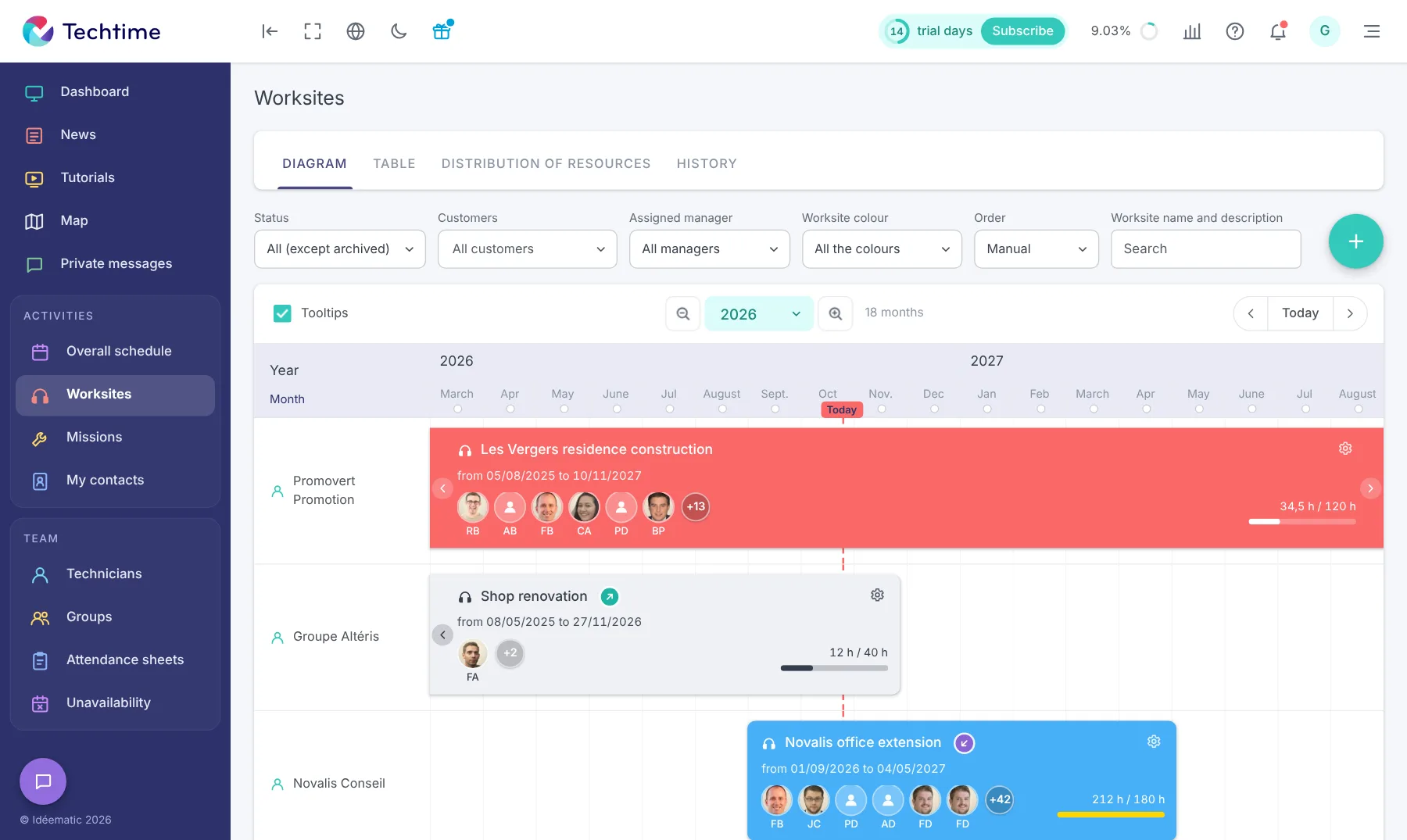
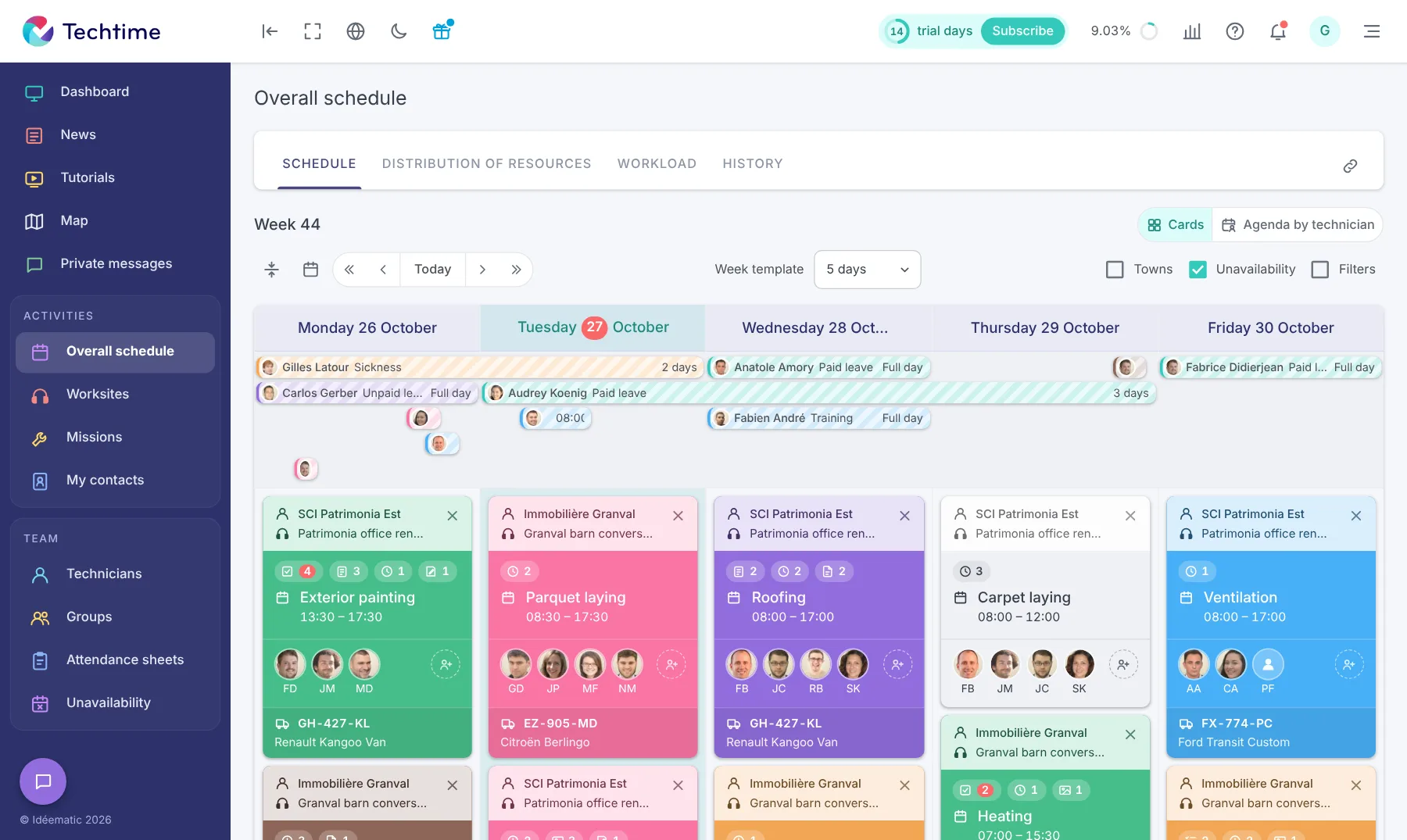
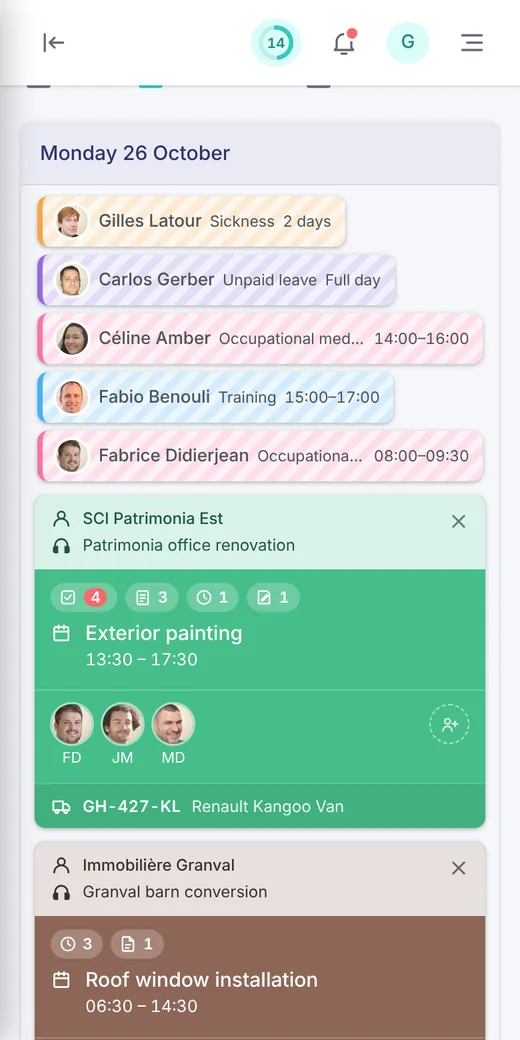
These lists are available through web or mobile apps, in the form of project management software. Our Techtime software lets you attach a personalised checklist to every activity you schedule. Items are ticked off one by one as you carry out your inspection.
Ensuring ongoing follow-up of inspection plans for project stakeholders
Unlike checklists, which validate the quality of the building’s components, the inspection plan defines how inspections are carried out. It answers the key question: who should inspect what, and when ? Through communication and collaboration between project stakeholders, you ensure effective follow-up of your inspection plans. Each stakeholder knows exactly what their responsibilities are in the project and how to meet them.
- Checklist for every element of the construction
- Descriptions to guide the inspector
- Accessible to all project stakeholders
- How inspections are carried out
- Each stakeholder’s responsibilities
- Ongoing follow-up through collaboration
Working together to resolve construction defects
If inspectors note deficiencies in your building, gather the necessary evidence (photos, notes) to inform the project stakeholders. You can resolve these construction defects as quickly as possible by adopting one of the methods associated with ISO 9001 (International Organization for Standardization). These management methods focus on the continuous improvement of worksite processes:
- Continuous improvement;
- the Kaizen system;
- Six Sigma;
- Lean Management.
3Why invest in a web or mobile app for quality control?
As with BIM, a worksite tracking app centralises data from quality inspections in the form of photos or notes. Because they are accessible and updated in real time, project stakeholders can more easily correct the defects identified during inspection.
By grouping data in dashboards, the client or construction companies can make better decisions. They can access the history of inspections carried out for the quality assurance plan, thanks to integrated worksite drawings. Some corrective actions can be noted in the as-built file (DOE) to certify the building’s quality (source).
On a large project such as the T2B section of the Grand Paris Express, a quality inspection tracking app brings considerable time savings. Project stakeholders complete their inspection report in under 5 minutes.
Optimising quality control on your worksite means digitising your data on a single dashboard. With the Techtime app, save time and money without compromising the reliability of your construction.
Frequently asked questions
Who is responsible for quality control on a worksite?
Quality control is carried out under the responsibility of the client or the quality control manager (QC Manager). The client can also appoint a technical inspector for contractual checks.
What does a quality control plan contain?
The organisation chart of tasks and responsibilities, operator documentation, the identity of the quality control manager, the letter authorising work to be stopped, identification of the works and companies, inspection phases and data from the tests carried out.
Which methods can be used to correct construction defects?
The continuous improvement methods associated with ISO 9001: Continuous improvement, the Kaizen system, Six Sigma and Lean Management.