


A water leak, a power cut, a jammed door, a cold room that has stopped: emergencies come without warning, and the customer expects a fast response. For a plumbing, electrical, locksmith or maintenance business, handling call-outs well is both a source of revenue and loyalty and a constant risk to the schedule. Here is how to organise the unexpected without disrupting the rest of the week.
In brief
Managing emergencies starts with qualifying them from the first call (danger, severity, time frame), then having capacity set aside for them: free slots, a floating technician or on-call duty. The office then chooses the technician according to skills, location and workload, and sends them a complete job on their phone. At a private home in France, a detailed quote is still mandatory before the work. After the visit, the signed report, the follow-up and the address history make it possible to invoice quickly and avoid repeat emergencies.
1Qualify the emergency from the first call
Not all “urgent” requests are equally urgent. Treating them all as top priority means having no priorities at all. The first step happens on the phone: asking the right questions to classify the request.
- Is there a danger to people or a risk of rapid deterioration (active leak, smell of gas, exposed wires)?
- Has the customer’s activity stopped (shop closed, production halted, home without heating)?
- Which installation is involved, what make, how old? Can the customer send a photo?
- How do you get to the site (code, caretaker, opening hours, parking)?
In the event of immediate danger (smell of gas, serious electrical risk), the first thing to remind the customer is to make the area safe and, if necessary, to call the emergency services or their energy supplier’s emergency number.
- Safety emergencyImmediate response
Danger to people or damage that is getting worse
- Functional emergencySame day
Customer’s activity or comfort badly affected
- Schedulable requestNormal schedule
Limited inconvenience, job to be scheduled
2Set aside capacity for the unexpected
If every technician has a full day, every emergency forces you to move a customer who was already scheduled, who then becomes unhappy in turn. Businesses that handle call-outs well organise their capacity in advance:
- buffer slots left free every day, sized according to the usual volume of emergencies for the season;
- a floating technician, designated in rotation, who takes the emergencies and, on quiet days, gets ahead with small jobs;
- on-call duty for evenings and weekends, organised in compliance with employment law. We cover the rules in our article on managing on-call periods.
To size these margins, you need to know how many emergencies you actually handle per week and how long they take. That is the whole point of keeping a record of every job and of the hours spent.
3Choose the right technician in a few minutes
Once the emergency is confirmed, the office has to answer three questions: who has the necessary skills and certification? Who is closest? Who can take on the job without jeopardising the rest of their day?
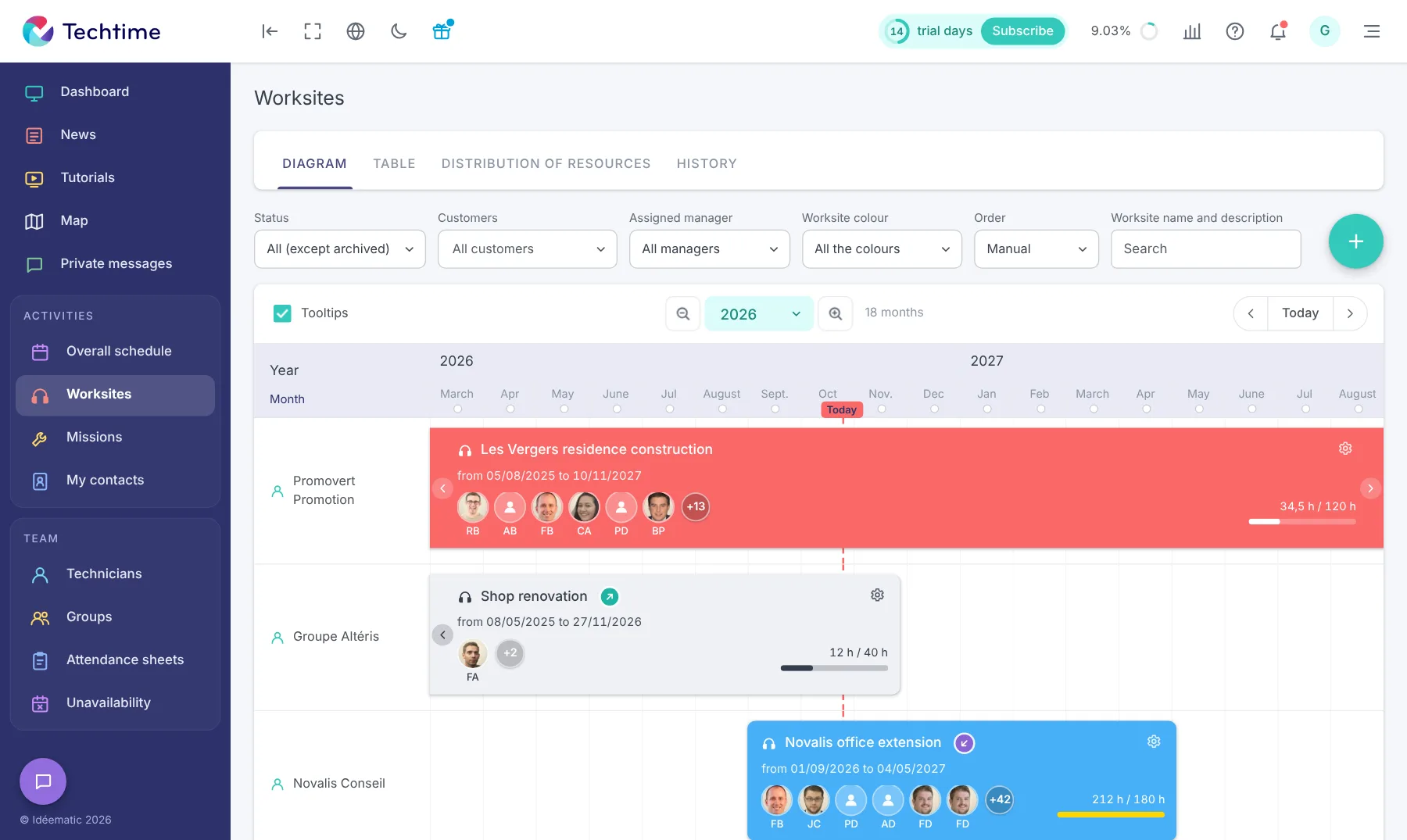
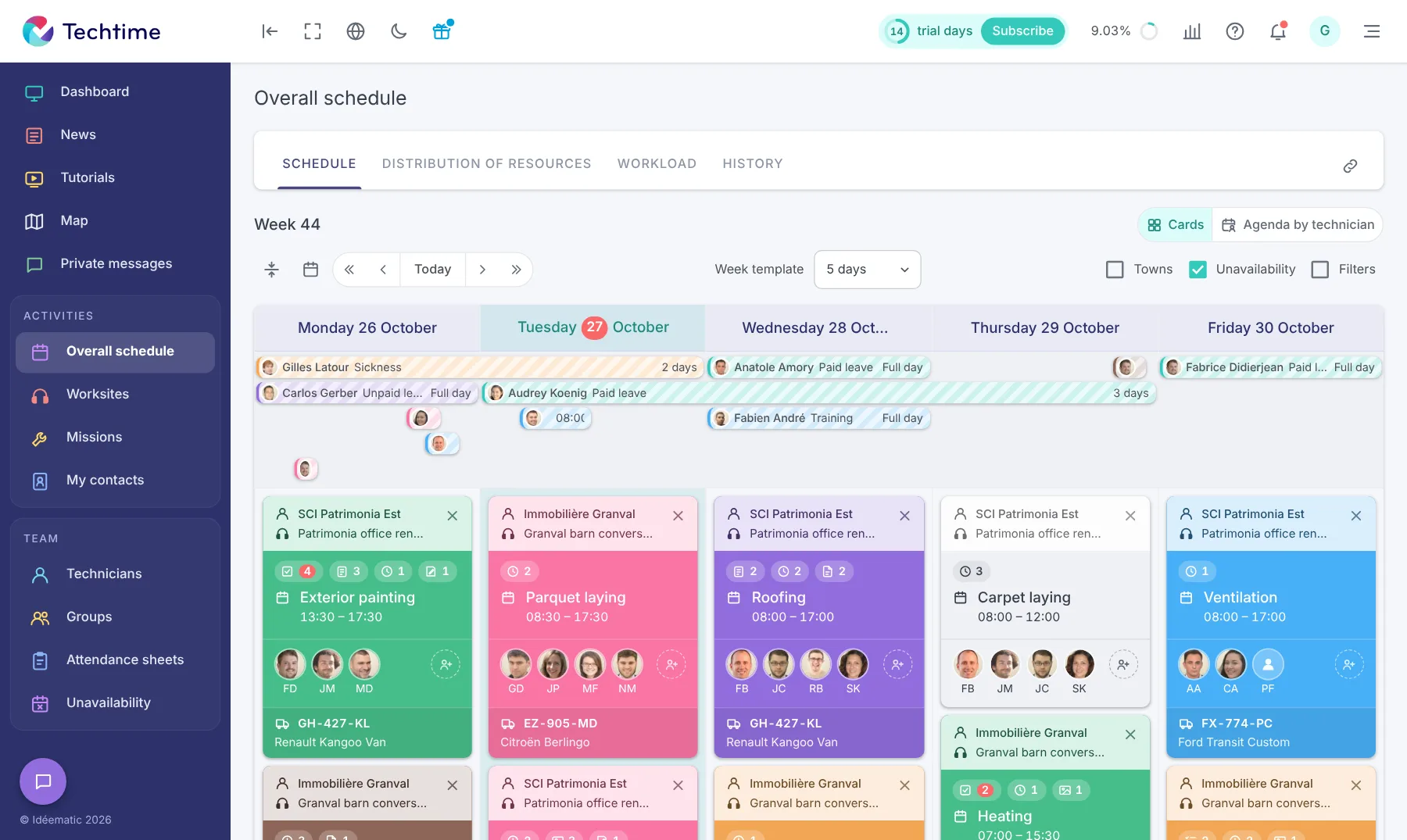
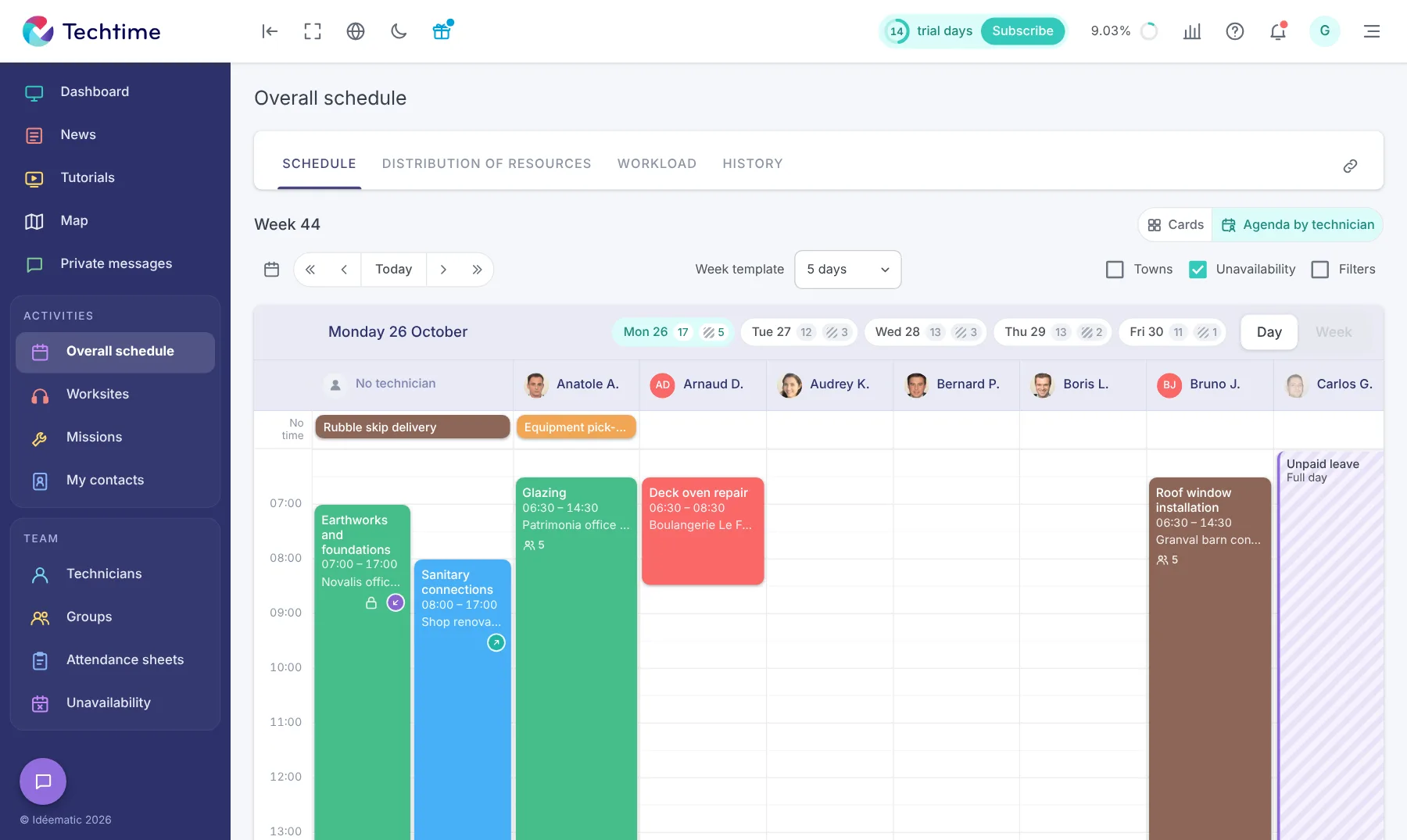
With a shared job schedule, these answers are visible in one place. In Techtime, the map shows the day’s jobs, the technicians and the customer addresses; the calendar per technician and the workload view show who has room; absences appear while you schedule. All you then have to do is place the job in the schedule and assign the technician.
4Send a complete job, without a string of phone calls
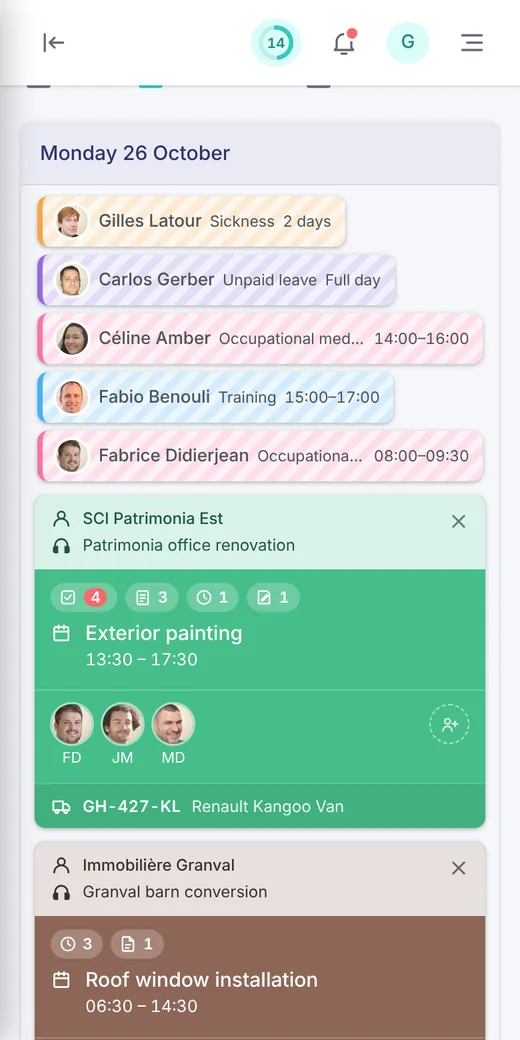
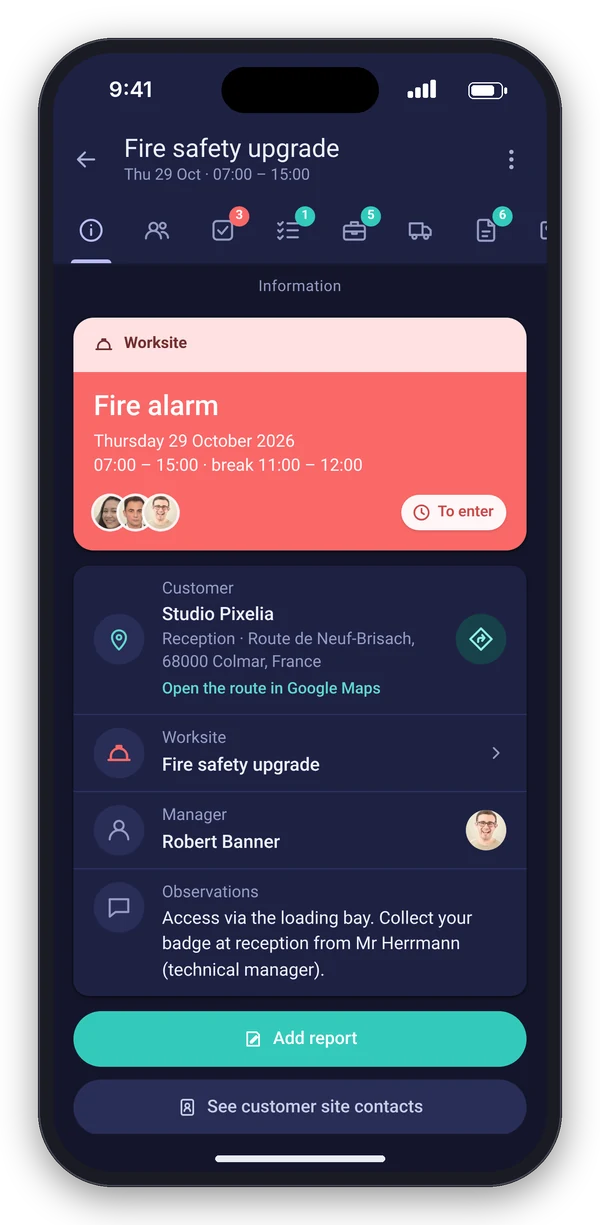
In an emergency, every clarification call wastes time. The job must reach the technician with everything they need: address, on-site contact, description of the problem, photos sent by the customer, access instructions, history of previous visits to that address.
With the Techtime mobile app, the job appears in the technician’s schedule and they receive an update notification. They find the customer’s contact details, the instructions and the documents, and can talk to the office through the built-in messaging if anything still needs clarifying.
5At a private home, stay within the rules
An emergency does not exempt you from the obligation to inform the consumer. These rules also protect the business: an informed customer is far less likely to dispute the invoice.
Home call-outs in France: what the regulations say
Since 1 April 2017, the French order of 24 January 2017 (in French) has required professionals providing breakdown, repair and maintenance services for buildings and household equipment to inform consumers of their prices and to give them a detailed quote before the work is carried out, whatever the amount. For maintenance or repair work carried out urgently at their home and expressly requested by them, consumers do not have the 14-day right of withdrawal, within the limit of the work strictly necessary to deal with the emergency. Finally, a note must be provided before payment as soon as the service reaches €25 including VAT. Details are given in the DGCCRF fact sheet on home call-outs (in French). Rules checked in November 2026.
6After the call-out: invoice quickly and prevent recurrence
A well-handled emergency ends with three things: a report signed by the customer, clearly identified follow-up and an invoice sent quickly.
A call-out repair is often temporary: a replacement part to order, an ageing installation to replace, a maintenance contract to offer. This follow-up must be noted on site, otherwise it gets lost. In Techtime, the service report filled in on mobile includes a “To plan” section (new job, new activity or new quote) and the customer’s signature. The office has everything it needs as soon as the visit ends to invoice and schedule what comes next.
Finally, step back and look at your emergencies. If the same address calls three times in two months, the job history shows it, and it is time to offer a lasting solution rather than a fourth call-out.
Key takeaways: 6 habits for managing emergencies
- Qualify every request from the first call: danger, severity, time frame.
- Set aside capacity for the unexpected every day.
- Choose the technician according to skills, location and workload.
- Send a complete job to their phone.
- At a private home, provide a detailed quote before the work.
- Have the report signed, note the follow-up and invoice without delay.
FAQ
How do you fit an emergency into a schedule that is already full?
Ideally, you don’t have to: buffer slots or a floating technician absorb emergencies. Otherwise, choose the nearest technician whose day includes a job that can be moved, let the customer concerned know and update the schedule so that everyone sees the change.
Is a quote mandatory for an emergency call-out at a private home?
In France, yes. Since the order of 24 January 2017, professionals providing breakdown, repair and maintenance services for buildings must give a detailed quote before carrying out the work, whatever the amount.
Can the customer withdraw after an emergency call-out?
Under French law, for maintenance or repair work carried out urgently at their home and expressly requested by them, consumers do not have the 14-day right of withdrawal, within the limit of the work strictly necessary to deal with the emergency.
Which software should you use to manage call-outs and jobs?
Job management software that brings together the schedule, a map, a mobile app for technicians and the report signed on site. Techtime meets these needs for businesses that combine call-outs, scheduled jobs and worksites.
Article published in November 2026.