


Please note: this article refers to French regulations and standards.
France’s construction cost index (ICC) has risen considerably since 2020. It stood at 2,227 points in the first quarter of 2024 (INSEE). This increase is linked to inflation in several factors, such as energy costs, material prices and wage increases. On top of this come weather events with ever greater consequences, such as heatwaves and floods: €6.5 billion in claims in 2023 according to France Assureurs (source). How can you anticipate these increasingly frequent risks to manage the weather better in construction?
In brief
Rain, frost, black ice, snow, high winds and, since June 2024, heatwaves: bad weather damages materials and endangers employees. In France, only the employer can decide to stop the worksite, after consulting the works council (CSE); employees then receive 75% of their gross salary under the bad-weather leave scheme. To limit the impact, there are three approaches: anticipate the weather in the schedule by allowing at least a week’s margin, adapt working hours in hot weather, and train and equip teams.
1What are the effects of bad weather on a worksite?
A construction site runs best when the weather is dry and stable. Bad weather can not only affect the quality of building materials, but also endanger workers’ safety. These weather setbacks lead to extra costs because of the various delivery delays.
Which weather conditions are recognised as bad weather on a worksite?
Under French law, bad weather covers “weather conditions and floods when they make carrying out the work dangerous or impossible […]” (Article L5424-8, French Labour Code). This includes frost, black ice, rain, snow and strong gusts of wind. Each construction trade is more sensitive to one weather factor than another. The crane operator or the timber framer pays more attention to wind speed, while a painter keeps an eye on the outside temperature.
French decree no. 2024-630 of 28 June 2024 recognises heatwaves as bad weather requiring work on site to stop. This provision gives your employees the right to compensation, provided the heatwave episode is recognised by Météo-France or by prefectoral order (source).
Concrete drying disrupted, wood and metal damaged
Frostbite, hypothermia, burns from contact with frozen metal
Closely monitored by the crane operator or timber framer
Recognised as bad weather since June 2024
What is their impact on workers and buildings?
Extreme weather conditions disrupt your worksite for several reasons. Moisture disrupts concrete drying, causes wood to rot and metal to rust. High winds can damage partially built structures, weakening load-bearing elements or exterior cladding. By reducing the thermal conductivity of certain materials (glass fibre, brick, concrete or wood), water reduces the building’s thermal insulation.
Your construction employees suffer various symptoms if they are exposed to extreme temperatures for too long. Cold causes frostbite, burns from contact with frozen metal surfaces or hypothermia. The risk of falling increases if the ground is frozen. Intense heat increases fatigue, cramps and dehydration, and can even lead to loss of consciousness.
2What are the rules for bad weather in construction?
Under Article L5424-9 of the French Labour Code, only the employer or their site manager can decide to stop work. This decision is subject to the approval of the staff representatives who make up the works council (CSE). However, if the client is a public administration or local authority, its representative on the worksite can object to the work stoppage.
If the stoppage is approved, employees are entitled to bad-weather leave in construction. The allowance amounts to 75% of gross salary. As an employer, you must send a work stoppage declaration to your construction bad-weather leave fund.
If the worksite stoppage is prolonged because of an exceptional weather event, obtain the weather report from the station closest to your site. This document can justify your delay to your client so that you don’t have to pay penalties. The courts recognise its evidential value in the event of a dispute with your client.
3How can you manage the weather better in construction?
Don’t let bad weather catch you off guard and keep slowing your worksite down. We suggest three approaches to better manage the effects of the weather on your worksite.
- 1Anticipatea week’s margin in the schedule
- 2Adaptworking hours in hot weather
- 3Train and equipteams for bad weather
Anticipate weather conditions at the planning stage
You can’t decide what the weather will be like on a given day. However, you can anticipate bad weather by researching the weather conditions at your worksite’s location. Going back several years, you can identify recurring trends.
It is best to add at least one extra week of work when preparing your schedule. This extra time lets you adjust your teams’ work if endless bad weather slows them down too much (especially in winter). You should also plan reasonable delivery times.
If bad weather strikes suddenly, don’t send your workers home straight away. Plan other tasks that aren’t affected by the weather, such as work inside the building: painting, plumbing, joinery, electrical installation, etc.
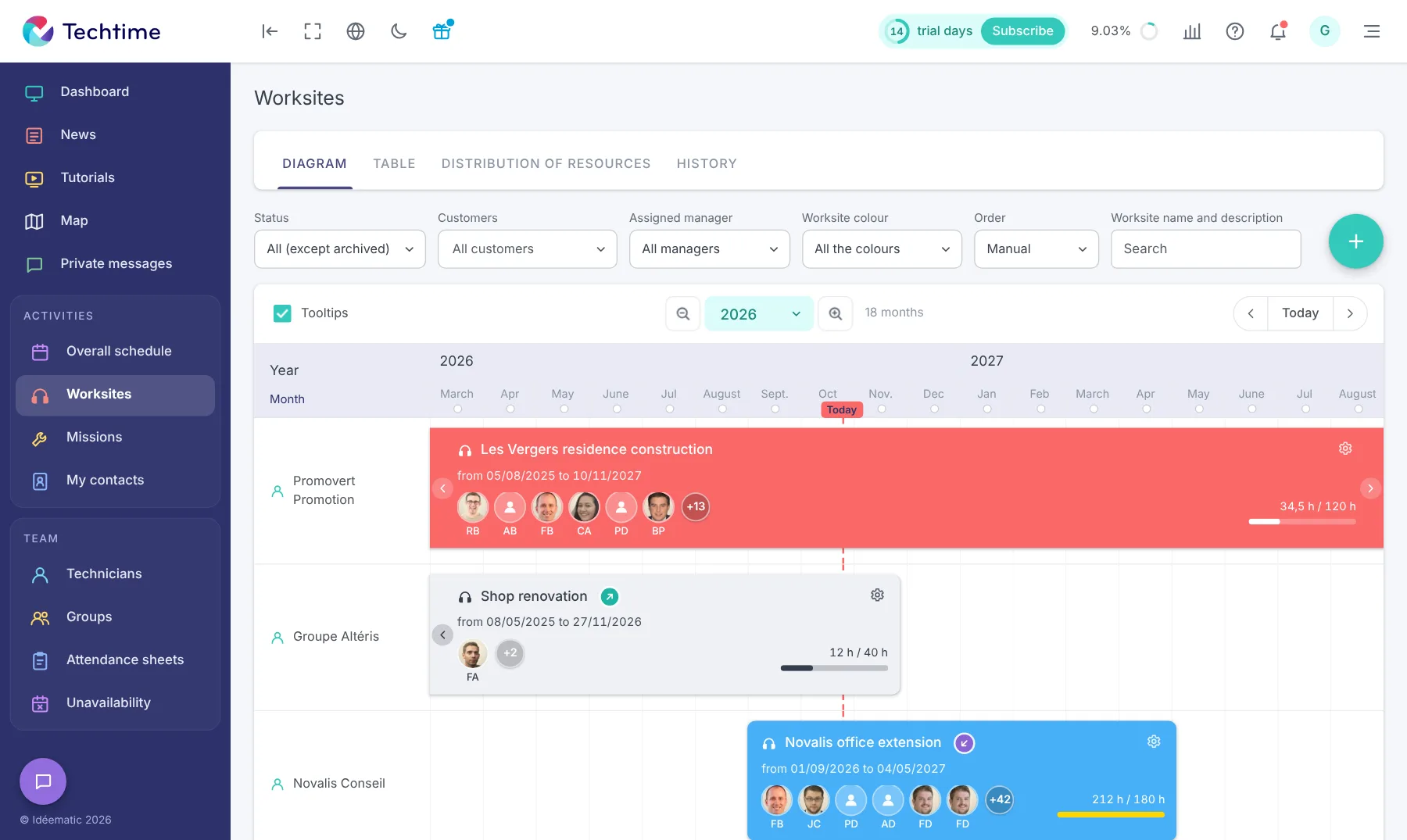
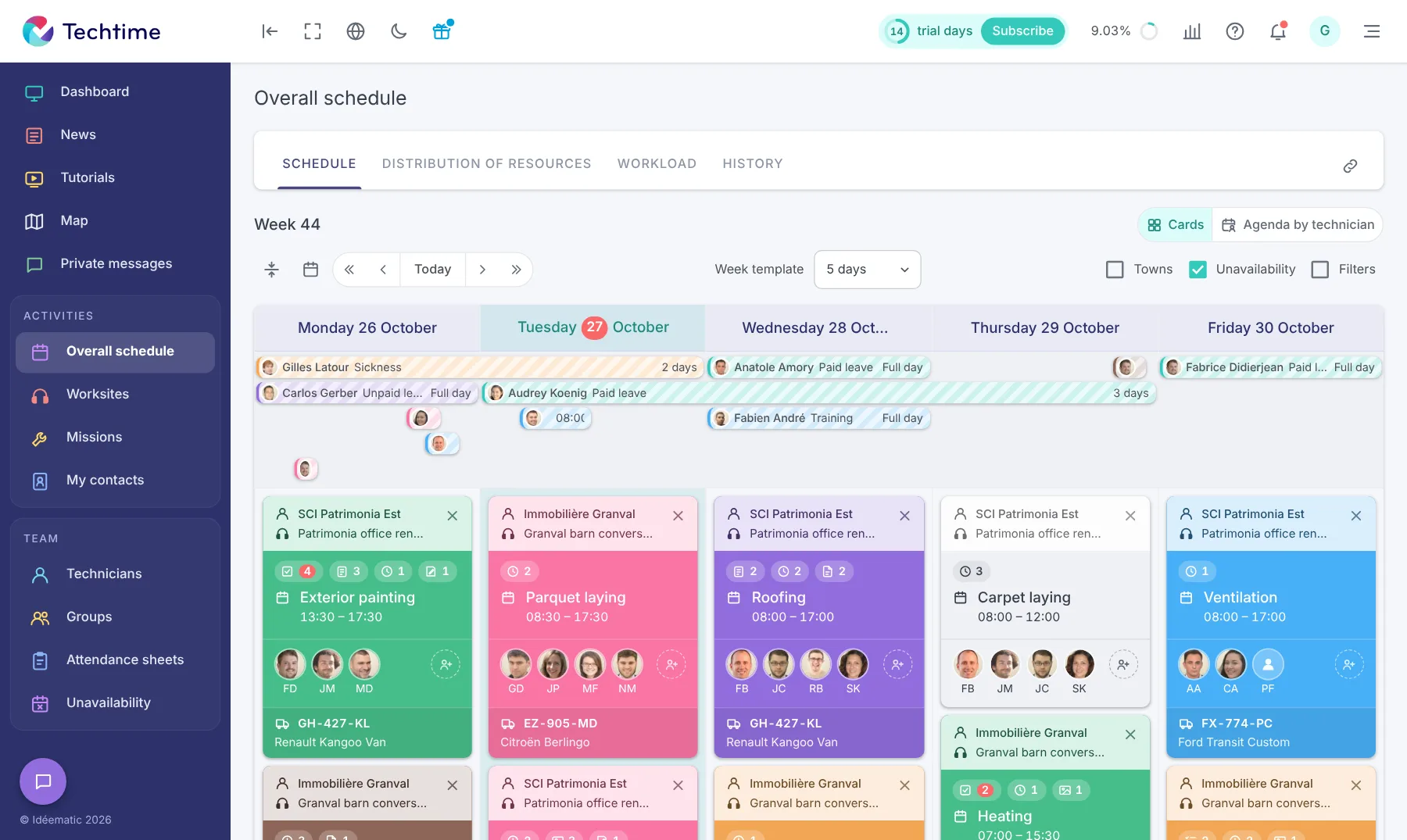
👉 Record all this data in your Techtime worksite schedule
Adapt your employees’ working hours
If your worksites run during the summer, you face an ever-growing risk of a heatwave. Météo-France estimates that France has experienced an average of 9.4 days of heatwave a year since 2010 (source). As an employer, you are responsible for the health and safety of everyone on your worksite.
That is why it is better to start work earlier in the morning so as not to suffer from the effects of the heatwave. Weather apps can help you adjust your teams’ timetable over several days.
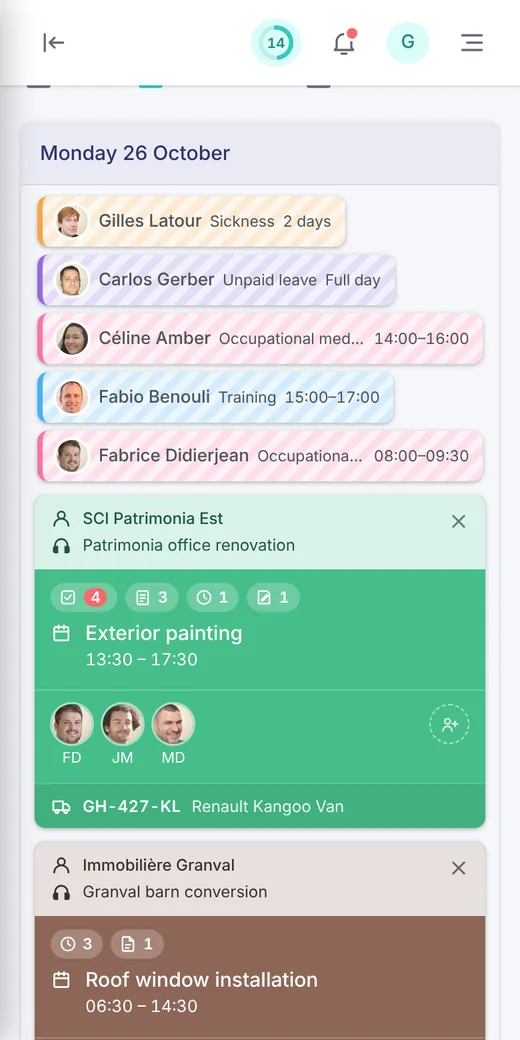
👉 Keep your client informed of these schedule changes in real time
Train your teams in good practice for bad weather
A third of construction workers work more than 20 hours a week outdoors (source). The arduousness of the work and the risk of accidents are all the greater when the weather is poor. So offer training to your construction tradespeople to make them aware of safety protocols in bad weather. They need to know how to act and protect their equipment depending on the circumstances.
As an employer, it is your responsibility to provide the following equipment, compliant with standards:
- tarpaulins and covers for sensitive materials;
- waterproof clothing;
- drainage systems;
- properly anchored scaffolding and barriers;
- helmets with chin straps;
- storage containers for your machines;
- drinking water and temporary facilities for your employees.
To avoid being swamped by delivery delays, anticipate bad weather in your worksite schedule using recurring data. Adapt your teams’ work with their safety first and foremost in mind. Keep up to date with the situation in real time with your technicians and your client thanks to our application.
Frequently asked questions
Which weather conditions are recognised as bad weather?
Weather conditions and floods that make work dangerous or impossible: frost, black ice, rain, snow or strong gusts of wind. Since the French decree of 28 June 2024, heatwaves are also recognised as bad weather.
Who decides to stop a worksite in bad weather?
In France, only the employer or their site manager, after approval from the staff representatives on the works council (CSE). Employees then receive bad-weather leave, paid at 75% of their gross salary.
How can you anticipate the weather on a worksite?
By studying the usual weather conditions at the worksite’s location, adding at least a week’s margin to the schedule and planning sheltered tasks, such as indoor work, in case of bad weather.