


As a construction professional, improving productivity is obviously one of your main business goals. To help you cut operating costs while keeping operations running smoothly and to a high standard, you can rely on job management software. Simpler scheduling, easier communication, paperless processes, analysis of the data collected: here is everything you need to know to boost your productivity through good job management.
In brief
Job management software boosts productivity in four ways: it makes processes paperless (less paper, secure data), simplifies scheduling by taking job duration, travel and availability into account, makes real-time communication between teams, partners and customers easier, and provides data for analysing activity, such as the gap between planned and actual durations.
How can job management software boost your productivity?
Better management of your jobs is a sure way to increase your productivity. But how? While some costs may seem unavoidable for your business, paperless management can help you optimise your jobs and those of your staff day to day.
A paperless process
With job management software, all your processes become fully paperless. It is a way to free yourself from several problems linked to using paper, such as the various costs, storage, or data security and durability.
Job management is crucial to your business. Going digital offers certain guarantees compared with more “old-school” management: better compliance with constraints and obligations, for greater customer satisfaction.
Simpler scheduling
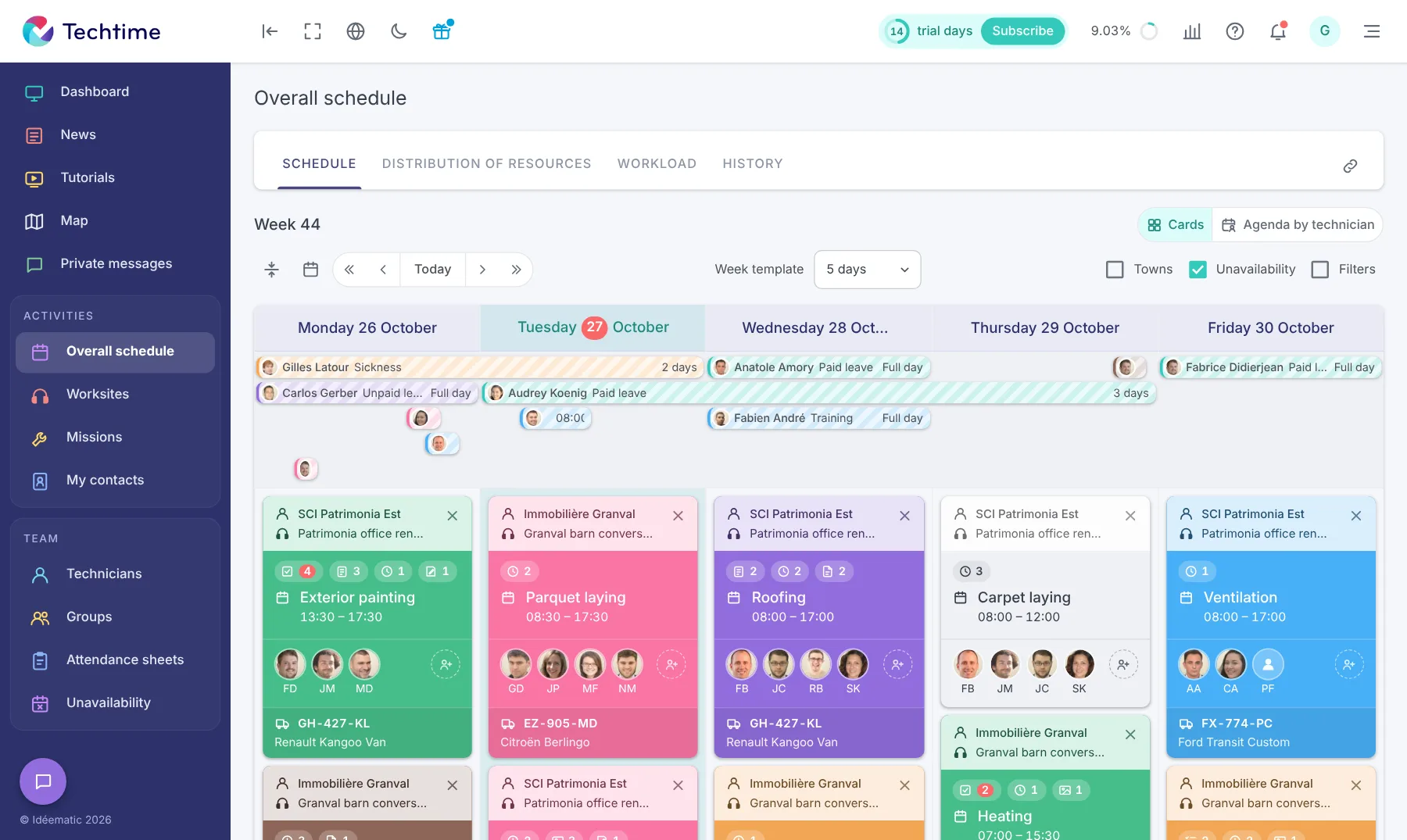
Boosting productivity also means smoother, simpler scheduling. Job management software lets you organise your teams’ schedules quickly and efficiently, taking various factors into account:
- nature and duration of the job;
- travel time;
- staff availability;
- vehicle availability, etc.
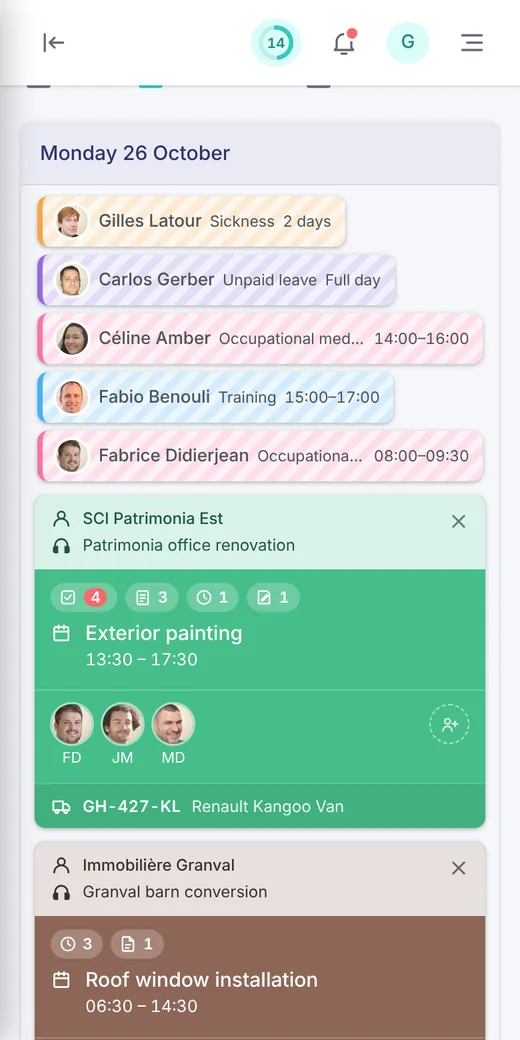
An effective way to put the right professional on the right job. With the Techtime mobile app, every tradesperson has quick access to essential information:
- the tasks or jobs to be carried out;
- the job location and customer information;
- the date and time of the job;
- the team line-up and everyone’s roles;
- all the information, plans and photos needed to work efficiently.
- Printing and storage costs
- Poorly secured data
- Schedules that take ages to build
- Paperless, secure processes
- The right person on the right job
- Information on mobile for every tradesperson
Easier communication
Going digital lets everyone involved, internal and external, share the same information in real time. Each job is carried out in a coordinated way and everyone is informed of any change. An instant messaging system also lets you communicate remotely and live so you can stay as responsive as possible.
This ease of communication also lets the customer be kept informed of the progress of the works at any time. This transparency remains an effective way to anticipate questions or contractual commitments, and to show the quality of your company’s work.
Less paper, lasting data
Duration, travel, availability
Information shared in real time
Planned and actual durations compared
Job management: how to use the data collected?
While job management software is an excellent tool for boosting your productivity, you still need to use and analyse the data collected properly.
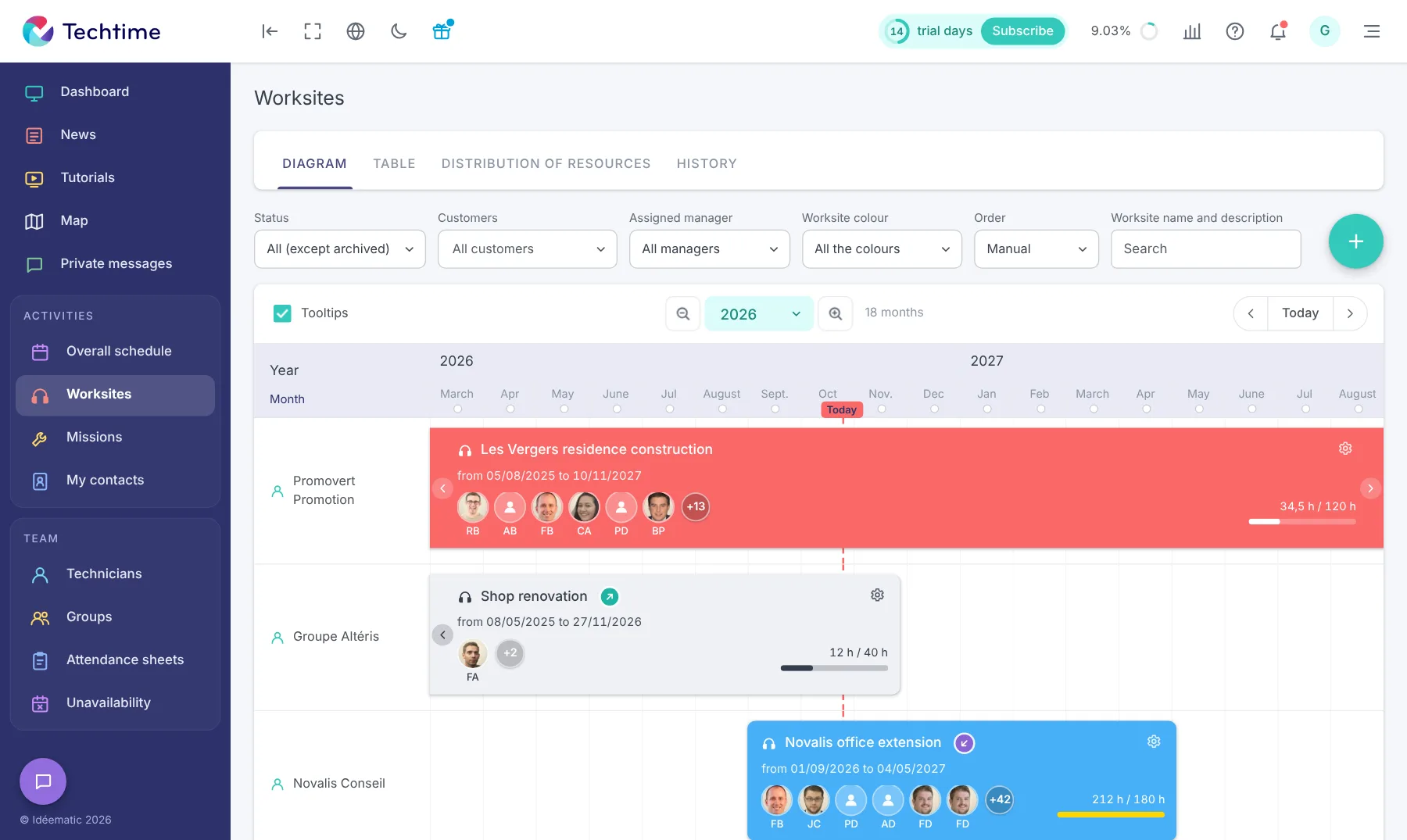
With the Techtime web application, you get an overview of your business, whether you are a timber framer, an electrician, a painter or a plumber. It is then easy to schedule all your worksites and jobs, taking available staff and resources into account. This management tool lets you optimise your business and boost your productivity.
Good job management is also a way to analyse potential problems: a lack of staff or resources on a worksite, a delay on a job, etc. The data collected gives you concrete indicators of the areas for improvement that may be holding back your productivity.
Job management software thus gives you access to precise activity reports. In particular, you can calculate the differences between a job’s planned and actual durations.
Frequently asked questions
How can you make your jobs more productive?
By making your processes paperless, scheduling teams according to the nature and duration of jobs, travel and availability, sharing information in real time and analysing the data collected.
What information should a technician have about their job?
The tasks to be carried out, the location and customer information, the date and time, the team line-up, and useful plans, photos and documents.
What is the data from job management software used for?
To spot problems (lack of staff or resources, delays) and compare planned and actual job durations, thanks to precise activity reports.