


Please note: this article refers to French regulations and standards.
Construction companies and tradespeople, are you still wondering why you should write detailed site meeting reports?
In this article, we explain the benefits of worksite monitoring and the importance of the report for your company. We will look at its legal value and the benefits of worksite monitoring, in particular for checking the progress of the works and their technical compliance.
In brief
The site meeting report records the findings and decisions of each site meeting: participants, actions completed, problems identified, new instructions, schedule and date of the next meeting. It lets all stakeholders share the same information and follow the progress and compliance of the works. Non-contractual under the French standard NF P 03-001, it remains essential evidence in the event of a dispute; an objection clause is only valid if the original contract provides for it.
The site meeting
The main purpose of the site meeting is to fine-tune the worksite’s organisation, whether administrative, technical or material, and to bring any problems to light.
The stages of the site meeting
Each meeting follows a very precise sequence:
- Check the schedule of activities
- Check their technical compliance
- Measure the tasks completed
- Compare against what was planned
- Report problems (technical or material difficulties, defects, etc.)
- Bring the various worksite stakeholders together
- 1ScheduleCheck the activities
- 2ComplianceCheck the technical side
- 3MeasurementTasks completed
- 4ComparisonWith the forecast
- 5ProblemsDifficulties, defects
- 6CoordinationBetween stakeholders
The participants in the site meeting

Here again, the various project stakeholders have very specific roles:
- the project manager (the building company or tradesperson in charge of the worksite),
- the site foreman,
- the contractors involved (subcontractors, engineering firm, architect, etc.),
- the client (who commissioned the work).
The site meeting or visit makes it possible to check on site that the works set out in the contract between the company and the client are being carried out as agreed. Each participant can then sign the project progress documents, which in particular record the status of the works to date.
The site meeting is also an opportunity to move the project forward and take important collective decisions, especially regarding unexpected events or possible changes.
Definition and content of the site meeting report
Definition of the site meeting report
The site meeting report must record the findings and discussions from site visits and meetings. All stakeholders then have access to the same information, which reduces the risk of misunderstandings.
Its role is essential, as it allows precise monitoring of the progress of the works and records the actions to be taken or revisited. In short, it contains everything that was said and everything that needs to be done, by whom, for whom, how and when.
The goal: to deliver a structure that matches what was quoted.
The main information to include in the report
The following points are essential:
- Worksite name
- Client’s name
- Worksite address
- Date and time of the site visit
- Participants
- Agenda
- Actions completed since the last visit
- Problems identified (non-compliance, defects, etc.)
- Any incidents, changes, bad weather or technical difficulties encountered
- Observations on the quality of workmanship
- New instructions and task assignments
- Actions to be carried out
- Schedule
- Appendices: plans, photos, sketches, etc.
- Date of the next meeting
If you are responsible for writing the report for a large worksite, consider dividing your document by work package, area or type of activity, so that it is as clear and structured as possible. The site meeting report must be sent to everyone concerned by the progress of the worksite.
What is the legal value of a site meeting report?
The site meeting report: a non-contractual document
Also known as a site record, the report is not a contractual document in the legal sense under the French Afnor standard NF P. 03-001 (Article 4.2.1.). It is nevertheless an essential document in the event of a dispute, as it can be presented to appointed experts. By recording the progress of the works and all findings of defects and/or other problems in the report, the project manager demonstrates good faith and the information provided to the client. Its purpose is therefore above all informative. The legal obligations of the parties to the project must in all cases be set out in the original contract.
Special case: the objection clause
Site meeting reports often include the statement: “After x days without objection, the site meeting report will become contractual”. But unless this is stated beforehand in the original contract, the report will have no legal value. For the report to be considered a contractual document, the works contract must specify that it has that status.
It is generally recommended to notify the stakeholders of any objection within 8 days of receiving the written report. But these objections can in no case go beyond the contractual obligations established beforehand.
To deal with major changes, a written agreement between the parties must then be concluded.
Note: if a client accepts works carried out outside the contract during a site visit, a judge may disregard a written objection made afterwards in the event of a dispute.
- Informative document (French standard NF P 03-001)
- Useful evidence for experts
- Proof of the project manager’s good faith
- “After x days without objection” clause
- Objections advised within 8 days
- Within the limits of the contract’s obligations
Conclusion
As a building tradesperson or contractor, remember that you are responsible for the proper execution of the works carried out on a construction site. Monitoring must therefore be precise, with regular site meetings that make it possible to detect any problems early.
With the reports of these meetings, you can keep a record of all the worksite’s progress.
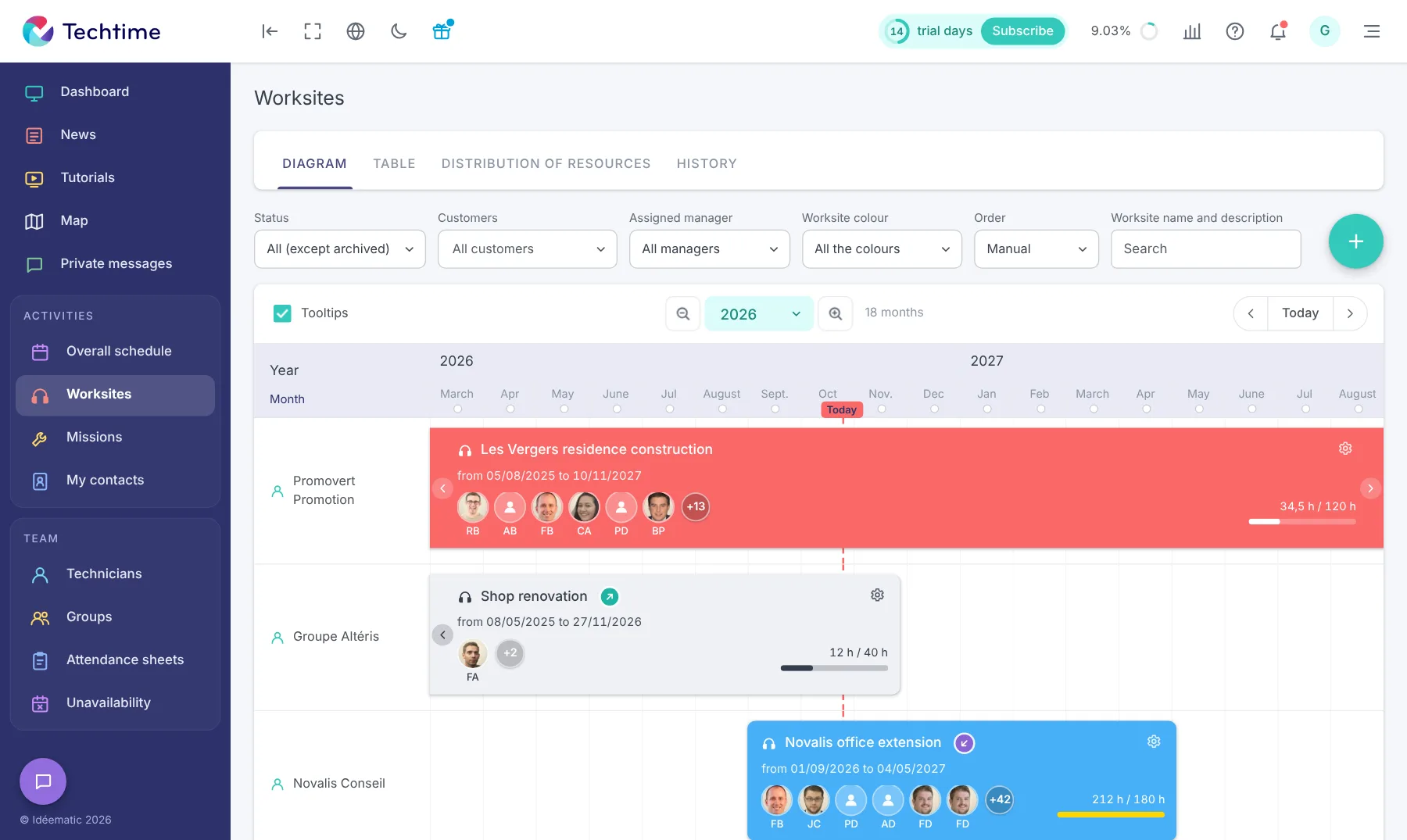
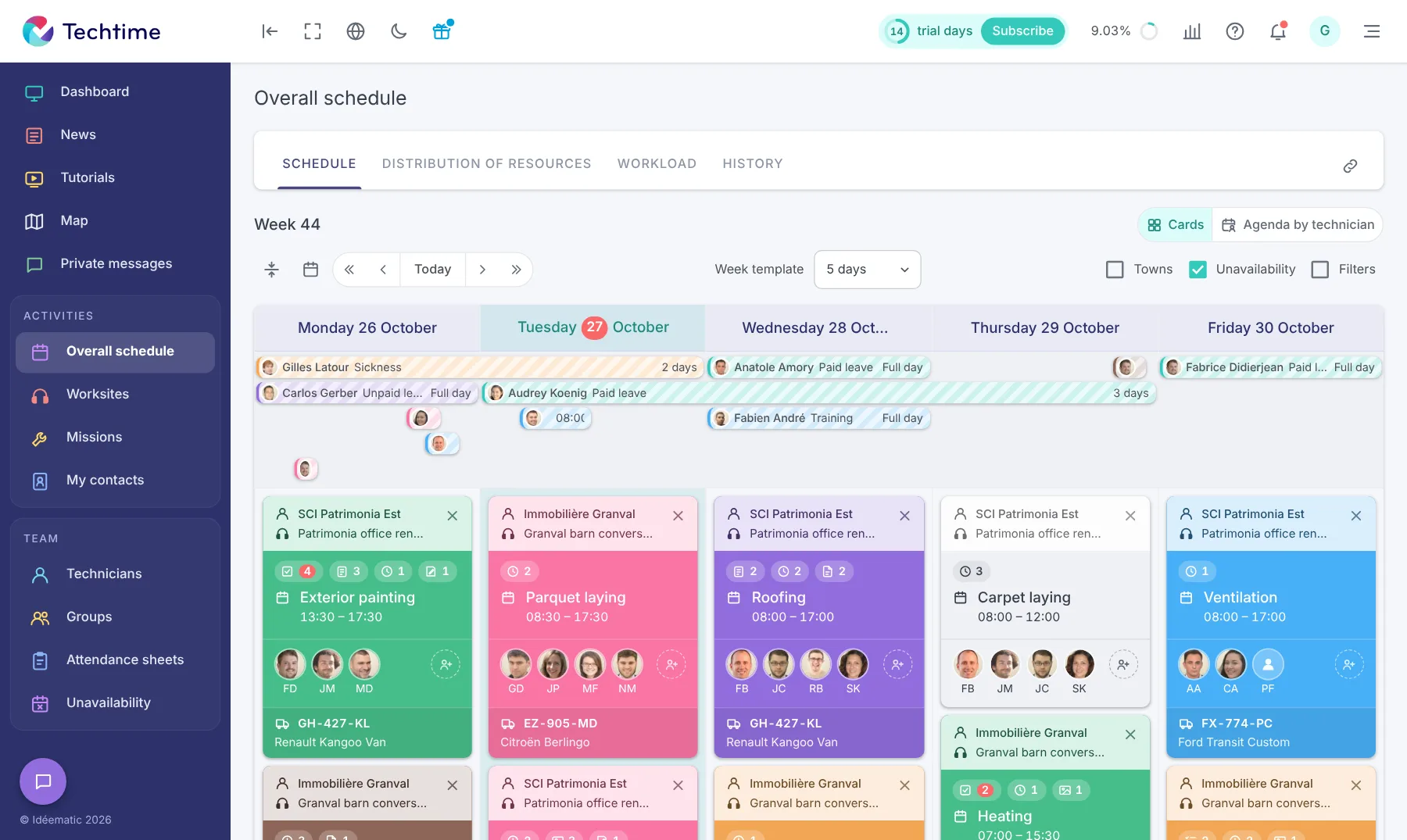
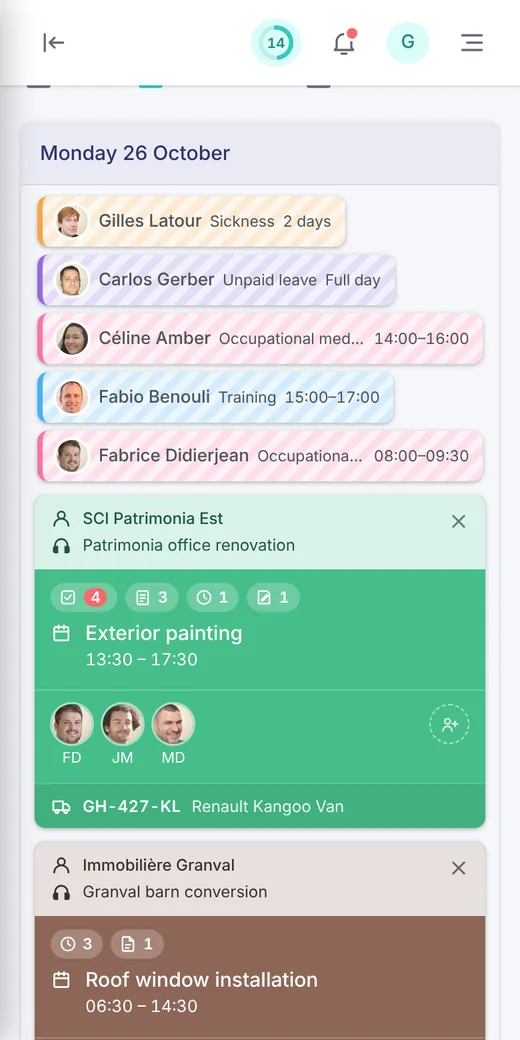
To centralise the schedule, activities, documents, photos and information reported from the field, Techtime offers construction management software designed for the day-to-day organisation of worksites and jobs. Information entered by the office and field teams is thus kept together in a single environment.
Frequently asked questions
What should a site meeting report contain?
The worksite name and address, the client, the date of the visit, the participants, the agenda, the actions completed, the problems identified, the observations, the new instructions, the actions to be carried out, the schedule, the appendices and the date of the next meeting.
Does a site meeting report have legal value?
It is not a contractual document under the French standard NF P 03-001, unless the original contract provides for it. It nevertheless remains essential evidence in the event of a dispute.
Who takes part in a site meeting?
The project manager, the site foreman, the contractors involved (subcontractors, engineering firm, architect) and the client.