


On a worksite, every minute counts. Yet in many building companies, digital tools have piled up to the point of harming productivity. Multiple software packages, duplicated information, constant notifications: the promise of efficiency sometimes turns into wasted time.
To avoid this drift, digital sobriety is emerging as a pragmatic approach: use only the digital tools that genuinely serve the field.
In brief
Digital sobriety means reducing the environmental footprint and organisational overload of digital technology while keeping its performance gains. In construction, it addresses the pile-up of tools (quotes, scheduling, messaging, spreadsheets) that ends up harming productivity. It rests on three principles: centralise the essential functions (scheduling, time tracking, photos, field-office communication), lighten the digital load with lightweight apps, and evaluate every month which tools are actually used.
1Understanding digital sobriety in construction
Digital sobriety means reducing the environmental footprint and organisational overload of digital technology while keeping its performance gains.
It does not advocate rejecting technology: rather, it encourages choosing it with discernment, according to the company’s real needs.
According to ADEME (French environment agency) – Environmental footprint of digital technology in France (2023) and the Shift Project – Lean ICT: Towards digital sobriety (2019), the manufacture and use of digital equipment account for a significant share of global CO₂ emissions.
In construction, an already energy-intensive sector, this footprint adds to that of equipment and transport. Rugged worksite smartphones, cloud servers or tracking apps: each contributes to energy consumption.
So the point is not to “do less”, but to do better: digitise where it brings real operational value.
2When digitalisation becomes counterproductive
Many construction SMEs have accumulated tools without a clear strategy: one piece of software for quotes, another for scheduling, an internal communication app, plus legacy spreadsheets.
The result: site managers juggle several interfaces to confirm the same task. This digital fragmentation wastes time and energy.
Faced with this, digital sobriety becomes a simplification approach: reduce redundancy, encourage interoperability and focus attention on what matters.
Fewer tools also means less storage, network traffic and maintenance.
- One piece of software for quotes, another for scheduling
- An internal communication app
- Legacy spreadsheets and duplicates
- Less redundancy
- Tools that talk to each other
- Attention focused on what matters
3The principles of reasoned digitalisation
Measured digitalisation rests on three fundamental principles.
a. Centralise the essential functions
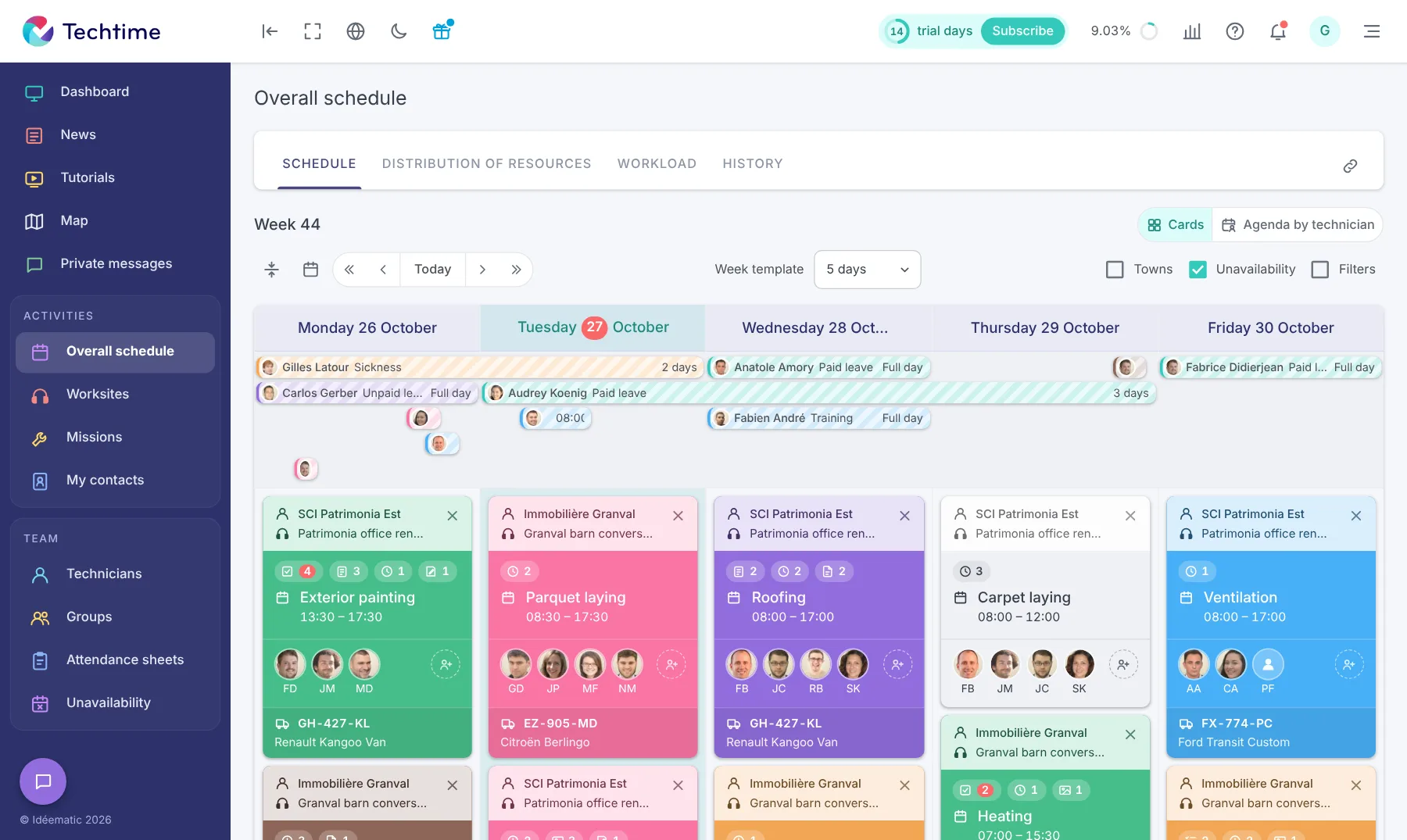
An effective tool brings together the key needs: scheduling, time tracking, progress photos, field-office communication.
There is no need for a complex ERP to handle these tasks. For a business owner, choosing a targeted solution means teams trained faster, fewer data entry errors and better management.
The article on managing worksite and job activities describes the functions essential to clear organisation.
b. Lighten the digital load
Sobriety does not mean austerity. It is about adopting lightweight applications that run on existing devices and require neither heavy updates nor dedicated servers.
On the human side, it also means limiting notifications, grouping data entry time and favouring direct communication. That way, technology stays at the service of the worksite, not the other way round.
c. Evaluate to adjust
A simple monthly evaluation is enough to track your digital maturity. How many tools are actually used? How much time goes on data entry? Do duplicates persist?
These questions help you spot excesses before they become costly. The guide to what is at stake in going paperless in construction offers concrete benchmarks for measuring these effects.
Scheduling, time tracking, progress photos, field-office communication
Lightweight apps, on existing devices
Every month: tools used, data entry time, duplicates
4Techtime: digital sobriety in practice
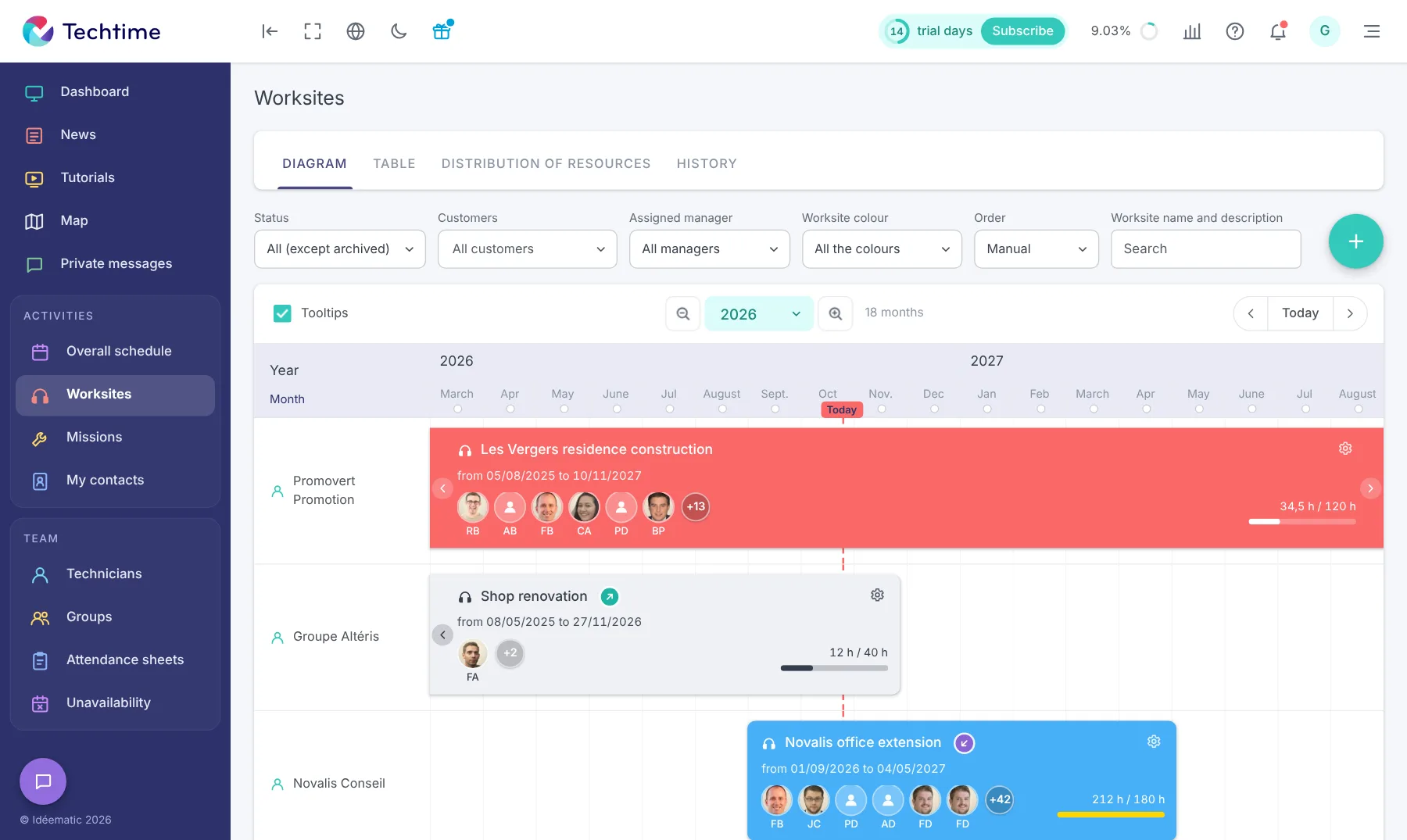
Techtime embodies this responsible approach with a single solution designed for the field.
The web and mobile application lets you digitise operations without introducing unnecessary complexity.
Simple, fast implementation
No heavy installation: accounts are created, access is assigned and the team can start straight away. The tool works on the devices the company already has.
This technical lightness reduces data consumption, server load and maintenance needs.
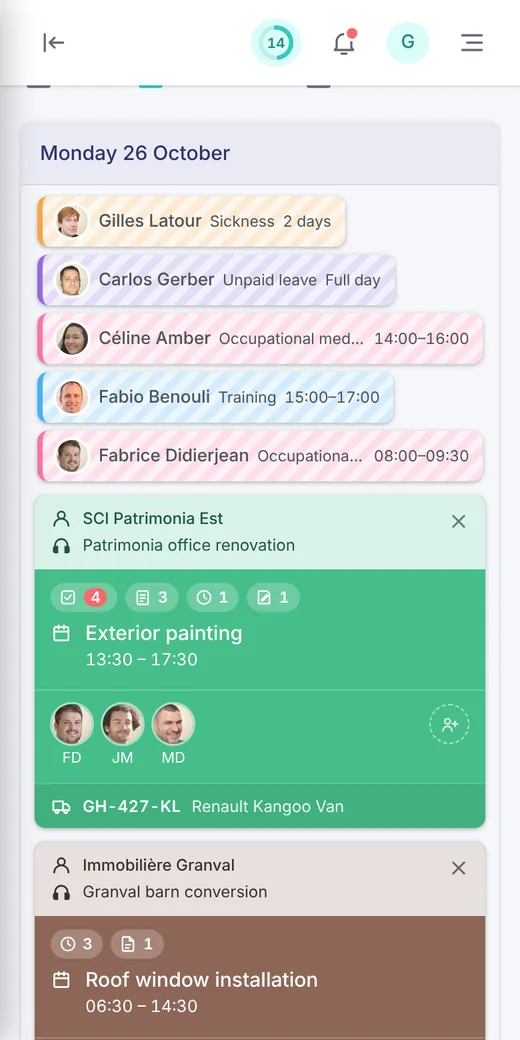
A common example: a team of five technicians shares the schedule, enters hours and uploads reports from a single environment, with no re-keying.
Benefits seen in the field
At Gaïa, scheduling has become clearer.
At Toma Peinture, real-time tracking has reduced administrative time.
These stories show that a sober tool does not hold back innovation; it simplifies daily work and makes digitalisation more sustainable.
Fewer apps, more value
By centralising information, Techtime eliminates manual exports and duplicates. Data is available instantly while network consumption is kept down.
As the guide to the 5 benefits of real-time worksite tracking software points out, this streamlining improves responsiveness and customer satisfaction.
5Towards a culture of digital simplicity
Adopting sober tools means starting a cultural change.
Training teams in reasoned use, introducing screen-free moments or grouping communication channels all promote consistency.
Little by little, sobriety becomes a shared reflex, not a constraint.
For an SME owner, this direction is strategic: it reduces the hidden costs of digital technology, strengthens operational performance and restores meaning to work in the field.
Techtime fits this logic: digitise less, but better.
Mini FAQ: digital sobriety and worksites
What is digital sobriety?
An approach that consists of using only the technologies that are genuinely useful, to limit their environmental impact and their complexity within the company.
Why does it matter for construction?
Because the proliferation of software makes management heavier. A sober approach improves coordination, reduces costs and encourages economical use of digital technology.
Should you digitalise less?
Not necessarily: the aim is to target solutions better. Techtime centralises tracking without adding technical constraints.
What are the benefits for a small business?
Less data entry, fewer errors and more visibility. This simplification frees up time for the field and reduces digital fatigue.