


Please note: this article refers to French regulations and standards.
The REP PMCB scheme (extended producer responsibility for building products and materials), created by France’s AGEC law (anti-waste law for a circular economy), has been operational since 2023. Eco-contributions on building products and materials have applied since 1 May 2023.
The aim of these schemes is to reduce the amount of worksite waste. According to CAPEB, the building sector produces more than 46 million tonnes of waste every year. ADEME, the French ecological transition agency, reports that the PMCB stream accounted for 22 million tonnes of waste in 2024, based on data declared by the eco-organisations.
Yet the FFB (French Building Federation) has been denouncing for several months a scheme it says has become “untenable” for building tradespeople and contractors. It points in particular to rising eco-contributions and take-back services considered inadequate. On the ground, many companies also point to the scheme’s administrative complexity and the difficulty of accessing collection points (Batirama).
Tabled in the National Assembly on 28 April 2026, bill no. 2723, sponsored by Stéphane Delautrette, Véronique Riotton and Anne-Cécile Violland, aims to restructure the REP PMCB scheme. In particular, the text seeks to bring collection points closer, guarantee free drop-off for small loads and require more financial transparency.
In brief
Bill no. 2723, tabled on 28 April 2026, aims to restructure the REP PMCB scheme, which tradespeople criticise for unequal access to collection points, complex procedures and “double payment”. It provides for three categories of materials (inert minerals, wood, other products), a network of collection points defined in consultation, free drop-off for small sorted loads, separate display of the eco-contribution on invoices (“visible fee”) and a fund financed by eco-contributions to deal with fly-tipping. The text has not yet been adopted and may change.
Inert minerals, wood, other products and materials
Collection points defined in consultation with local stakeholders
Eco-contribution shown separately on invoices
Funded by part of the eco-contributions
1Restructuring the REP PMCB: why is it essential for the building sector?
Three years after the REP PMCB was launched, criticism from building companies is mounting. CAPEB, through several national and regional statements, highlights recurring difficulties faced by small building businesses, particularly in rural areas. On 28 January 2026 it published a survey through CAPEB Charente reporting:
- Unequal access to REP-compliant waste collection points;
- Overly complex administrative procedures due to the many eco-organisations, platforms and processes;
- A lack of consultation between construction company representatives and the eco-organisations’ decisions.
On top of this comes construction tradespeople’s main complaint about how the AGEC law is applied: “double payment”. Some companies pay an eco-contribution when buying materials, then extra fees when dropping off the waste. This criticism has also been raised in the Senate, where several members have warned about eco-contribution increases decided without sufficient consultation or notice compatible with building companies’ economic constraints.
For very small building businesses, these accumulated costs are becoming hard to absorb. A tradesperson doing several jobs in the same day can sometimes lose several hours just to drop off a few bags of waste. These extra costs inevitably feed through to quotes and invoices under the “REP Bâtiment eco-contribution” just when the construction company has to calculate its markup rate.
2How does the Delautrette bill aim to redefine the management of worksite materials?
The bill takes a different approach from the government’s scenario. In her report no. 2521, MP Sophie Mette points out that the growth of the REP PMCB is putting increasing financial pressure on the timber sector. The National Timber Federation estimates that the eco-contribution could reach €30 per tonne if no adjustment is made to the scheme.
The debate on the future of the REP PMCB goes beyond the question of wood, however. Several stakeholders favour an organisation better suited to the characteristics of each material. This is the case with Ecominéro, which recommends a clearer separation between categories 1 and 2 in future specifications.
The bill plans to create three separate categories within the REP PMCB: inert mineral materials, wood products and materials, and other construction products and materials. The aim is to tailor approvals and contribution levels to the specific features of each family of materials in order to improve worksite waste sorting:
| Category under the bill | Examples | What is at stake for tradespeople |
|---|---|---|
| Inert mineral materials | Concrete, bricks, aggregates, roof tiles | Local drop-off points, material recovery |
| Wood products and materials | Roof structures, joinery, panels | Taking account of wood’s specific features |
| Other construction products and materials | Plastics, metals, plaster, glass, insulation | Clearer take-back channels |
The subject nevertheless remains particularly sensitive and could still change during parliamentary debates.
3How could the new territorial network simplify companies’ day-to-day work?
Article 1 of bill no. 2723 provides for a “network defined in consultation with regional councils, local authorities, take-back operators, distributors and representatives of professionals in the sector”. This network should be fully implemented by 31 December 2027 at the latest.
This restructuring would aim to bring collection points closer. However, the authors specify that private platforms and specialist operators should remain the priority for professional waste. Public recycling centres would nevertheless keep an important role in the territorial network, alongside the private take-back networks deployed by the eco-organisations.
The text also provides that, by 31 December 2026, any competent local authority that requests it can enter into a contract with an eco-organisation. This contract would include the collection of construction and demolition waste brought in by households. The aim is to secure local authorities’ participation in the scheme legally and financially.
For construction companies, this change could cut unnecessary journeys and simplify drop-offs on small renovation worksites. In practice, a tradesperson working on several homes in the same week could drop off their waste more easily without crossing several municipalities.
Beyond the territorial network, article 1 also seeks to address another recurring complaint from tradespeople: the cost of dropping off waste. The text provides for eco-organisations to fully cover free take-back of construction or demolition waste from PMCB for any load under 3 m³. Above this volume, coverage would be partial. This measure aims to limit the “double payment” situations regularly denounced by building professionals.
4What will the “visible fee” change for your quotes and invoicing?
Article 2 of bill no. 2723 concerns the financial transparency of the REP PMCB. The text provides for a “visible fee”, i.e. mandatory display of the exact amount of the eco-contribution on invoices between businesses.
The aim is to make costs clearer and ensure that the eco-contribution is identified separately throughout the sales chain. It must not be subject to commercial negotiation, discount or mark-up. For building companies, this matters. Some cost increases are currently hard to explain to customers when the REP is buried in the overall price of materials. Across all REP schemes, report no. 2521 states that €2.3 billion in eco-contributions were collected in 2023, with growth expected to around €7 billion by 2029. This trend illustrates the growing weight of eco-contributions in the economics of the sectors concerned.
For building companies, this clarification could prove important in fixed-price contracts or long projects. On some worksites signed several months before work starts, a change in rates could quickly upset the expected profitability.
How the scheme works overall is explained on ADEME’s official REP PMCB portal.
To go further, see also our guide to the CCAP in private contracts.
5Who will pay for fly-tipping in future?
Dealing with fly-tipping is one of the most sensitive parts of the Delautrette-Riotton-Violland bill. In the explanatory memorandum, the MPs state that building waste accounts for nearly 80% of the fly-tipping recorded in France.
Today, clean-up is mainly funded from local authority budgets. Several areas, as the Centre Hérault waste syndicate notes, have been warning for years about the financial burden of these operations. A study reported by Francioli already put the average cost at around €60,000 a year in 2019 for local authorities dealing with fly-tipping.
To tackle this problem, the bill provides for the creation of a fund financed by part of the eco-contributions paid into the REP PMCB scheme. From 1 January 2027, this fund would cover fly-tipping of more than 10 m³. In a second phase, coverage would extend to dumps of more than 1 m³ from 1 January 2029, after the scheme has been evaluated.
This measure aims to gradually shift part of the financial burden from local authorities to producers and eco-organisations, in line with the polluter pays principle.
- Unequal access to collection points
- Complex procedures: eco-organisations, platforms, processes
- “Double payment”: eco-contribution then drop-off fees
- Local network defined in consultation
- Free drop-off for small sorted loads (under 3 m³)
- Visible, non-negotiable eco-contribution
6Summary: what would this bill change for construction companies?
If adopted, the Delautrette-Riotton-Violland bill could change several aspects of building companies’ day-to-day operations. Tradespeople could benefit from easier access to collection points thanks to a stronger territorial network and greater involvement of local authorities in poorly served areas.
The text also aims to secure free drop-off for small loads in law and improve the transparency of eco-contributions through the “visible fee”. Eco-organisations would bear more responsibility for funding fly-tipping clean-up, while segmentation into inert mineral materials, wood and other construction materials would allow contribution levels to be adjusted more precisely.
For companies on the ground, the REP PMCB is no longer just an environmental issue. It is also starting to have a direct impact on worksite organisation, purchasing, logistics and the financial management of projects.
The parliamentary timetable remains uncertain. Nevertheless, this bill marks a new stage in the overhaul of the REP PMCB and in relations between the State, local authorities and construction companies.
7Conclusion
The REP PMCB is no longer just about waste management. With drop-off traceability, REP supporting documents and tracking the associated costs, it is becoming a real organisational issue for construction companies. For site managers, QHSE managers and business leaders, centralising this information is now essential to save time and secure worksite compliance.
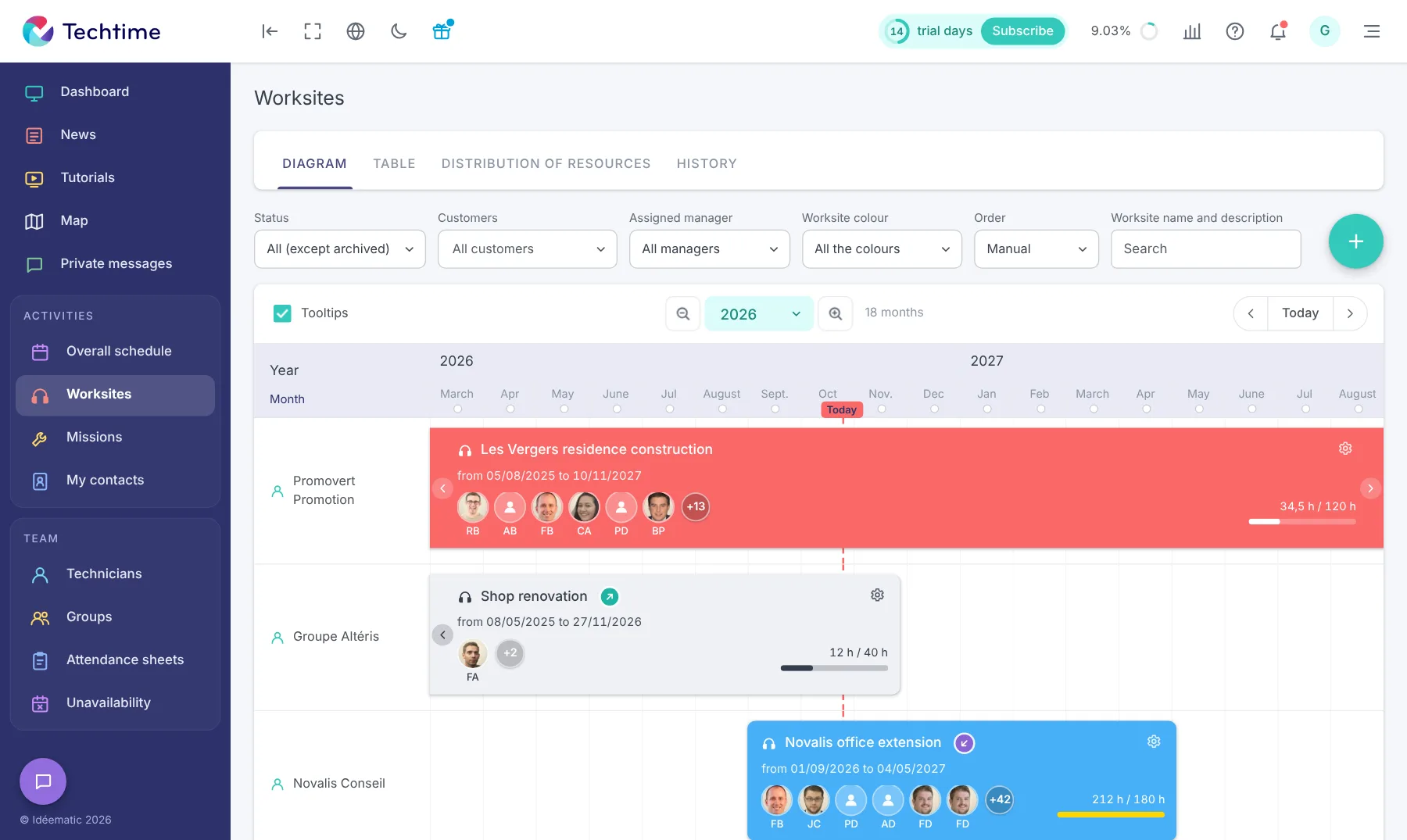
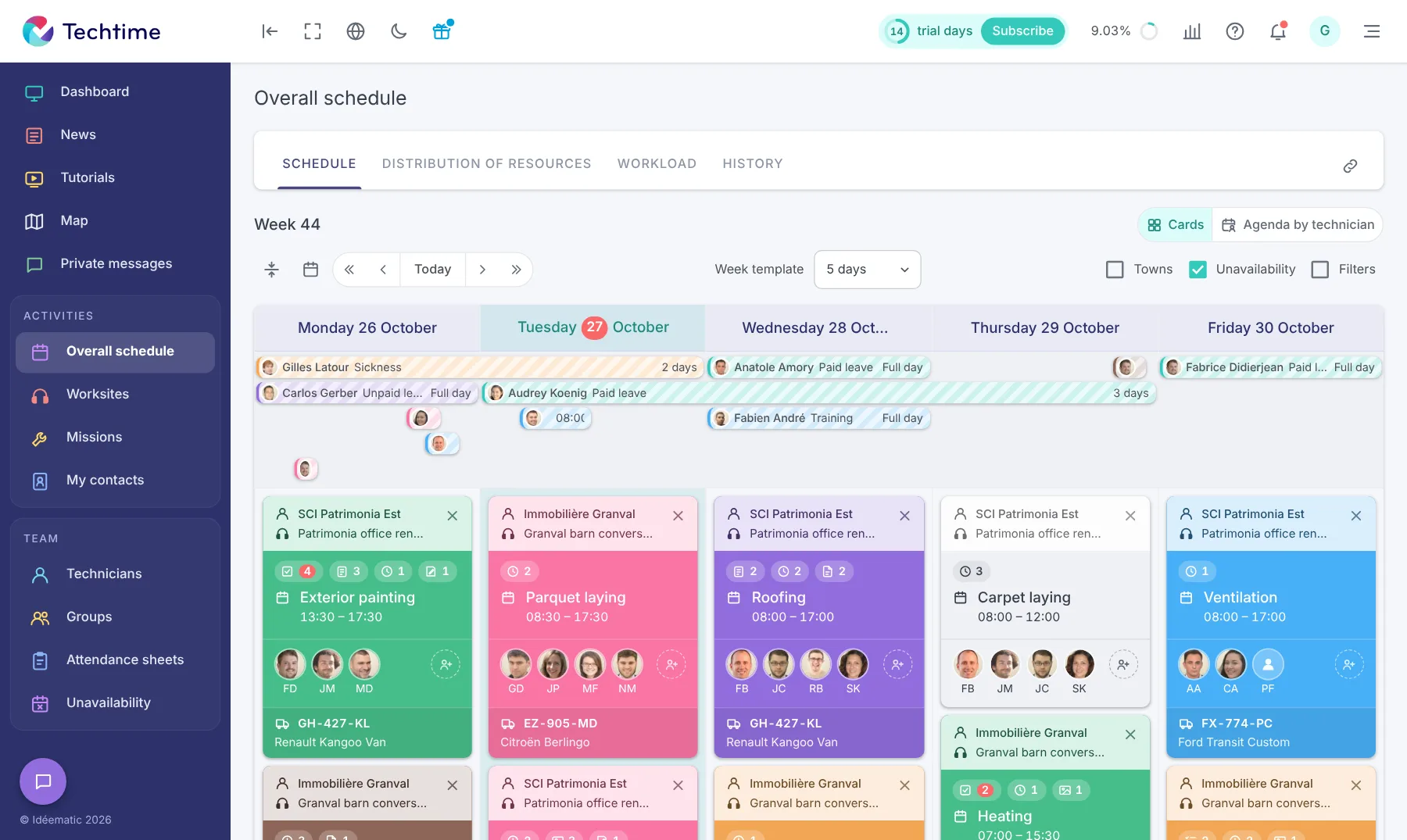
With Techtime’s Electronic Document Management (EDM), building companies can centralise their REP supporting documents, drop-off slips and worksite documents in one place, saving time and better securing worksite administration.
FAQ
Has the REP PMCB bill already been adopted?
Bill no. 2723 was tabled in the National Assembly on 28 April 2026. The text has yet to be examined and may change during parliamentary debates.
Will free drop-off apply automatically to all waste?
The text mainly targets small loads under 3 m³ and sets conditions relating to waste sorting and take-back arrangements.
Will quotes have to show the eco-contribution?
If the bill is adopted as it stands, the amount of the eco-contribution will have to appear separately on invoices between businesses to improve the scheme’s financial transparency.