


Worksite theft is rising at an alarming rate: +13% between 2022 and 2024 (source). But because margins are very tight, construction companies struggle to see worksite security as a priority investment. Yet according to the French Building Federation, worksite theft cost more than €1 billion in 2023 (source). Rising raw material prices and the constant comings and goings of teams on site make these illegal acts easier. What simple measures can you put in place to protect your worksite from thieves?
In brief
Worksite theft rose by 13% between 2022 and 2024. Thieves mainly target copper (45% of reported thefts), power tools, construction machinery, fuel and electronic devices. To protect a worksite, combine four measures: secure the perimeter, pair electronic surveillance with security guards, store equipment in secure areas and train teams in safety procedures.
1Which worksite equipment is stolen most often?
Accomplices within the project, opportunists or members of organised crime account for most worksite thefts. These criminals take advantage of their place in the team or favourable conditions (longer nights) to go after the following materials.
Raw materials and valuable equipment
Copper in electrical cables is the main target of raw material thieves on worksites. According to the Cayola Médias group, this metal accounts for 45% of reported thefts. The roll-out of green technologies (electric vehicles, solar panels, etc.) is driving ever-growing demand for electricity. The price of solid copper, without oxidation or varnish, ranged from €7 to €9 per kilo in 2024 (source). It can be resold on the black market for at least €10,000.
Other basic materials are also in demand, such as timber and steel. These raw materials are subject to global shortages that push up production costs (source). Yet demand remains high because of construction projects and energy renovation. As a result, unscrupulous criminals quickly resell them on the black market and make a huge profit.
The most sought-after tools and machinery
Portable tools (saws, drills, hammers, etc.) easily disappear or get lost by nature. When they are electric, their resale can be very lucrative (source). In DIY stores for the public or professionals, the price of an electric drill ranges from a few tens to several thousand euros.
Construction vehicles are not spared either. According to the French equipment federation (DLR), more than 4,000 machines disappeared in 2022, representing losses of more than €20 million. These are mainly excavation vehicles such as diggers or bulldozers. Heavy goods vehicles and vans, used for transport between worksites, complete the podium (source).
Fuel and confidential documents
The price of fuel keeps rising over time. According to Statista, the average price of diesel in France rose from €1.24/L in May 2020 to €1.93/L in September 2023. The €2/L threshold was regularly exceeded during this period. The average price of petrol followed the same trend.
In this context, it is tempting to siphon the tanks of construction machinery or steal fuel cans. Losses can reach up to 50 litres of fuel stolen in one night, as on this worksite in Déols (Indre).
Electronic devices (smartphones, tablets, computers) also require particular vigilance. In the event of hacking or theft of sensitive documents (construction drawings, invoices, etc.), the consequences can be dramatic.
2What are the consequences of theft on a worksite?
Whether it’s a small tool or a large machine, theft on a worksite is never trivial for a construction company. The consequences are first and foremost financial. Not only must you buy back the stolen equipment, but also repair the damage caused by the thieves, such as cut fences or broken materials. Without tools or raw materials to continue the worksite, the company risks late penalties.
Human relationships also suffer serious damage. The client is responsible for worksite surveillance until it is handed over. If they fail to protect their worksite or deliver the project on time, it affects their reputation. Customers will tend to turn their backs on them and leave negative reviews.
In addition, repeated sabotage by thieves creates a sense of insecurity and demotivation among the company’s employees. They see their schedule constantly reorganised to make up for missing equipment. This creates stress in the teams.
3What measures should you take to protect your worksite?
In 2022, the Coyote Theft Observatory estimated financial losses of more than €10,000 for 66% of construction companies hit by theft (source). Yet worksite security measures are still far from unanimously adopted by construction professionals. Some think they can maximise profit by cutting costs they see as non-essential. However, there are simple ways to secure your worksite and so make a winning long-term investment.
Anchored fencing and lighting of sensitive areas
Cameras, motion detectors and security guards
Containers, anti-theft devices, GPS trackers and marking
Safety procedures reinforced with the whole team
Protecting your worksite perimeter
The most economical and basic solution is to enclose your worksite area with fencing firmly anchored in concrete blocks. Not only do you create a physical barrier that is hard to cross, but you also limit the visibility of your tools and materials behind the fencing.
If thefts mainly happen at night, install lighting in strategic places such as near fences or construction machinery. Your security guards or cameras will be able to spot intruders more easily in full light.
Combining electronic security systems and security guards
The best surveillance coordinates human and electronic resources. To save on staff, clients may be tempted to cover the area with security systems.
- Surveillance cameras, connected to the internet if possible, let you monitor sensitive areas continuously and in real time.
- Motion detectors pick up suspicious presences day and night. They trigger loud or silent alarms so that security staff can respond quickly.
This basic equipment can be supplemented with cutting-edge technology such as drones or smart motion sensors. Drones monitor the worksite in real time and have software to model the site in 3D. They can even assist workers on site by transporting materials. Smart sensors use different wave fields to identify intruders, either infrared or microwave. Combining the two reduces the risk of false alarms.
However sophisticated, this equipment is not infallible in some parts of the worksite, especially cramped areas or those without network coverage. In that case, nothing replaces the mobility and attentiveness of a good security guard with a torch, especially at night. These professionals can also control access to the construction site by checking ID badges or biometric systems.
Organising equipment storage and deliveries
Don’t tempt anyone by leaving tools or materials lying around your worksite. As the client, make sure at the end of each day that equipment is properly stored in secure areas such as containers. For valuable items, set up a storage area away from the street to make it hard to reach.
Protect your construction machinery with anti-theft systems or GPS trackers. Never leave keys in vehicles. Also mark your most expensive tools with serial numbers or other indelible markings. As for equipment deliveries, avoid scheduling them just before long breaks such as weekends, public holidays or holidays.
Training your colleagues in safety procedures
Remind your workers that care and safety are everyone’s business. Regularly organise training sessions to raise awareness of safety procedures and how to use the latest technologies.
Reinforce these rules firmly through briefings at the start of the day or notice boards in temporary site buildings. Tradespeople must know how to react and whom to contact in the event of danger or intrusion in their work area.
Fight worksite theft with constant surveillance of the area using human and electronic resources. Stress the importance of good storage to ensure maximum productivity. Make your team members aware of their own safety and that of the company.
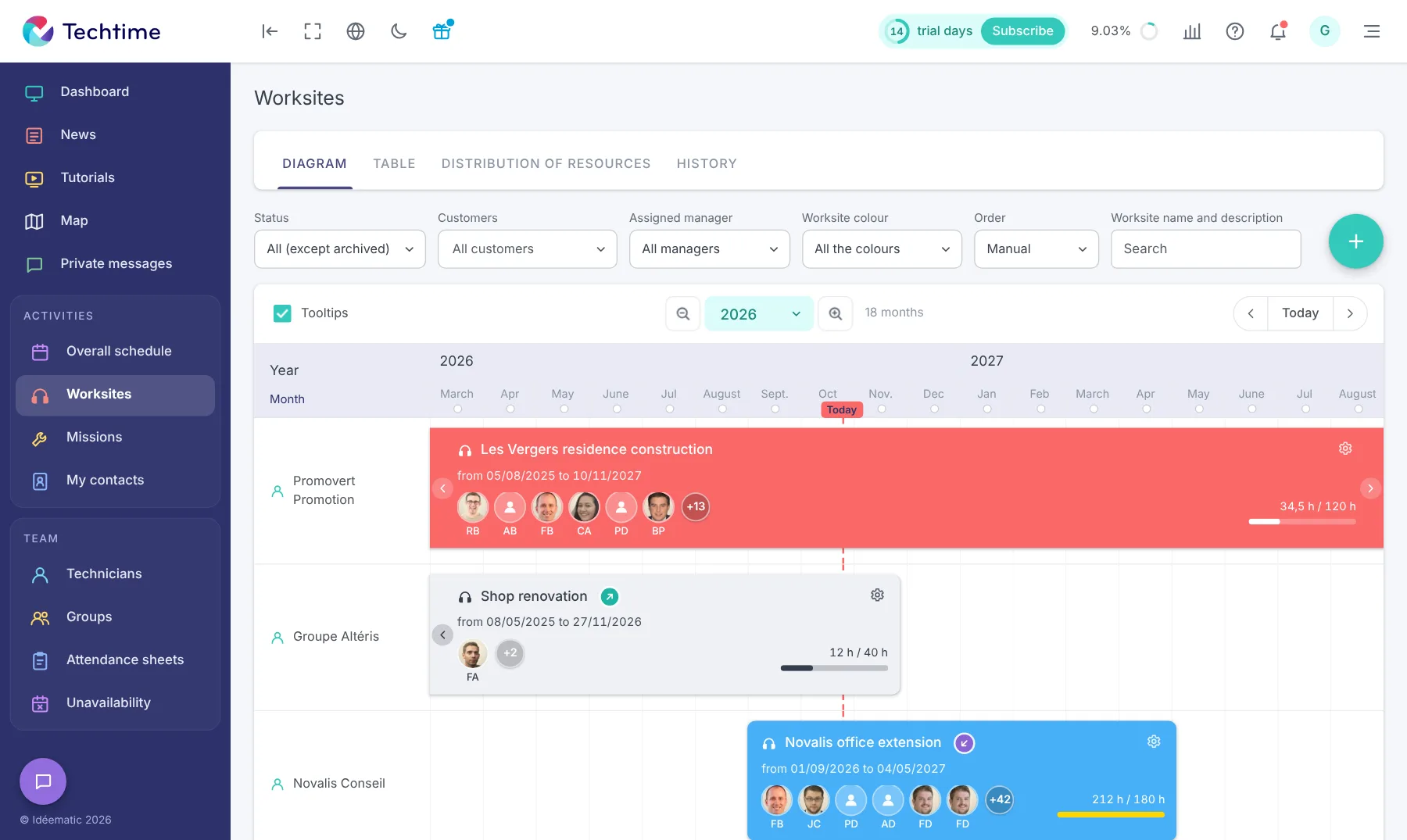
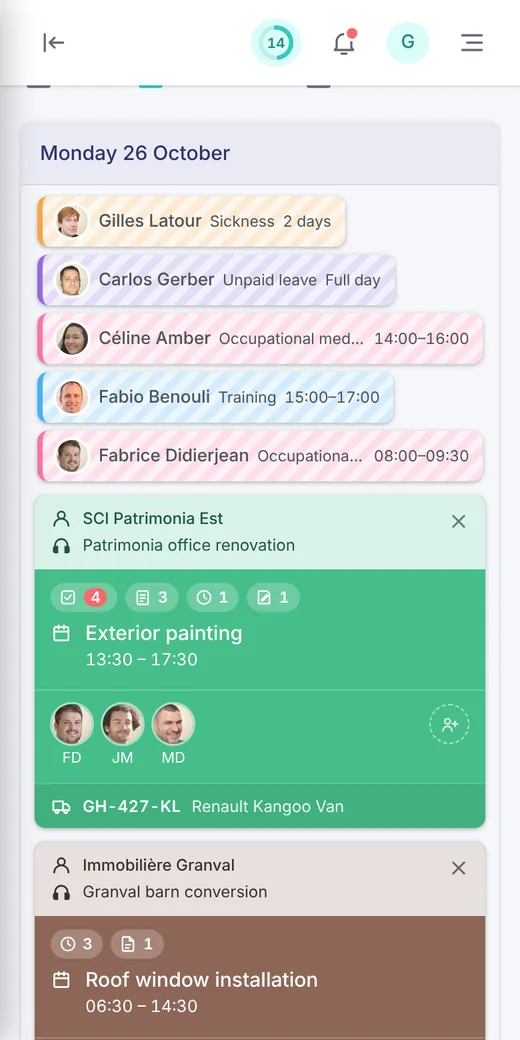
Want to track the location of your equipment in real time or alert your workers to an unexpected event that could upset their schedule? Get the Techtime software now to run your business with peace of mind.
Frequently asked questions
Which equipment is stolen most often from worksites?
Copper from electrical cables accounts for 45% of reported thefts. Thieves also target timber and steel, power tools, construction machinery (more than 4,000 disappeared in 2022), fuel and electronic devices.
What are the consequences of theft on a worksite?
They are first and foremost financial: stolen equipment has to be bought back and damage repaired. Theft also strains relationships between worksite stakeholders and the motivation of teams, whose schedules constantly have to be reorganised.
How do you protect a worksite against theft?
Enclose the worksite with well-anchored fencing and light sensitive areas, combine cameras, motion detectors and security guards, store equipment in secure containers, fit machinery with anti-theft devices or GPS trackers and regularly remind teams of safety procedures.