


Please note: this article refers to French regulations and standards.
France’s National Low-Carbon Strategy (SNBC) calls for the energy renovation of 500,000 homes a year until 2030, then 900,000 until 2050 (source). Beyond insulating the roof or walls, double glazing in windows cuts heat loss by 15% (source). This task, like laying parquet floors, falls within joinery. Yet the trade faces major recruitment difficulties: 80% according to France Travail (formerly Pôle Emploi) (source). What training and job opportunities are there if you decide to become a joiner?
In brief
The joiner makes and installs the elements that fit out a building: doors, windows, staircases, cupboards, parquet floors. They mainly work with wood, but also with PVC and aluminium. In France, the trade is open with a CAP, a vocational baccalaureate or a BTS, or through a retraining course eligible for the CPF (personal training account). A beginner joiner earned €1,766.92 gross a month in 2024, and up to €3,800 gross as a workshop manager or foreman.
1What are a joiner’s main tasks?
The joiner fits out the interior of a building by making furniture, floors or structures that connect rooms. These may be doors, windows or staircases for kitchens, living rooms, bedrooms, terraces or pergolas (source).
To make a bespoke piece, they take the room’s measurements and transfer them to a worksite plan. After selecting the material that suits the style of the building, they make the interior element using precise machine tools (source):
- table saw;
- spindle moulder;
- planer-thicknesser;
- combination woodworking machines.
The pieces are transported from the workshop to the worksite, where they are assembled and treated with various finishes (varnishes, lacquers, etc.). The joiner also works on the building’s insulation and weatherproofing, on structural work with a timber framer or on furniture restoration (source).
What materials does the joiner work with?
Wood remains the material most used by the profession. Not only is it strong and insulating, but certain finishes (varnish, oil, wax) also make it impervious to dust.
However, the joiner also uses other materials such as PVC and aluminium. PVC is cheaper than wood, but it looks more neutral and temperature changes can damage it through expansion. It is therefore less durable than wood that has been properly treated (chemically or thermally) against moisture or pests. The slimness of aluminium makes it suitable for assembling frames for large picture windows. However, it does not offer good thermal insulation.
Good to know: what are the differences between a joiner and a cabinetmaker?
The cabinetmaker and the joiner both work with wood to fit out the interior of a building. However, their working methods differ on several points.
| Joiner | Cabinetmaker | |
|---|---|---|
| Output | Structural and functional elements, mass-produced or bespoke: doors, windows, frames, staircases, cupboards, etc. | Bespoke decorative furniture: tables, chairs, wardrobes, bookcases, etc. |
| Materials used | Strong construction timber: pine, oak, fir, beech | Fine and precious woods for marquetry: mahogany, walnut, maple, exotic woods |
| Techniques | • Mortise and tenon • dovetail joints • Specific machines | • Carving • Veneering or marquetry • hand polishing • Traditional tools |
| Finishes | Simple, robust, functional finish | Decorative, elegant finish |
| Working environment | Workshop with heavy machinery | Smaller, quieter workshop |
2What skills does a joiner need in the workshop or on site?
A good grasp of geometry and calculation is essential for drawing up plans for partitions or laying parquet floors. This precision carries over into handling tools to avoid accidents, especially with machines. Knowing the physical properties of materials makes it possible to work them with rigour and aesthetic sense. Technique and industrial production must not stifle their creativity, so that they can meet the client’s wishes.
As well as being skilful, a self-employed joiner has every interest in being versatile. That way they can work on several types of worksite and collaborate with various construction players: bricklayer, timber framer, plasterer, site manager, etc. It is all about listening, adaptability and coordination.
3Becoming a joiner: what qualifications and career prospects?
Joinery is not just one trade. There are several specialities depending on the materials or the work you want to do. As a tradesperson, you follow short vocational courses, but nothing prevents a career change through adult training.
Training to become a joiner
There are as many courses as there are specialities in joinery. Nevertheless, in France qualifications can be grouped into three main levels after lower secondary school:
- CAP (certificat d’aptitude professionnelle) in joinery;
- Vocational baccalaureate (BP) technician;
- BTS (two years of higher education).
- 1CAPmenuisier
- 2Vocational baccalaureatetechnicien
- 3BTStwo years of higher education
The specialities correspond to the materials the future apprentice will work with (wood or aluminium) or to specific techniques. The joiner can be, for example:
- Fitter or installer: makes and installs the joinery on site, while making sure it is watertight.
- Manufacturer: stays in the workshop to make the pieces. This requires in-depth knowledge of the tools and processes at their workstation.
- Marquetry worker: enhances wooden panels with ornamental patterns made from precious materials.
- etc.
For adults looking for a career change, courses eligible for the CPF are available from AFPA or your France Travail agency. In a few months, they let you acquire skills recognised at professional level 3 (CAP/BEP).
See the various job profiles on Onisep
A joiner’s salary according to experience
As a construction worker, the gross monthly salary of a beginner joiner in France in 2024 was €1,766.92. Climbing the ladder to project manager or team leader level, an experienced joiner can earn €2,415 gross a month. These figures depend on the company and on the region where the woodworker practises: the Paris region pays better than the rest of France (source).
Income tax is deducted from this salary at a rate of 4.5% (source). However, employed joiners benefit from several advantages that boost their pay, such as a 13th month, paid overtime and company health insurance.
Job opportunities and career progression in joinery
According to Onisep, 90% of young joiners find a job in craft businesses at the end of their studies. Construction/renovation companies and industrial manufacturers also take on these newly qualified professionals. Permanent contracts are offered as staff become more qualified.
With experience, an employed joiner can become a workshop manager, foreman or team leader. Gross salary then ranges from €2,500 to €3,800 (source). With training in management skills, it is possible to take over as head of a company.
Joiners who want to go self-employed hope to earn more (between €2,300 and €5,000 (source)). This is possible provided they master their marketing and take on several responsibilities (work, administration, sales, etc.).
Our experts in supporting business owners are here to help you
4How are new technologies improving joinery?
The joiner’s trade has existed for centuries, but the development of new digital technologies brings greater performance and durability to products. CNC machines cut materials with unrivalled precision. Computer-aided design software (CAD), similar to BIM, lets the client approve the product on a virtual model before it is made. Smart glass changes transparency depending on the room’s temperature or lighting.
Wood can also be 3D printed using specific processes such as filament extrusion or powder bed fusion. For outdoor fittings, composite wood is more resistant to wear, stains and moisture than traditional wood.
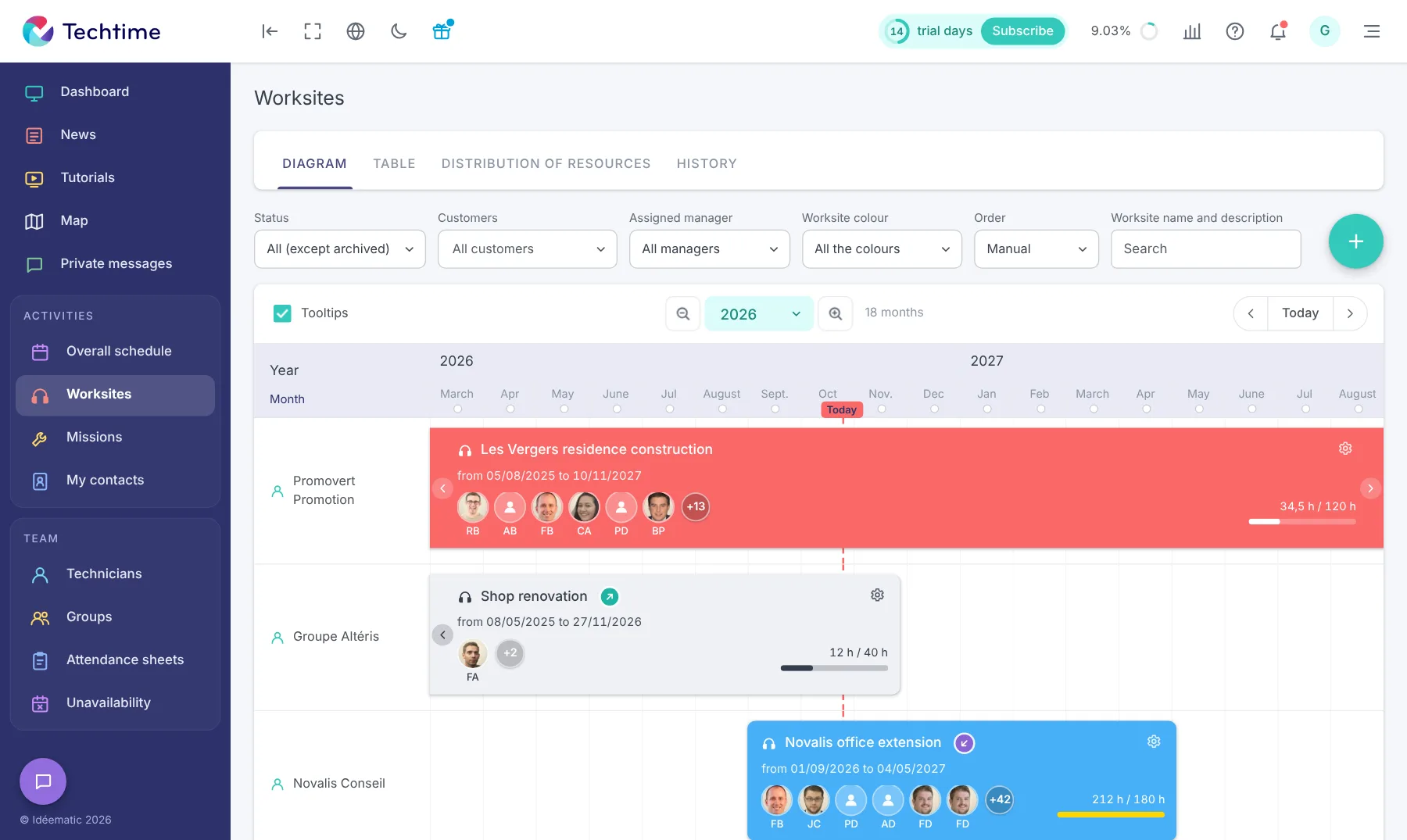
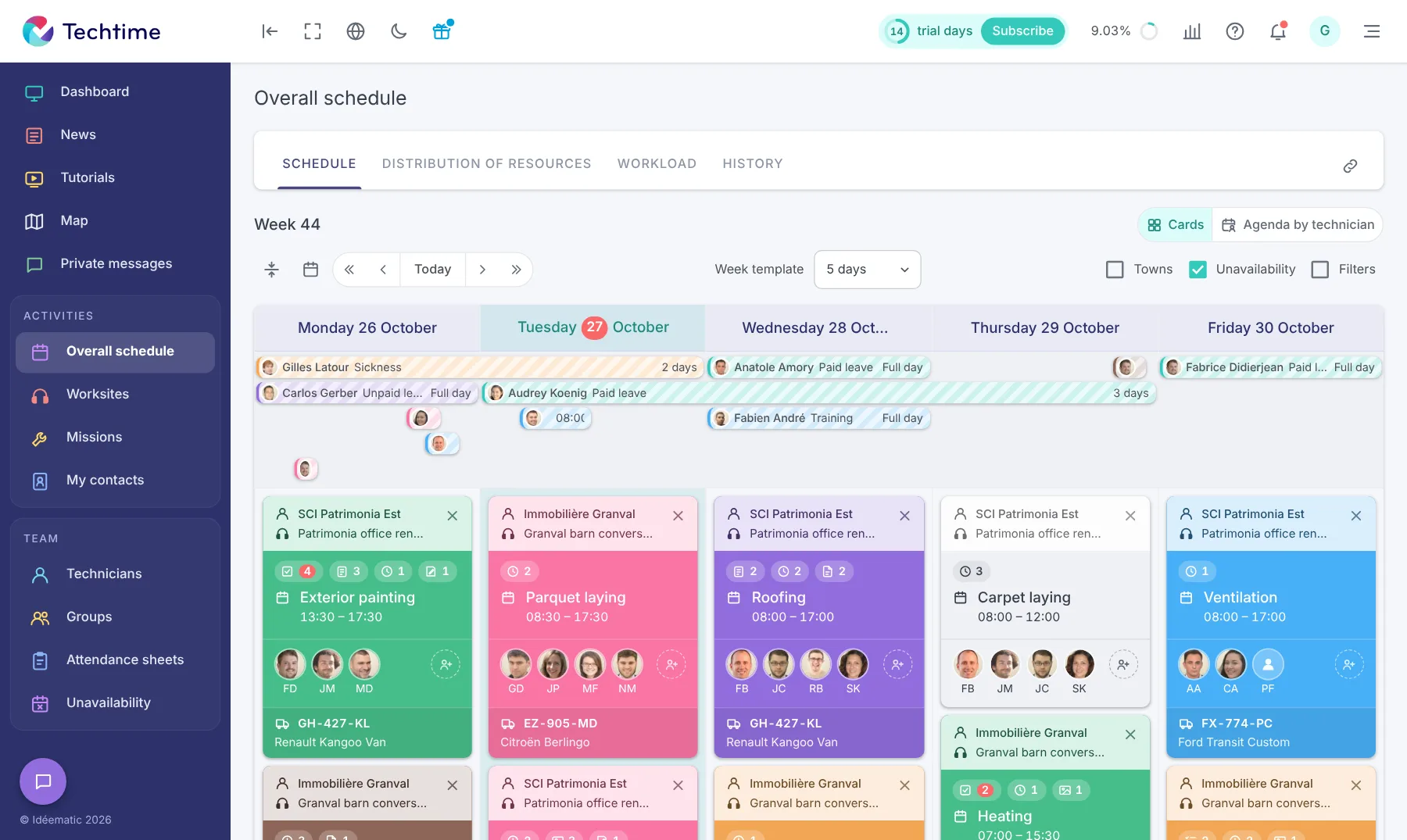
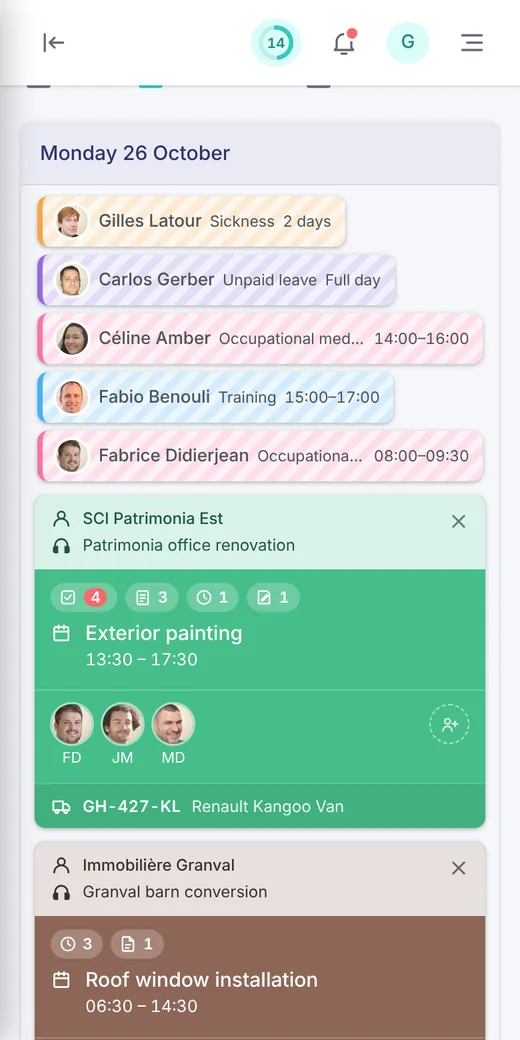
Among these innovations, the worksite tracking app lets the joiner carry out several tasks in real time:
- Manage their schedule.
- Coordinate with the other trades through instant messaging.
- Report their hours.
- Access plans and other important worksite documents.
- etc.
Using this connected tool brings considerable time savings in managing the various tasks. Tradespeople become more efficient and gain resources thanks to better control of deadlines and costs, as the head of CMT Industrie points out. Techtime has all the settings you need to raise the quality of your worksites. Install it on your computer or mobile without delay.
The joiner is a tradesperson who works wood to make various pieces for your interior fit-out. They also work with other, more economical or equally insulating materials, such as PVC or aluminium. It is a trade with a future, given the many renovation projects in the building sector. Employed or self-employed, save time on your admin tasks and reinvest it in making your pieces. Book an appointment to subscribe to our worksite tracking app.
Frequently asked questions
What is the difference between a joiner and a cabinetmaker?
The joiner produces structural and functional elements (doors, windows, staircases, cupboards) from strong construction timber. The cabinetmaker makes bespoke decorative furniture, with fine woods and techniques such as carving, veneering or marquetry.
What qualifications do you need to become a joiner?
In France, after lower secondary school, three levels of qualification lead to the trade: the CAP in joinery, the vocational baccalaureate technician and the BTS (two years of higher education). Adults changing career can take a CPF-eligible course with AFPA or France Travail.
How much does a joiner earn?
In France in 2024, a beginner joiner earned €1,766.92 gross a month and an experienced joiner €2,415. As a workshop manager, foreman or team leader, they earn between €2,500 and €3,800 gross. Self-employed, they can hope for between €2,300 and €5,000.