


Please note: this article refers to French regulations and standards.
In recent years, construction companies have struggled to keep their worksites going. Rising material prices, higher energy costs and financing difficulties have led to shrinking order books. To adapt to customers’ difficulties without putting cash flow at risk, it is increasingly common to invoice deposits in construction, their number depending on the size of the worksite. But is this legal? Can you take any deposit before the works begin?
In brief
Taking a deposit before works is legal in France, provided it is set out in a signed quote and accompanied by a deposit invoice, which is mandatory under article 289 of the French General Tax Code. Unlike earnest money (arrhes), a deposit definitively binds both parties. No law sets its amount: the average rate is 30%, negotiable between 10% and 40%. A deposit helps finance the first equipment purchases, reduces the risk of unpaid invoices and secures the customer relationship.
1Taking a deposit before works: is it legal?
A deposit is a sum the customer pays the company before the work begins. It is usually paid when the quote is signed, but this is not a strict requirement. It represents a percentage of the total invoice and commits both parties to the terms of their contract.
In France, the law on deposits for works in public contracts is now found in the Public Procurement Code. Articles R2191-20 to R2191-22 govern the right to deposits, their amount and how often they are paid. The interval is set at three months, except for craft cooperatives (where it is reduced to one month). The total amount of deposits is reduced by the portion corresponding to the retention. For private contracts, the rules on deposits are set out in article L111-3-1 of the French Construction and Housing Code.
2Deposits and other advance payments: what are the differences?
From a legal and accounting point of view, you must distinguish deposits from other advance payments such as earnest money (arrhes), an advance or an interim payment application (Service Public):
- A deposit binds both parties when the quote is signed. If the company withdraws, it may have to pay damages to its client. If the client cancels, the deposit is non-refundable and they may have to pay the contractor compensation as damages.
- Earnest money does not bind the parties definitively. This reservation gives a more flexible right to withdraw. However, if the customer breaks the contract, the company keeps the earnest money as compensation, as with a deposit. If the company withdraws, it repays double the amount to the client in accordance with article L214-1 of the French Consumer Code (Habitat Presto).
- An advance is an initial payment for work not yet carried out. Unlike earnest money, it does not involve repaying double: if the works are not carried out, the amount paid must be returned to the customer. A repayment guarantee is included in the invoice to protect the customer. That is why this practice is mainly suited to public contracts or large worksites.
- An interim payment application is an intermediate invoice issued as the works progress, unlike an advance. It is very useful for long worksites. There can be several interim applications for the same job, and they can be combined with a deposit invoice.
Binds both parties as soon as the quote is signed
Withdrawal possible; a company that withdraws repays double
Initial payment, no double repayment, repayment guarantee possible
Interim invoice based on progress, can be combined with a deposit
Good to know: when the quote is signed off-premises (at the customer’s home, for example) or at a distance, a private customer has a 14-day cooling-off period under the French Consumer Code. If they withdraw within this period, the company must refund the deposit paid.
3Why take a deposit before starting work?
The construction deposit serves several vital purposes for the company that receives it:
- Financing the first purchases of worksite equipment without putting too much strain on cash flow. This is very important when you calculate the price and margins of your worksite. You can include other costs, such as travel or setting up equipment on site.
- Reducing the risk of unpaid invoices and last-minute cancellations. With amounts split into instalments, the customer can manage their funds better and avoid getting into difficulty. Chasing an unpaid invoice in construction is a time-consuming task that only causes problems for both parties (penalties, legal proceedings, etc.).
- Securing the customer relationship financially and legally. If the customer wants to change or cancel the contract after paying, they may owe compensation for the resources already committed. These include worksite equipment and the team of tradespeople already scheduled in the worksite schedule.
This binding payment does not only protect the company. Not only does the customer make their spending more manageable through several payments, they also make sure the company is reliable. This is the basis of a healthy, transparent relationship between the two parties, provided certain rules are followed:
- Draw up a clear, detailed contract with all the clauses on deadlines and refunds;
- Keep evidence of expenses incurred before the works;
- Communicate regularly on project progress to avoid remedial work at the end of the job. Article 1217 of the French Civil Code allows the customer to take action if the company does not honour its contract (suspension of the contract, termination, price reduction, etc.) (Avocat Cohen-Boulakia).
4How much should the worksite deposit be?
No regulation sets a specific amount for a deposit on works. The average rate is 30%, to provide enough resources for equipment and tradespeople (bricklayers, electricians, landscapers, etc.). It can be renegotiated downwards, to around 10% to 20%, or upwards to 40% (Rénovation Man). Customers should not hesitate to ask the company why it is proposing that percentage in its quote.
5How do you invoice a deposit?
Article 289 of the French General Tax Code makes it mandatory to issue a deposit invoice for any payment received. It must include the following mandatory information:
- the company’s registered name and contact details;
- its SIRET number;
- the customer’s contact details;
- the invoice number;
- the amount of the service excluding and including VAT;
- the VAT rates applicable to the amount of the works (except for construction micro-entrepreneurs).
The wording “deposit invoice” or “deposit of X% on quote no. XXX” is recommended to identify the document. Once this first payment has been confirmed, a final invoice will deduct the deposits already paid from the total amount of the job.
6What should you do in the event of a dispute over a deposit?
A lack of clarity in the contract or unfulfilled obligations can cause conflict between the customer and the construction company. If the deposit was paid without a signed quote or if the tradespeople do not start work once the money has been received, the customer can take legal action. This takes place before a court that depends on the value of the dispute (France Victimes):
- Local court (tribunal de proximité) where the works are carried out, for a dispute under €10,000;
- Judicial court (tribunal judiciaire), where representation by a lawyer is compulsory, for a dispute over €10,000. An appeal is possible if the dispute exceeds €5,000.
- The one where the works are carried out
- Lawyer compulsory
- Appeal possible above €5,000
Before going to court, it is better to try one of the following amicable solutions:
- request a refund of the deposit by recorded delivery letter with acknowledgement of receipt;
- arrange mediation between the two parties.
If the court finds the tradesperson at fault on the basis of the file submitted (quotes, invoices, recorded letters, photos of defects), it may order the following. Either the works must be carried out under compulsion, or the company must pay damages to its customer, or even redo or demolish non-compliant work.
7Conclusion
Taking a worksite deposit before the works is a legal practice, provided it is clearly backed by a signed quote and a compliant invoice. The construction company secures its cash flow and protects itself against unpaid invoices. The customer gets a firm commitment from the tradesperson and a payment schedule suited to their situation. All this requires clear, transparent communication to avoid last-minute cancellations, or even legal proceedings.
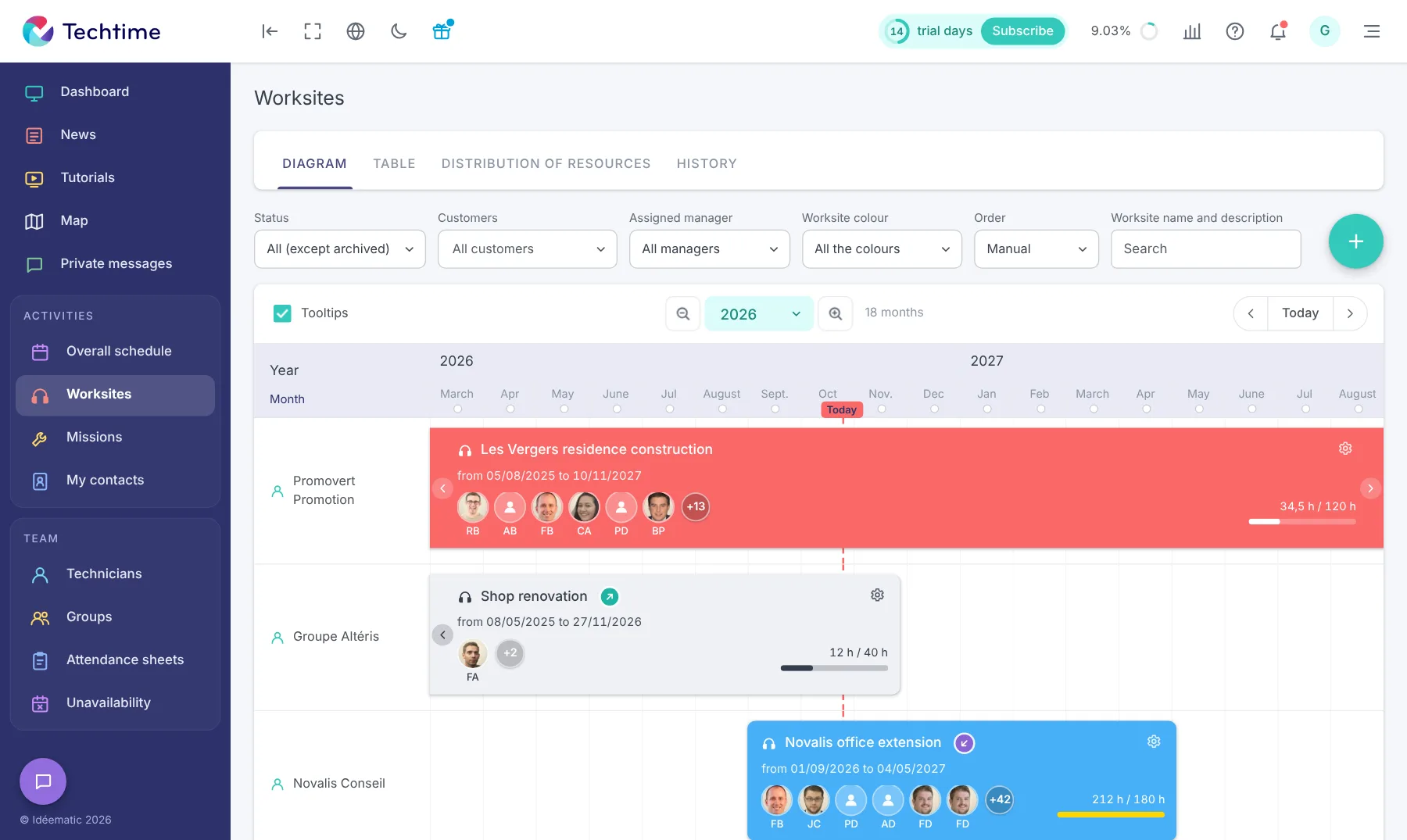
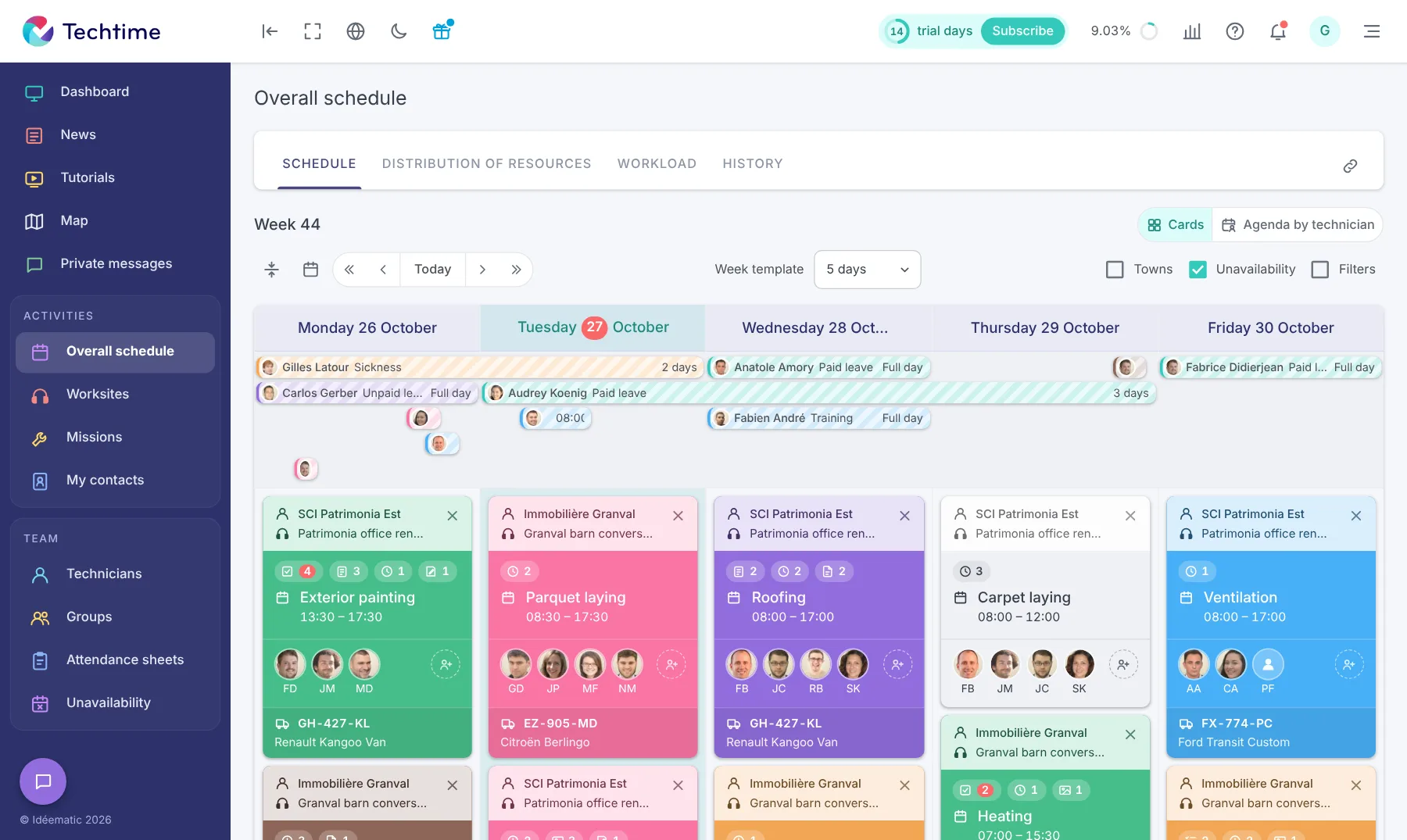
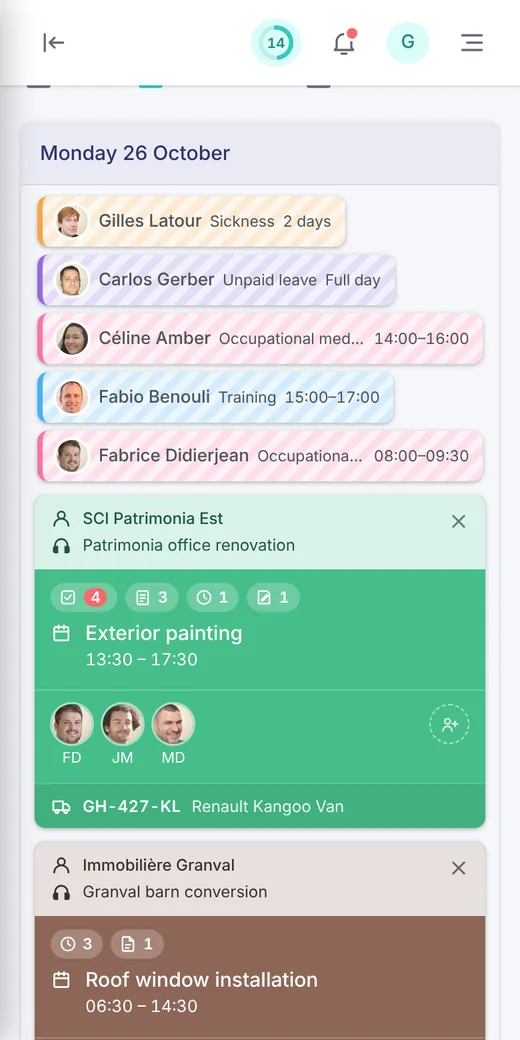
Deposit invoices are essential documents in your works file. To save time and minimise errors, the worksite management software Techtime includes electronic document management (EDM). Discover this and other equally strategic features in our web app or mobile app.
Frequently asked questions
What is the difference between a deposit and earnest money?
A deposit binds both parties as soon as the quote is signed: a customer who cancels cannot get it back. Earnest money allows withdrawal: the customer loses it, and a company that withdraws repays double the amount.
How much deposit should you ask for works?
No regulation sets an amount. The average rate is 30%, and it can be renegotiated downwards, to around 10% to 20%, or upwards to 40%.
Do you need to issue a deposit invoice?
Yes. Article 289 of the French General Tax Code requires an invoice for any deposit received, including in particular the company’s registered name and SIRET number, the customer’s contact details, the invoice number, the amounts excluding and including VAT and the applicable VAT rates.