


Please note: this article refers to French regulations and standards.
Are you thinking of retraining to become a bricklayer? After all, you are good with your hands and would like to save money by building the house of your dreams? The current climate is favourable for a career change into construction, particularly masonry, a sector in high demand. According to figures reported by Batirama, more than 20,000 recruitment projects for skilled bricklayers are under way in France. What skills are required? What salary can you expect?
In brief
The bricklayer is responsible for the structural work: laying foundations, building walls and creating the building’s horizontal structures. In France, it is the most sought-after skilled trade, with 16,010 recruitment projects in 2025 according to France Travail (the French public employment service). The trade is open at any age, with a CAP (French vocational certificate) in 2 years, supplemented if needed by a BP, a vocational baccalaureate, a professional title or a BTS. A beginner earns the French minimum wage (€1,272 net), rising to €3,000 net in the Paris region with experience.
1What does a bricklayer do?
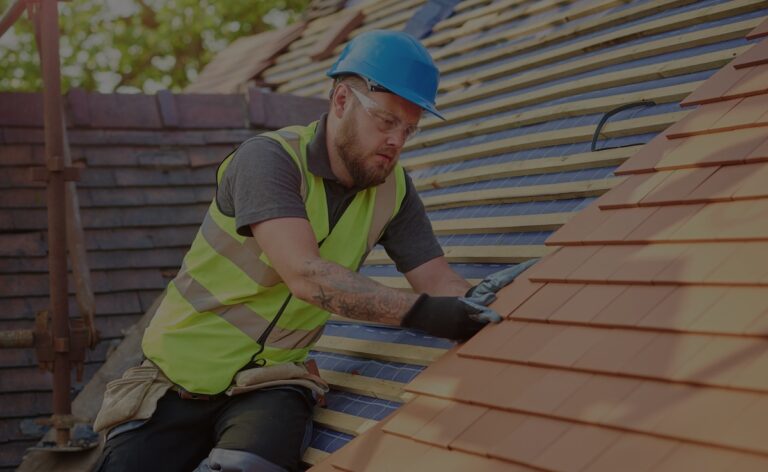
The bricklayer steps in once the groundworker has finished levelling the ground and digging trenches for the foundations. Following the surveyor’s or architect’s plans, they fit these trenches with timber or metal formwork to pour the concrete. Steel reinforcement is added to the material to increase its tensile strength.
Once the building’s frame is in place, the bricklayer builds the walls by assembling several types of materials: bricks, concrete blocks, stone, timber, etc. To hold the elements together, they prepare binders suited to each building material: mortar, cement, plaster, resin, renders, etc.
As the person responsible for the structural work, the bricklayer does not just build vertical structures. They also create the horizontal structures on every floor of the building (screeds, slabs, floors, ceilings) and make openings for doors and windows. They build the partition walls to create the different rooms according to the architect’s plans. Once the building is complete, they apply renders to the façades for appearance, waterproofing and insulation (Manpower).
2What are the pros and cons of being a bricklayer?
The advantages of the bricklayer’s trade
Among all the construction trades, bricklayer is the most sought-after skilled worker position. According to France Travail’s latest survey of the top 10 recruitment projects in 2025, it ranks first with 16,010 projects. This shows just how fundamental this professional is to the construction or renovation of buildings.
Training to become a qualified bricklayer is short (see below). You take part in a variety of projects that help old or new buildings with their ecological transition. Thanks to your mastery of structural work, you will be better able to understand the work to be done in your own home, or to carry out some of it in compliance with standards. That can mean considerable savings (Place des chantiers).
The disadvantages of the bricklayer’s trade
Safety is paramount at all times. Bricklayers often work on scaffolding, which requires a good sense of balance and a head for heights. Even though they have various tools for cutting building materials (rotary hammer, chipping hammer, cut-off saw), these remain heavy to carry. Add the uncomfortable positions that have to be held for hours, and the job requires good physical fitness.
Despite the economic difficulties in construction, there are still many worksite projects, especially in building renovation. As a result, bricklayers have to be available at all times and ready to travel a lot to cover on-call periods. When working outdoors, they are exposed to bad weather on the worksite, from rain to heatwaves and cold spells.
3What skills do you need to succeed as a bricklayer?
Apart from physical fitness, the bricklayer is rigorous in their work. They follow the architect’s plans and are precise in their setting out. Thanks to their manual dexterity, they shape bricks or stones to measure to build a consistent wall. By regularly checking their worksite schedule, they manage their time and travel so as not to fall behind on their tasks. They apply and enforce worksite safety rules at all times (Cherche chantier).
Despite the attention they must pay to precision and safety, the bricklayer remains a versatile and approachable professional. Their commercial sense helps them find clients and make themselves available to them, especially if they are self-employed. They work in teams with other bricklayers on large worksites, while collaborating with other construction tradespeople:
- the timber framer for floors or the roof structure;
- the joiner for fitting doors and windows;
- the tiler for laying tiles on floors or walls;
- the painter and decorator for finishing façades or partition walls;
- etc.
Finally, they know all the building materials, as well as the binders needed to bond them together. Sensitive to the appearance of buildings, they adapt their techniques and raw materials to renovation projects so as not to spoil the character of the original building.
4Retraining to become a bricklayer: what training do you need?
Whether you are retraining after a career in another sector or looking for a rewarding manual trade, masonry is open at any age with good training. Training to become a qualified bricklayer is short. In France, after lower secondary school, you start with 2 years of apprenticeship to obtain a CAP in one of the following specialities (Onisep):
- CAP bricklayer/builder in reinforced concrete;
- CAP civil engineering structures builder.
This first qualification can be supplemented by 2 or 3 years of further study to obtain one of the following:
- BP (Brevet Professionnel) bricklayer;
- BP stone trades;
- BP swimming pool trades;
- Vocational baccalaureate in work on built heritage (option A: masonry);
- Vocational baccalaureate building technician: organisation and execution of structural work;
Finally, for those who want to specialise in a specific field or take on more responsibility, you can choose from the following higher qualifications (Je change de métier):
- TP (Titre Professionnel) heritage building bricklayer;
- TP limestone specialist bricklayer;
- TP structural work team leader;
- BTS Building
- BTS Building envelope: design and construction
- BTS Construction economics management
- BTS Public works
- 1CAPbricklayer or civil engineering structures builder
- 2BP or vocational baccalaureate2 to 3 more years
- 3TP or BTSspecialisation and responsibilities
- 4Site foremanthen site manager
Can you become a bricklayer without qualifications?
If you don’t have the qualification required to become a bricklayer, you can still start by learning on the job. You can first gain experience working on worksites, for example through temporary assignments or as an unskilled worker. These situations fall under work placements or temporary assignments. However, to be recognised as a qualified bricklayer in France, you must prove 3 years of professional experience to your Chamber of Trades and Crafts. It can then issue you with a certificate of recognition of professional qualification so that you can fully practise the trade.
What are the possible career prospects?
After a few years of experience, a bricklayer can move up to become a structural work site foreman or a site manager. If management responsibilities don’t appeal, it is possible to specialise in a far more lucrative and rewarding niche, such as:
- restoring historic heritage or old buildings;
- building homes with optimal energy performance.
These specialities require in-depth knowledge of techniques and building materials to meet specifications. If the bricklayer wants to change status and has a solid, reliable professional network, they can set up their own construction company and go self-employed.
5What does a bricklayer earn?
According to Batiactu, a beginner bricklayer in France starts on the minimum wage (SMIC), i.e. €1,272 net per month. This basic salary increases with experience and with the region where the bricklayer lives. A bricklayer in the Paris region earns more (up to €3,000 net) than a counterpart elsewhere in France (up to €2,700) (Coover).
As a self-employed worker, a bricklayer can pay themselves between €2,500 and €5,000 depending on their clientele, specialisation and how well they run their business. These figures apply if they provide very well-paid services to a loyal and steady clientele.
6Conclusion
The bricklayer’s trade remains one of the essential pillars of the building industry. It offers many opportunities, not only in modern, eco-friendly homes but also in restoring historic heritage. It remains one of the most sought-after construction trades on the market, and training is short and offers rewarding specialities.
Masonry is physical, precise work that requires a good sense of balance when working at height. It also demands unfailing availability and rigorous tracking of the various worksites the bricklayer is involved in. The slightest delay in the structural work pushes back the tasks of other construction tradespeople and, ultimately, the whole project.
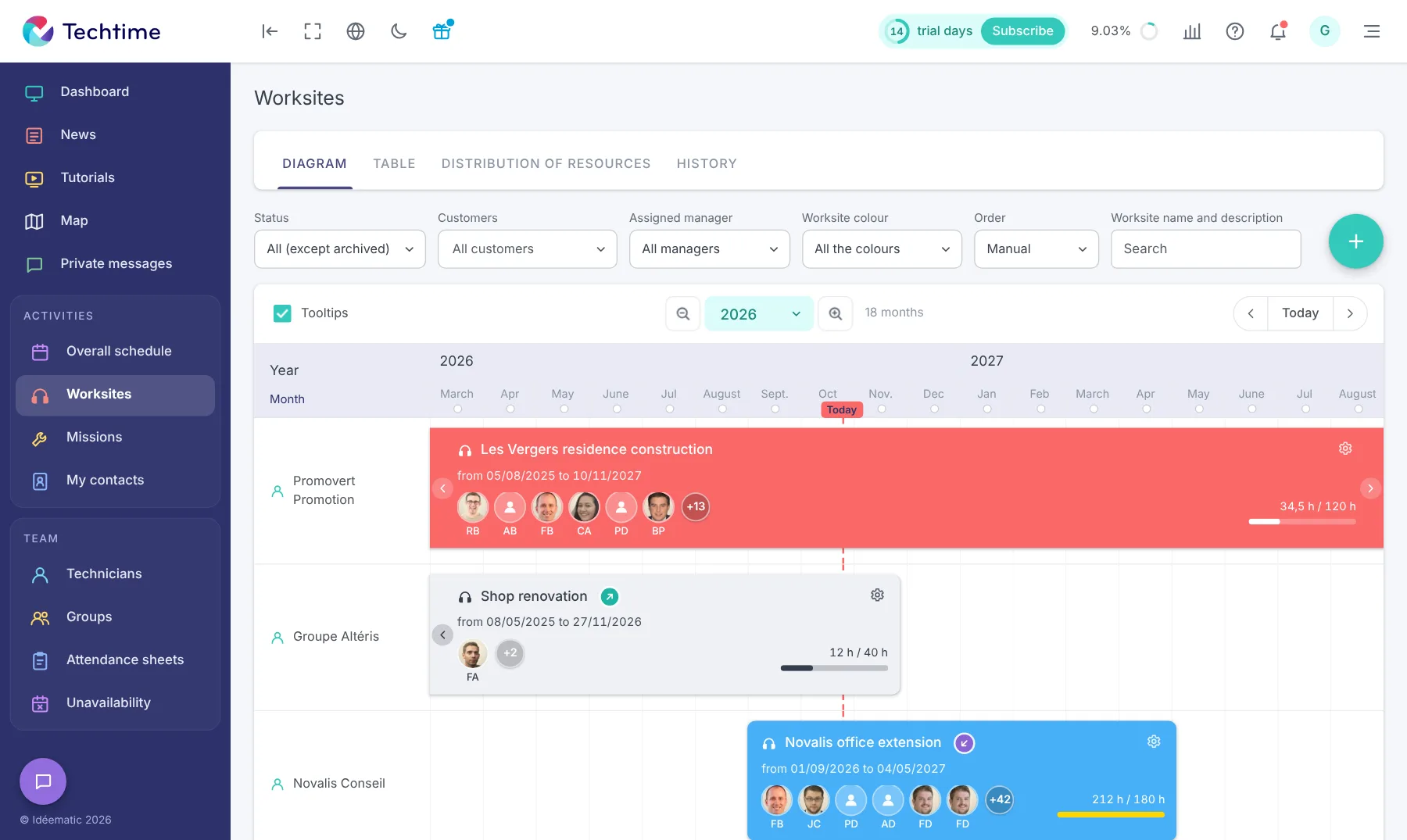
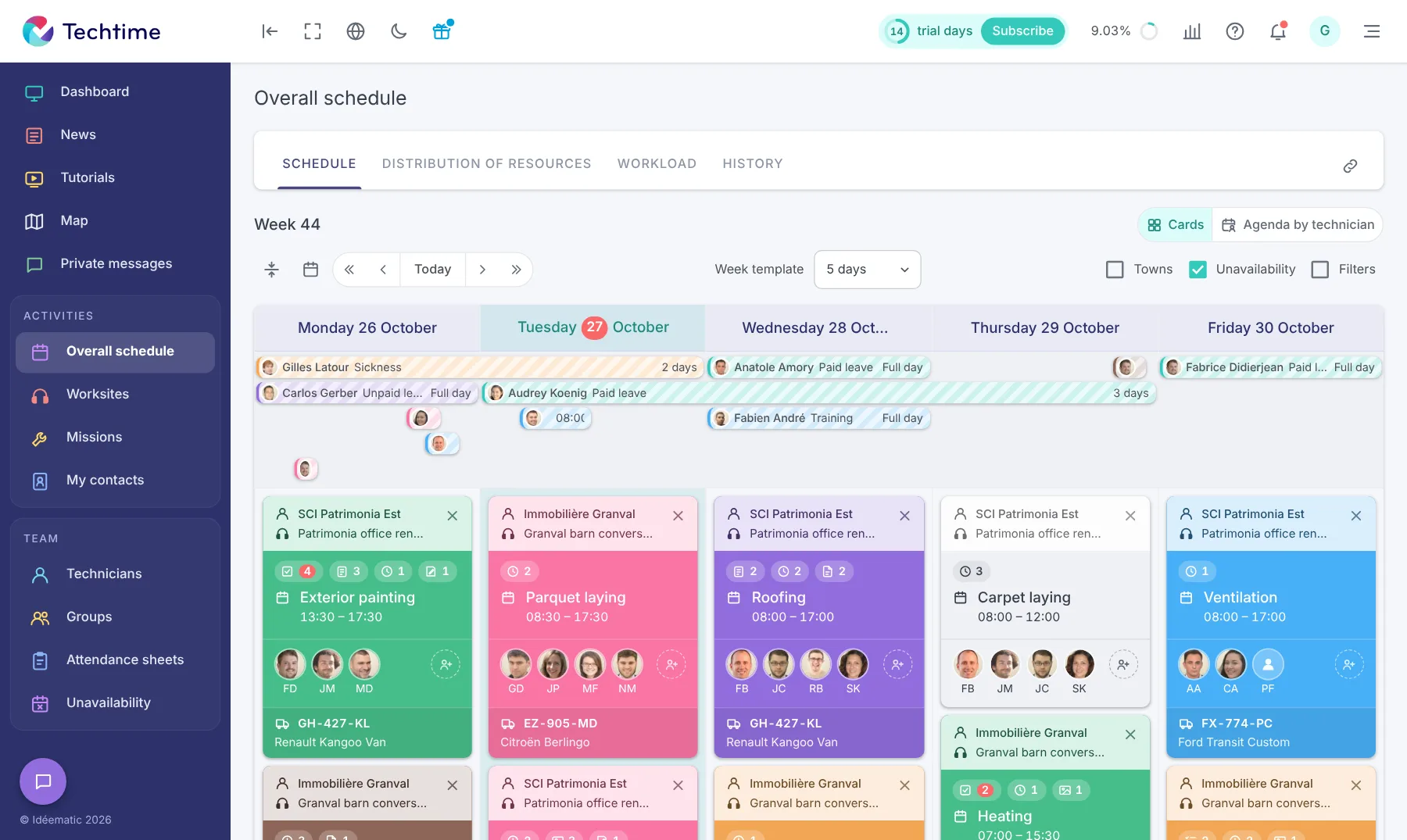
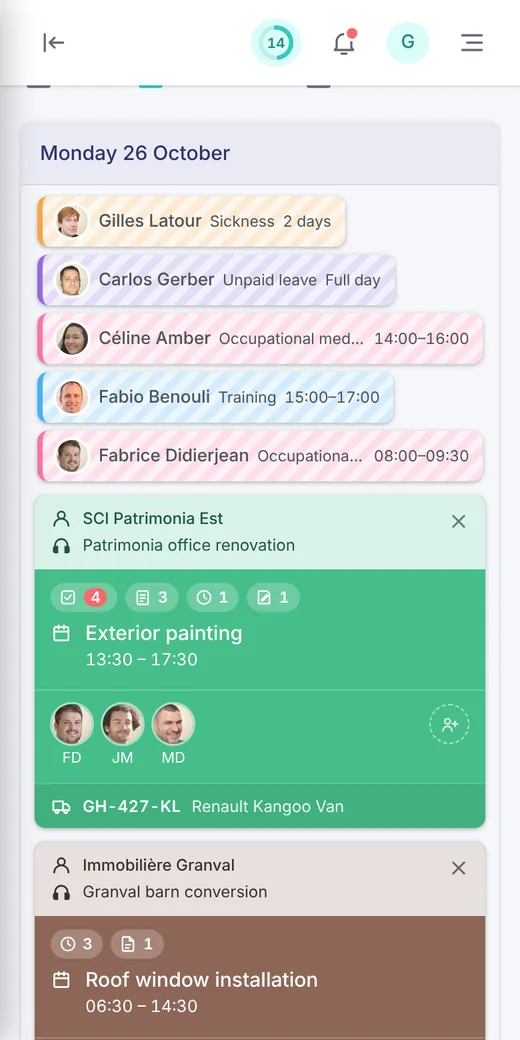
That is why you need responsive worksite management software that you can access anywhere, at any time, to optimise your schedule and complete your work on time. It also lets you alert your colleagues in the event of problems (bad weather, supply delays, etc.) so the team can adapt quickly and avoid falling behind.
Good news: Techtime offers these basic features, and much more.
Frequently asked questions
What training do you need to become a bricklayer?
In France, after lower secondary school, 2 years of apprenticeship lead to a CAP (bricklayer, reinforced concrete builder, civil engineering structures builder). It can be supplemented by a BP, a vocational baccalaureate, a professional title or a BTS to specialise or take on responsibilities.
Can you become a bricklayer without qualifications?
Yes. You can start by learning on worksites, gaining experience alongside professionals.
How much does a bricklayer earn?
A beginner bricklayer in France starts on the minimum wage, i.e. €1,272 net per month. With experience, their salary can reach €3,000 net in the Paris region and €2,700 elsewhere. Self-employed, they can pay themselves between €2,500 and €5,000.