


Please note: this article refers to French regulations and standards.
The handover of works marks the completion of the construction or renovation of a building. The client (MOA) inspects the work and, depending on what they write in the handover report, accepts it with or without snags.
In France, the worksite handover report follows strict rules as a legal document. It triggers the statutory guarantees that cover the building’s first years. Which project stakeholders must fill in and sign this report? What mandatory information does it contain? Techtime gives you the main points to remember.
In brief
The works handover report makes the end of the worksite official: in it, the client accepts the works without snags or with snags, or refuses them. No law requires it to be drawn up, but it triggers the statutory guarantees: completion (1 year), proper functioning (2 years) and ten-year (10 years). It is filled in jointly by the client and the project manager after the inspection and states in particular the parties, the handover date, the address of the work and details of the snags with the deadline for clearing them.
1What is a works handover report?
The works handover report is an administrative report that makes the end of the worksite official. The project manager (MOE) and the client carry out an inspection together to check that the work has been carried out and complies with the building quote.
Depending on what they observe on site, the client (MOA) can reach one of the following three conclusions:
- The report is accepted without snags: they have found no visible defects and now take responsibility for their building. The worksite is officially handed over. If, after the handover, the client discovers defects that were not visible during the inspection, these may be covered by the builder’s statutory guarantees (completion, two-year or ten-year) or, failing that, by ordinary contractual liability, depending on the nature and severity of the damage.
- The report is accepted with snags: they record defects visible enough to require remedial work. These defects are carefully listed in the report, even if they don’t stop the client from moving into their property. The two parties (client and builder) agree on a deadline for the necessary repairs, before scheduling another handover date. This inspection will be an opportunity to clear the snags and make sure the building complies and can be considered habitable.
- The works are refused as such: they find defects that are too serious and items not carried out although they were on the quote. As a result, moving in is cancelled. Under a contract governed by French law no. 75-1334, the client can apply the 5% retention when it is stated in the contract.
Good to know: tacit handover is only possible if the client takes possession of the premises, pays for the works in full and raises no objection. This was the situation in the French Court of Cassation ruling of 30 January 2019 (Civ 3e, 18-10-197) in the absence of a works handover report.
No visible defects: the worksite is officially handed over
Defects listed, remedial deadline agreed, then snags cleared
Defects too serious or items not completed: moving in cancelled
2Which statutory guarantees take effect after the handover?
No law requires a works handover report to be drawn up and signed. Nevertheless, this document triggers the various statutory guarantees that cover the work for a set period. The company remains bound by several statutory guarantees:
- The completion guarantee requires the builder to repair defects in their work for 1 year from the handover. Under Article 1792-6 of the French Civil Code, it does not cover imperfections caused by normal wear and tear or the use of the building;
- The proper functioning (or two-year) guarantee requires them to repair or replace equipment that can be removed from the structure for 2 years. This covers, for example, heating or electrical systems;
- The ten-year guarantee covers, for 10 years, damage that compromises the soundness of the work or makes it unfit for its purpose.
3Who should fill in the works handover report?
The client and the project manager jointly fill in the works handover report at the end of their site inspection. The former acts as the commissioning client, the latter as the person responsible for the quality of the work. The signatures of the client and project manager make it easier to prove the handover. The project manager’s presence is only mandatory when there is a project management contract; without one, the handover can take place directly between the client and the company.
Another major project stakeholder may add their signature to the document: the architect or the property developer. However, in the event of worksite disputes, the architect may be held liable if ten-year damage is attributable to them as a builder (design, supervision, failure to advise, etc.). Article L242-1 of the French Insurance Code makes it compulsory to take out insurance guaranteeing payment for all the repair work.
As Picovschi lawyers point out, failure to take out insurance is punishable by six months’ imprisonment and a €75,000 fine.
4How do you fill in a works handover report?
The content of the works handover report is prepared before the inspection. Everyone involved in approving the document must be informed of all the worksite’s technical information. Checking the various parts of the building requires several inspection tools, such as a tape measure, pencils, a spirit level, a laser pointer, etc. The client would be well advised to come with a checklist covering several key items, such as:
- the general appearance of the exterior façade and garden;
- wastewater drainage;
- proper operation of the mechanical ventilation system (VMC), using an anemometer;
- the power supply to sockets and switches;
- the watertightness and flatness of floor coverings;
- etc.
All these components call on the know-how of several construction tradespeople, such as the bricklayer, the locksmith, the plumber, etc.
On the day of the inspection, the client checks each item on their checklist with the project manager and the architect, if present. They make sure the work is of good quality and complies with the signed quote and the law in force. At the time of signing, the following mandatory information must appear on the document:
- Identity and role of each party (client or project manager);
- People present, represented or absent;
- The handover date;
- The physical address of the work;
- Details of any snags, including the deadline for clearing them agreed with the builder;
- Where applicable, information on clearing the site and dismantling the worksite, in particular how the installations needed for the works will be removed.
Once the remedial work has been carried out, checking and approving it will require a snag clearance report.
5Why fill in your handover report in worksite tracking software?
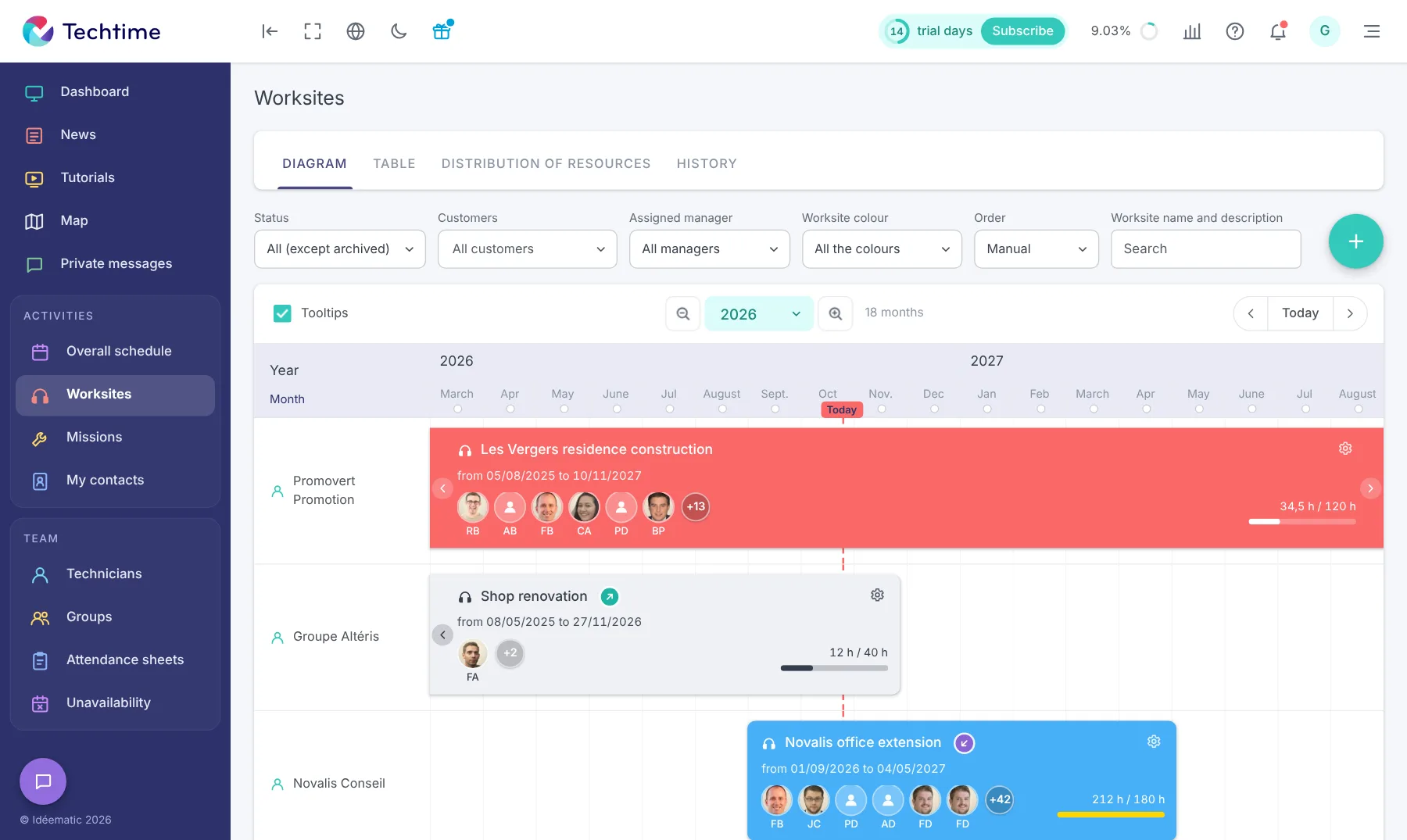
Worksite tracking software such as Techtime offers many advantages for managing a works handover report. By storing it in a cloud using electronic document management (EDM), every stakeholder can edit or sign the report at any time. The different versions of the report are kept to track the worksite more closely.
Photos of the snags are valuable evidence that guarantee their quality and serve as legal arguments in the event of a dispute. Built-in electronic signatures and compliance with ISO or eIDAS standards strengthen the file’s legal security.
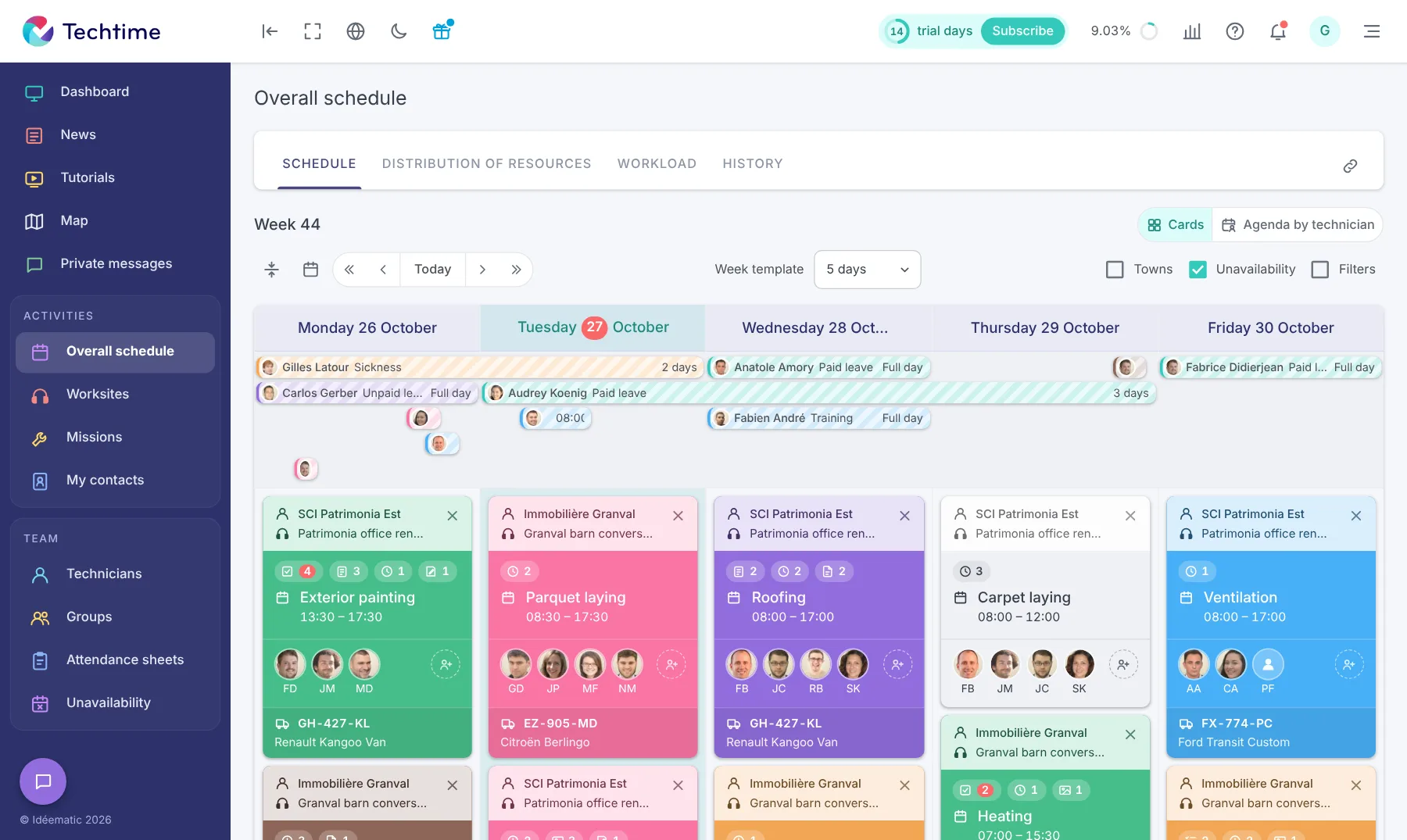
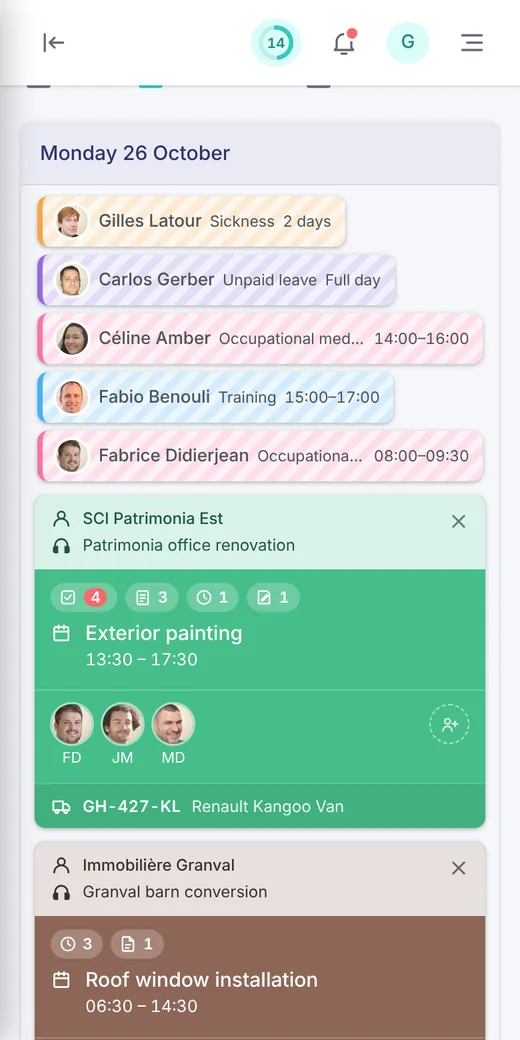
If there are snags, the site manager assigns the tasks needed to fix them to the various tradespeople. Each user can follow the progress of this work in real time thanks to construction scheduling.
Conclusion
Drawing up a works handover report remains a key step in securing the delivery of a worksite. It makes the end of the works official, triggers the statutory guarantees and frames each party’s liability. Even though no legal provision requires it, a clear, dated and signed document remains essential to avoid disputes and prove the actual condition of the work at handover.
Reduce the risk of data entry errors and make communication between the parties smoother with Techtime, your worksite management software.
Optimise your worksite handovers and try Techtime now
Frequently asked questions
Is the works handover report mandatory?
No law requires it to be drawn up and signed. It nonetheless remains essential: it makes the end of the worksite official and triggers the statutory completion, proper functioning and ten-year guarantees.
Who fills in the handover report?
The client and the project manager fill it in jointly at the end of their site inspection. The architect or property developer may also sign it.
What should a works handover report contain?
The identity and role of each party, the people present, represented or absent, the handover date, the address of the work, details of any snags with the deadline for clearing them and, where applicable, the arrangements for clearing the site and dismantling the worksite.
Works handover report template
Download this handover report template for free and make your worksite handovers easier every day. The template (in French) is provided for information only. It does not replace legal advice and may need adapting to each situation. Techtime accepts no liability for its use or consequences.