


Please note: this article refers to French regulations and standards.
Are you good with your hands and keen to protect others? Driven by growing concerns about building security, the locksmithing market keeps growing. According to a Global Market Insights study, growth should reach 6.9% between 2025 and 2034. Worldwide revenue stood at $5.8 billion in 2024. This branch of metalwork offers excellent future prospects thanks to technological developments in security systems (smart locks, armoured doors). Here is what you need to know to succeed in your career change and become a locksmith.
In brief
The locksmith makes, installs and repairs locks and closing systems. The locksmith-metalworker designs the metal parts of doors, windows and guardrails; the emergency locksmith steps in urgently when a client can no longer get into their home. In France, the trade is learned through a CAP, BP, vocational baccalaureate or BTS; without qualifications, 3 years of experience are required to set up a business. A beginner locksmith earns the French minimum wage (€1,245 net), rising to €26,215 gross a year after 10 years.
1What does a locksmith do?
The locksmith is a locking specialist who shapes locks and keys from various metals. Depending on whether their work involves making or maintaining security systems, there are two types of specialities in this field.
Locksmith-metalworker: designing protection systems
The locksmith-metalworker is a builder through and through. With the help of a joiner, they design and shape the metal parts needed for the opening mechanisms of the building (doors or windows). The locks and keys that lock or unlock them are the most typical pieces in the trade.
But their ornamental ironwork also serves to protect people from the risk of falling. They install guardrails for balconies, walkways and bridges. Despite the practical function of railings and fence grilles, the tradesperson still takes care over their appearance, decorating them with wrought-iron scrolls or leaves (Onisep).
Emergency locksmith: repairing and maintaining your security equipment
The emergency locksmith steps in when their client can no longer get into or out of their home. The most common reasons are:
- key lost or broken in the lock;
- lock damaged after a break-in;
- armoured door closed by accident, locking the person out of their home.
With their various tools, they drill out the lock to replace it, or pick it using several methods. When they are not unlocking access to a building, the emergency locksmith installs or repairs various equipment to improve security. This may include metal shutters, roller shutters or home automation systems for opening and closing doors remotely. Intercoms and keypad entry systems are also part of their services (Onisep).
- Metal parts for doors and windows
- Locks and opening mechanisms
- Guardrails for balconies, walkways and bridges
- Key lost or broken in the lock
- Lock damaged after a break-in
- Armoured door slammed shut
2What are the pros and cons of being a locksmith?
The advantages of the locksmith’s trade
Job offers in locksmithing are numerous and varied. A locksmith’s presence on a worksite is essential to ensure the security of the building’s future occupants. Their mastery of metals lets them work with several construction professionals (Manpower):
- the timber framer to erect steel frames;
- the roofer to design steel roofing or fit metal staircases;
- the glazier to fit glass in metal frames (as in conservatories);
- the ornamental ironworker to customise and add decorative elements to gates, grilles, guardrails or banisters;
- the electrician to integrate access control systems, such as smart locks or keypads;
- the plumber to build metal structures that support heavy equipment (boilers, hot water cylinders).
As well as repairing or renovating old locks, the trade is adapting to new security technologies. The locksmith installs electronic systems (keypads, alarms, etc.) to complement their range of armoured doors and security grilles. These products are in ever-growing demand, especially since France adopted the “anti-squat” law of 27 July 2023. According to an article in L’Usine Nouvelle, the manufacturer Eliot multiplied its production and sales of armoured doors sevenfold.
The disadvantages of the locksmith’s trade
Like other construction tradespeople, the locksmith has to cope with demanding hours. The complexity of their tasks, or of the worksite in general, may lead them to work on call at night, at weekends or on public holidays.
The work is recognised as physical and gruelling. In the workshop or on site, the locksmith stands or crouches for long hours. Cutting metal and installing security systems expose them to certain hazards, such as worksite dust or noise.
3What skills do you need to succeed as a locksmith?
A true craftsman of mechanics, the locksmith stands out for unfailing precision. Not only must locks be unique, but the tools they use must be handled with great care. These are mainly drills, punching machines, disc cutters and welding machines (La Construction).
However, their craft techniques are being modernised with new tools, such as laser cutting, 3D printing of certain parts and CAD (computer-aided drafting) software. All these resources are used to make metal parts with ever greater precision.
Their meticulousness also shows in drawing up the plans or diagrams of the lock. They know the properties of the various metals, such as steel, iron, aluminium, copper, brass or bronze. Beyond their sketches, the locksmith expresses their artistic side by customising metal railings.
The uncomfortable positions require them to stay in good physical shape. They must be ready at any time to respond to an emergency at a private home or on a worksite. Thanks to their knowledge of sound insulation, electronics and weatherproofing, they collaborate with other construction tradespeople to make the worksite a success. Thanks to their people skills, they listen to their clients and colleagues.
4Retraining to become a locksmith: what training do you need?
Training to become a locksmith is relatively short. In France, whether through initial or continuing training, the possible routes are as follows (Hellowork):
- CAP locksmith-metalworker or aluminium and glass joiner.
- MC (additional qualification) welding technician (CAP level).
- BP (Brevet professionnel) metalworker or aluminium and glass joiner.
- Vocational baccalaureate in building works, metalwork speciality. Possible MC to become a welding technician (baccalaureate + 1 level).
- Vocational baccalaureate in industrial boilermaking.
- BTS metal architecture (design and construction) or industrial boilermaking.
- 1CAPlocksmith-metalworker or aluminium and glass joiner
- 2MC or BPwelding, metalworker
- 3Vocational baccalaureatemetalwork or boilermaking
- 4BTSmetal architecture or boilermaking
Can you become a locksmith without qualifications?
Working as an employee in locksmithing is regulated in France. You need to take one of the courses mentioned above. If you have no qualifications, at least 3 years of experience are required to set up your own locksmith business. Completion of an SPI (pre-installation course) with your Chamber of Trades and Crafts (CMA) is also required (Legal Place).
What are the possible career prospects?
After a few years of experience, a locksmith can progress to site foreman or site manager. With further training, they can specialise in highly sought-after fields such as:
- ornamental ironwork;
- aluminium joinery;
- installing high-security systems.
By developing their professional network in construction, an employed locksmith can change status and become a building contractor. According to Capeb figures, 2,324 locksmith businesses with up to 10 employees were set up in France in 2021.
5What does a locksmith earn?
According to Batiactu, a beginner locksmith in France starts on the minimum wage (SMIC), i.e. €1,245 net a month. Pay rises with years of experience and depends on location. A locksmith in the Paris region earns more than elsewhere in France because of the cost of living and clients’ spending power.
Still according to Batiactu, a locksmith can earn up to €26,215 gross a year after 10 years of experience. If you set up as a self-employed business owner, this pay has a good chance of reaching €3,000 net a month. This level is achieved with a good network of clients and partners.
6Conclusion
The locksmith’s trade has a bright future thanks to technological innovation and growing security needs. Their versatility means they handle not only manufacturing but also emergency repairs and maintenance of locks. Despite the physical demands, this profession suits people who care about security and attention to detail.
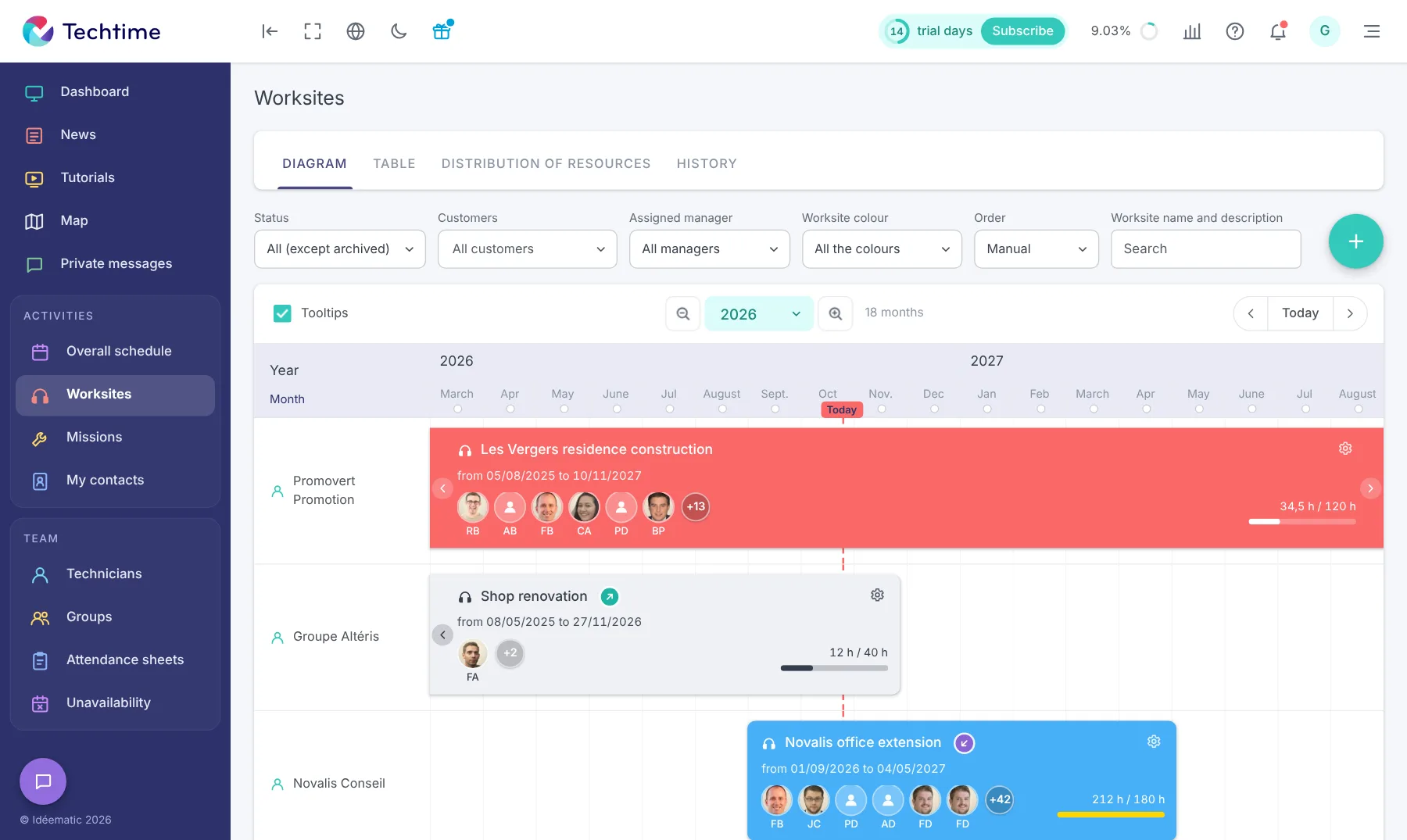
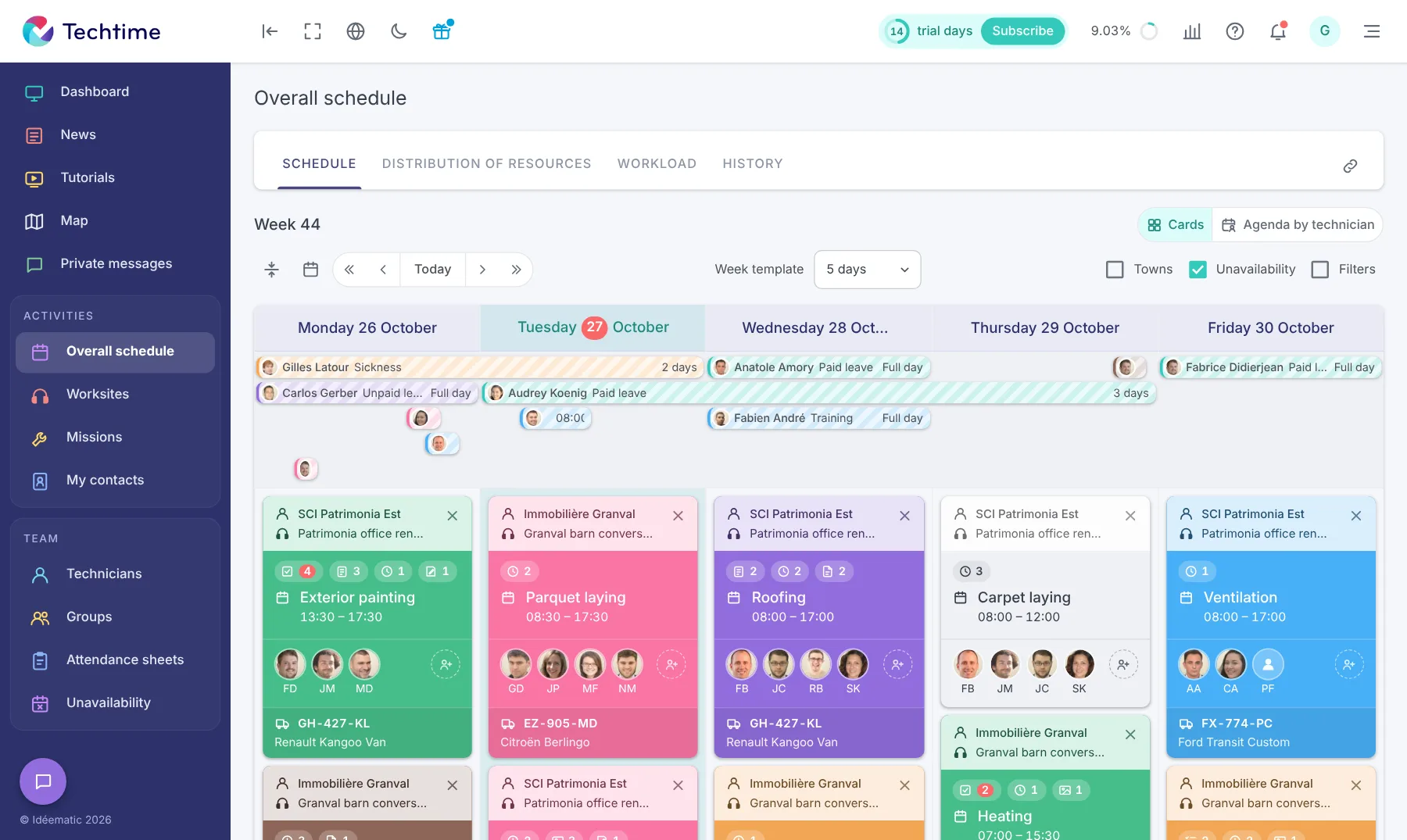
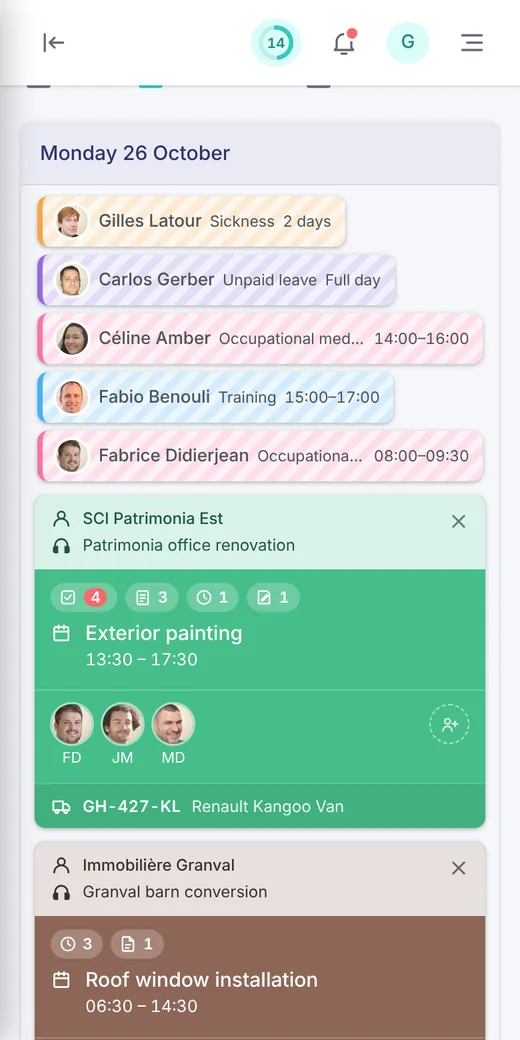
With Techtime software, draw up your job schedule across several worksites and organise your work in real time with other tradespeople. For help setting up your locksmith business, get in touch with our experts in supporting business owners.
Frequently asked questions
What training do you need to become a locksmith?
In France, a CAP locksmith-metalworker or aluminium and glass joiner, an additional qualification as a welding technician, a BP metalworker, a vocational baccalaureate (building works, metalwork or industrial boilermaking) or a BTS in metal architecture or industrial boilermaking.
Can you become a locksmith without qualifications?
To set up a locksmith business without qualifications in France, you must prove at least 3 years of experience and complete an SPI (pre-installation course) with the Chamber of Trades and Crafts.
How much does a locksmith earn?
A beginner locksmith in France starts on the minimum wage, i.e. €1,245 net a month. They can earn up to €26,215 gross a year after 10 years of experience, and around €3,000 net a month self-employed with a good client network.