


Please note: this article refers to French regulations and standards.
In 2023, a PlanRadar survey revealed that 80% of construction companies face disputes on their worksites. Because of poor communication, four out of five contractors distrust their subcontractors (source). This worrying finding has remained constant in recent years. In France in 2017, 64% of works projects ran into one type of dispute, while 36% faced several (source). These conflicts between professionals inevitably have negative consequences for finances, quality and the reliability of the works. What are the most effective preventive measures to avoid worksite disputes?
In brief
80% of construction companies face worksite disputes, mainly over defects (43%), non-compliant work (22%) or delays (20%). Six measures help protect you: a clear construction contract, careful worksite preparation, impeccable monitoring, quality control, a carefully prepared handover and up-to-date regulatory monitoring.
The most common worksite disputes
A worksite dispute arises when you have disagreements or differences with your customer or your partners. The most common causes are detailed in the 2017 report by the French national consumer and user association (CLCV) (source):
- Defects such as cracks or failure to meet standards (43%).
- Work not complying with the contract specifications (22%).
- Delays in completing the works (20%). Weather conditions, late deliveries of materials or changes requested by the client can cause overruns.
- Snags not cleared by the company (8%).
- Bankruptcies leading to the worksite being abandoned or stopped (7%).
Other factors are possible, such as invoices exceeding the initial quote, non-payment for work done or disagreement over the contract. In France, all construction tradespeople are bound by an obligation of result: they must deliver finished work that complies with the contract with the customer. If their contractual liability is engaged, they can be ordered to reimburse and compensate the client (source).
To better anticipate these problems and avoid confrontations, we suggest six actions to put in place from the start of the project. All these measures share communication between the parties, clarity and compliance with the contract.
1Avoid worksite disputes with a clear construction contract
The construction contract frames the relationship with your customer from the outset by defining each party’s rights and obligations. In France, there are several types: the individual house construction contract (CCMI); the works contract; the project management contract or the property development contract (VEFA, off-plan sale). Whatever your document, it must set out the following terms as clearly as possible (source):
- a detailed description of the project;
- costs;
- deadlines;
- payment terms;
- each party’s responsibilities;
- penalties for failure to meet the conditions;
- clauses (payment; warranty; termination; amicable dispute resolution; civil liability; delivery deadlines; change orders, etc.).
Then complete your project file with additional documents such as your purchase orders, quotes and invoices. If your customer is a private individual, a detailed quote is mandatory in France once the works exceed €150 including VAT (source). The client accepts your contract once they write “Bon pour accord” (approved), with the date and their signature, on the quote and your terms and conditions of sale.
To keep track of all the paperwork, consider EDM software (electronic document management).
2Prepare your worksite carefully
Beyond meetings with your customer, other tasks are essential to prepare and organise your construction worksite properly. This time, the focus is on your teams of employees and subcontractors, as well as your equipment fleet. Several steps are needed to prepare your worksite schedule:
- Break the project down into several tasks to set achievable deadlines in terms of time and resources.
- Select the resources needed for each task (both human and material).
- Put in place the tools and time needed for communication between teams, and between the project manager and the client.
- Allow a reasonable margin for risk management (bad weather, delivery problems, design changes, etc.).
- Place orders with your suppliers.
- Obtain the necessary administrative authorisations (worksite layout plan, construction drawings, declaration of intent to start works, etc.)
- Etc.
3Ensure impeccable worksite monitoring
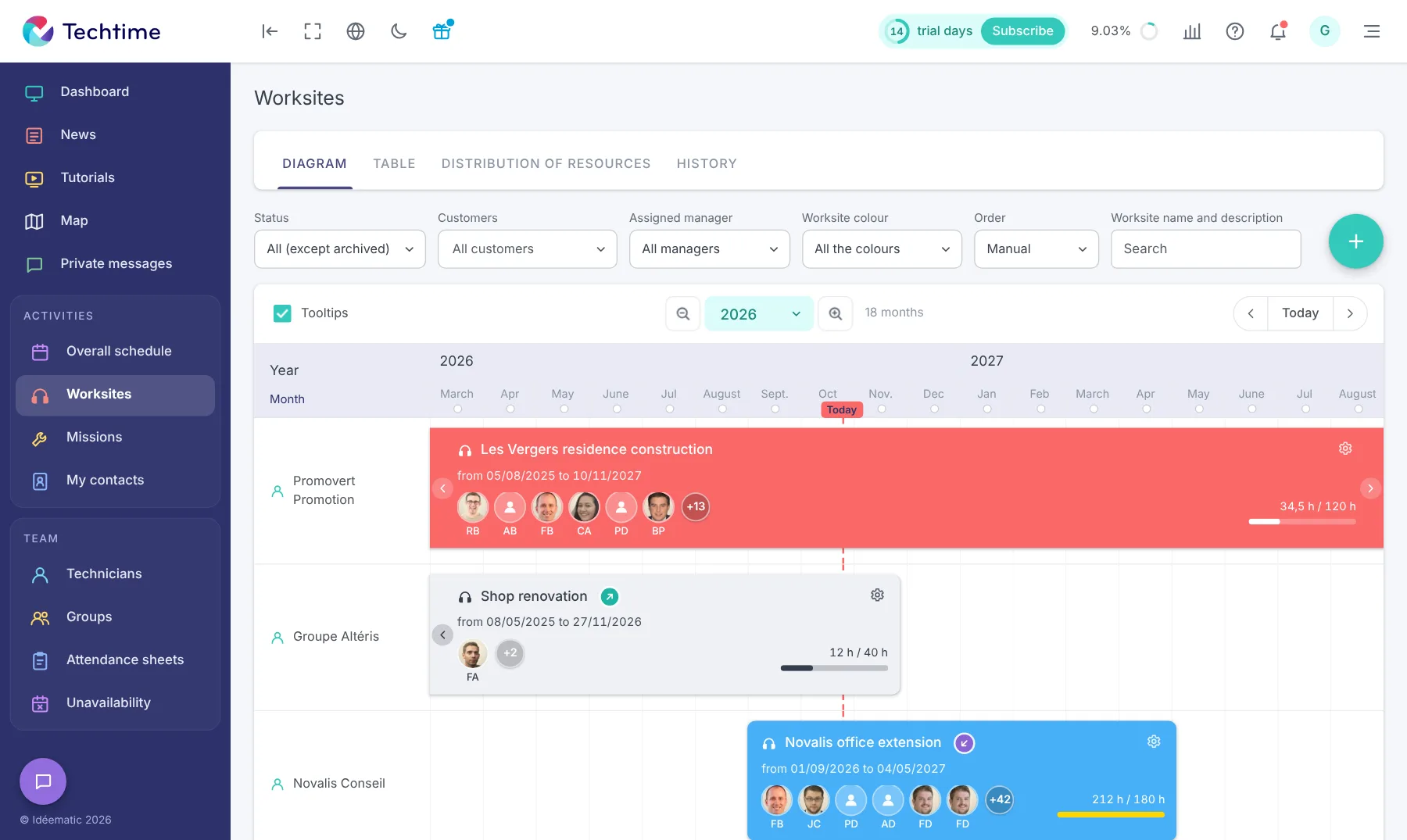
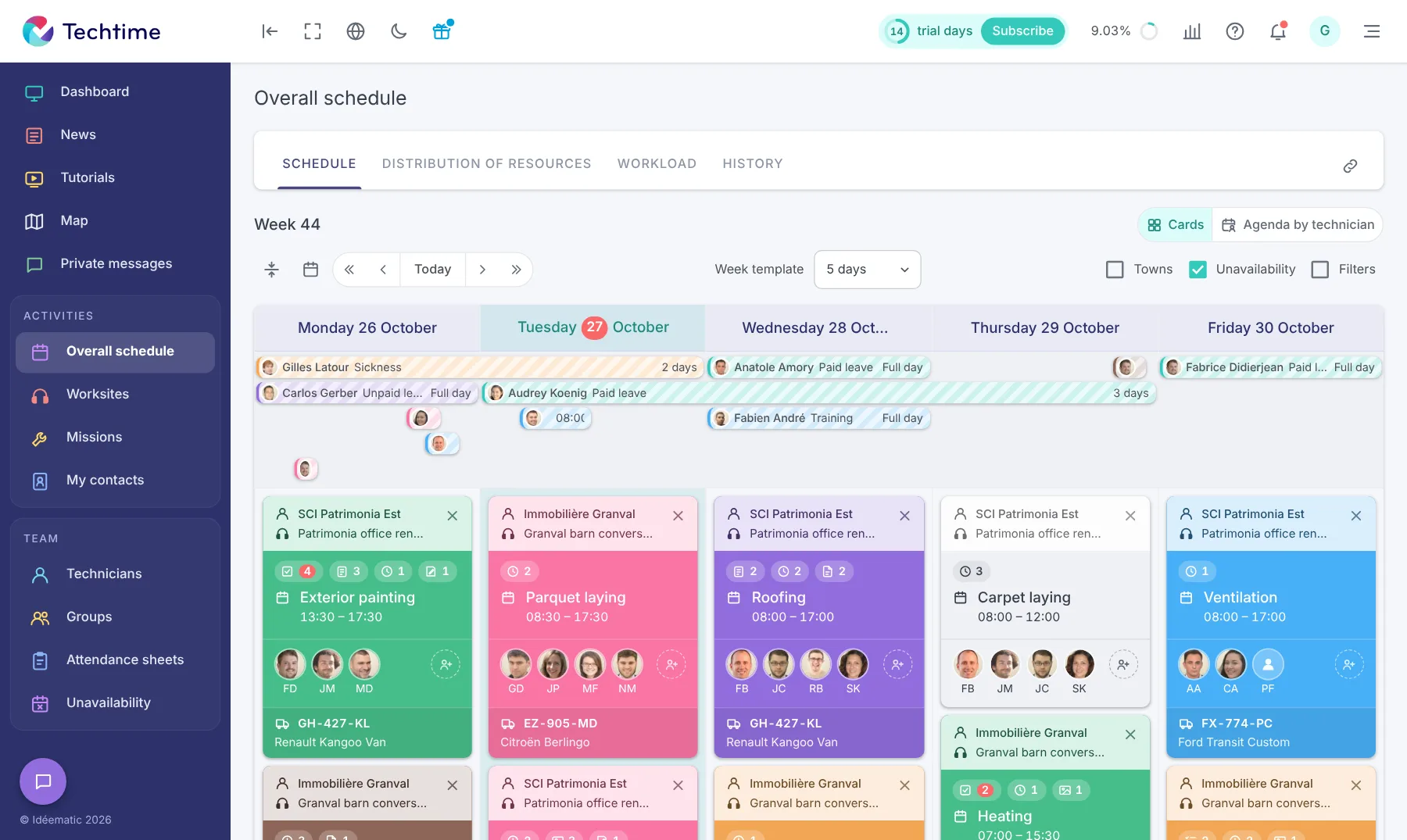
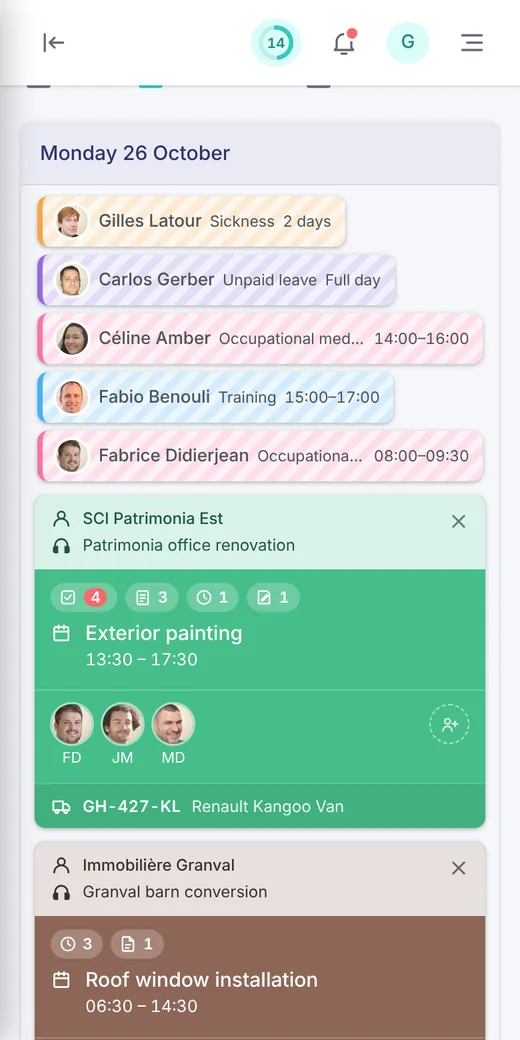
Communication is vital to a project’s success. With worksite tracking software such as Techtime, everyone can follow the progress of the works in real time. The app includes instant messaging to organise meetings or quickly share important information. Photos taken on site, time-stamped and annotated, can serve as evidence in the event of a later claim (source).
Despite these digital tools, schedule regular site visits (with or without your project manager). By inspecting the site in detail, you will have time to spot the slightest problem and fix it quickly. Every visit is recorded in a site report and in progress statements.
Good to know: the customer or client may request additional work. The reasons are mainly financial or due to changing site constraints (source). In all cases, a quote amendment is needed to have these changes approved by the customer and ensure they are paid in full (source).
How can software help you optimise your worksite management?

In this white paper, discover 4 key points to understand the benefits of using good software every day to manage your worksite and job activities:
- How do you plan, organise and supervise your worksite?
- What are the benefits of using worksite management software?
- Which software should you choose?
4Ensure optimal worksite quality
As mentioned in the first part of this article, defects are one of the main causes of worksite disputes. Other incidents can disrupt the works, such as fires, water damage, stock problems or theft on the worksite.
To avoid damaging your company’s image, ask your client or an outside inspector to carry out a worksite quality inspection. This document lists any construction defects that could lower the building’s rating or, worse, make it unfit for use. With impeccable quality in your materials and your tradespeople’s work, you reduce your costs while maximising customer satisfaction. You won’t have to carry out remedial work.
5Prepare the handover of works carefully
Once the building is finished, the builder organises the handover of works so that the customer can approve the quality of the work. This step is crucial because it marks the start of the statutory guarantees in France, the main ones being (source):
- the ten-year guarantee;
- the proper functioning guarantee;
- the completion guarantee (GPA).
Several types of handover are possible. In all cases, the parties inspect the building together before signing a handover report. If defects are found, the tradesperson has one year to repair them. Once the project manager’s snags have been cleared, the declaration certifying completion and compliance of the works (DAACT) is signed.
The handover can be amicable or judicial, under Article 1792-6 of the French Civil Code. In the latter case, a judge rules on whether the building is ready to be handed over, based on case-law criteria (source).
6Keep your regulatory monitoring and guarantees up to date
Construction law changes in its legislation, standards and provisions because of environmental and economic issues and technological advances. Don’t hesitate to take professional training courses to stay up to date. Call on construction lawyers to help you draft your documents or defend your interests (source).
Worksite disputes can be avoided through good preparation before your worksite starts. With clear contracts and a schedule that leaves enough room for manoeuvre, you keep your tasks well under control. Don’t let the quality of your work slip: make regular site visits and keep communication optimal between everyone involved. Our Techtime software has all the features you need to carry out your worksites in the best conditions. Contact us now.
Frequently asked questions
What are the most common causes of worksite disputes?
Defects (43%), work not complying with the contract (22%), delivery delays (20%), snags not cleared (8%) and bankruptcies (7%).
What should a construction contract contain?
A detailed description of the project, costs, deadlines, payment terms, each party’s responsibilities and penalties for failure to meet the conditions.
How can you avoid disputes on a worksite?
By signing a clear contract, preparing the worksite carefully, monitoring it with regular visits, checking quality, preparing the handover carefully and keeping up with regulatory changes.