


Please note: this article refers to French regulations and standards.
Plumbing in France is a sector largely dominated by small businesses. Of annual revenue of €14 billion in 2025, the vast majority goes to 15,000 SMEs (small and medium-sized enterprises). Jobs keep increasing thanks to the boost to the MaPrimeRénov’ grant and the ban on gas boilers since 2022 (ModelesdeBusinessPlan). Short training, an attractive sector… discover everything you need to know to start your career change and become a plumber.
In brief
The plumber designs and installs a building’s pipework: they study the plans, calculate pressure and flow rates, lay the pipes, test for leaks and connect the sanitary appliances; the plumbing and heating engineer also installs radiators and boilers. The trade is recruiting heavily: in France, 20,000 plumbing and heating engineer jobs were vacant in 2024. It is open with a CAP (French vocational certificate) in sanitary installations, prepared in two years or in a few months for career changers. The average gross salary is estimated at €22,560 a year in 2025.
1What does a plumber do?
The plumber works on all types of worksite, both new build and renovation. They don’t just install pipes. They analyse plans and make rigorous calculations to ensure a functional, safe network. Their tasks can be summed up in the following three key points.
- 1Planspipe routing
- 2Calculationspressure, flow, diameters
- 3Installationpipework and fittings
- 4Testingleak-tightness and insulation
- 5Appliancessanitary ware and household appliances
Preparing the plumbing installation diagrams
Before getting to work on the worksite, the plumber carefully studies the architect’s plans to determine the pipe routes. This preparatory work is essential for the safety of their work, especially if it takes place near the electrical network or air ducts (CIDJ).
They calculate the pressure and the volumetric flow rate for each installation, in litres per second or cubic metres per hour (Pages Jaunes). Calculating the flow rate and pressure determines the right pipe diameter and ensures sufficient flow for the household appliance or sanitary fitting. For example, according to the French unified technical document (DTU), the flow rate for a hand basin (0.1 L/s) is not the same as for a bath (0.33 L/s).
Laying the pipes and fitting the appliances
Once the plans are ready, the plumber goes on site according to the updates made to the worksite schedule. Inside the building, they mark out and drill holes in walls or floors to insert the pipework. This consists of pipes joined together, whose dimensions depend on the calculations mentioned above.
Once the pipes are installed, they check essential parameters, such as leak-tightness and insulation. If the network has no defects, they fill in the holes and fit the sanitary appliances (bath, sink, etc.) and household appliances (washing machine, dishwasher). They handle both the taps and valves and the electrical connections.
Installing other equipment for home comfort
When working as a plumbing and heating engineer, this construction professional also installs equipment to regulate the temperature of the home. Radiators, boilers, air conditioning and ventilation systems… all these appliances have one thing in common: they work with fluids. As well as new build, the plumber is a tradesperson who contributes greatly to energy renovation.
Once the building is operational, they regularly follow up with clients to service or repair faulty appliances. Their PPE (personal protective equipment) must be faultless to protect them from toxic substances (Officiel Prévention):
- bacteria, viruses or chemicals in wastewater;
- asbestos, lead, mould or solvents on the pipe walls.
The plumber may help with laying finishes in wet rooms or with home automation for connected appliances. In that case, they work in close collaboration with the tiler and the electrician respectively (Manpower).
2What are the pros and cons of being a plumber?
The advantages of the plumber’s trade
Like other construction trades, plumbing is a profession that requires few years of study and offers plenty of jobs. According to a France Travail survey, 20,000 plumbing and heating engineer jobs were vacant in 2024 (Je change de métier). Because of the lack of skilled labour, this shortage was still a reality in 2025, on a par with bricklayers and joiners.
Unlike the landscaper or the roofer, the plumber works mainly indoors. The impact of the weather on worksites doesn’t affect them directly. For a site foreman, this makes scheduling easier. What’s more, the plumber works in many types of buildings: residential, industrial, retail, agricultural or office buildings.
The disadvantages of the plumber’s trade
Working conditions are recognised as very tough. Whether for call-outs or remedial work, the plumber has to be available 24 hours a day, including weekends and public holidays. Sanitary appliances, household appliances and air temperature control equipment are very heavy to carry. The risk of injury is particularly high in the event of a fall or a wrong move.
Pipes are found in cramped spaces, prone to unpleasant smells and deposits. Most old pipework contains carcinogenic materials also found in worksite dust such as lead, silica or asbestos. In addition, near a boiler or water heater, you have to watch out for extreme temperatures that can cause burns.
3What skills do you need to be a good plumber?
The plumber has in-depth knowledge of fluid flow and the materials used for pipes (copper, stainless steel, steel, etc.). They master various preparation and assembly techniques, from marking out to bending and welding.
In terms of safety, they hold a PGN qualification (natural gas professional) and PGP (propane gas professional). Some knowledge of electrics and masonry is very useful for meeting the requirements of their client. More than just carrying out work, the plumber also acts as an adviser to optimise the plumbing layout. Finally, good physical fitness is essential for working in uncomfortable positions or carrying heavy loads.
4Retraining to become a plumber: what training do you need?
Training to become a plumber is among the shortest in construction. In France, the CAP in sanitary installations is the first qualification, prepared in two years, or in a few months for career changers. This training validates the fundamental skills, such as connecting pipes and carrying out repairs.
Once they have their CAP, the apprentice plumber can specialise in zinc roofing work or in maintaining individual heating equipment. If they want to study for up to 3 more years, they can obtain one of the following qualifications (Onisep):
- Vocational baccalaureate in heating, air conditioning and renewable energy installation;
- Vocational baccalaureate in maintenance and energy efficiency;
- Brevet professionnel (BP) in swimming pool trades or HVAC and sanitary installations;
- Titre professionnel (TP) climate comfort equipment installation technician.
Can you become a plumber without qualifications?
Because of the risks on worksites, certain certifications are mandatory for some plumbing activities in France. For example, the PGN certifications (natural gas professional) and PGP (propane gas professional) are required only for working on gas installations. However, a plumber can work without these certifications if they don’t work on that specific equipment. An adult changing career can complete CAP-level training in a few months or a year instead of the usual two years (Legalstart).
What are the possible career prospects in plumbing?
After a few years of experience, a seasoned plumber can apply for site foreman or site manager positions. An employed plumber can go self-employed, especially as professionals with dual training are in high demand and highly valued.
5What does a plumber earn?
In 2025, Batiactu estimated the average gross salary of a plumber in France at €22,560 a year. Pay depends on location, experience and status (employee or business owner). After 10 years of experience, an employed plumber can earn up to €30,479 gross a year, i.e. €1,838 net a month. If they are versatile and work in an area with plenty of jobs, a self-employed plumber can earn up to €5,000 net a month (Indeed). This level is reached through many extra hours (jobs and administration) and good opportunities.
6Conclusion
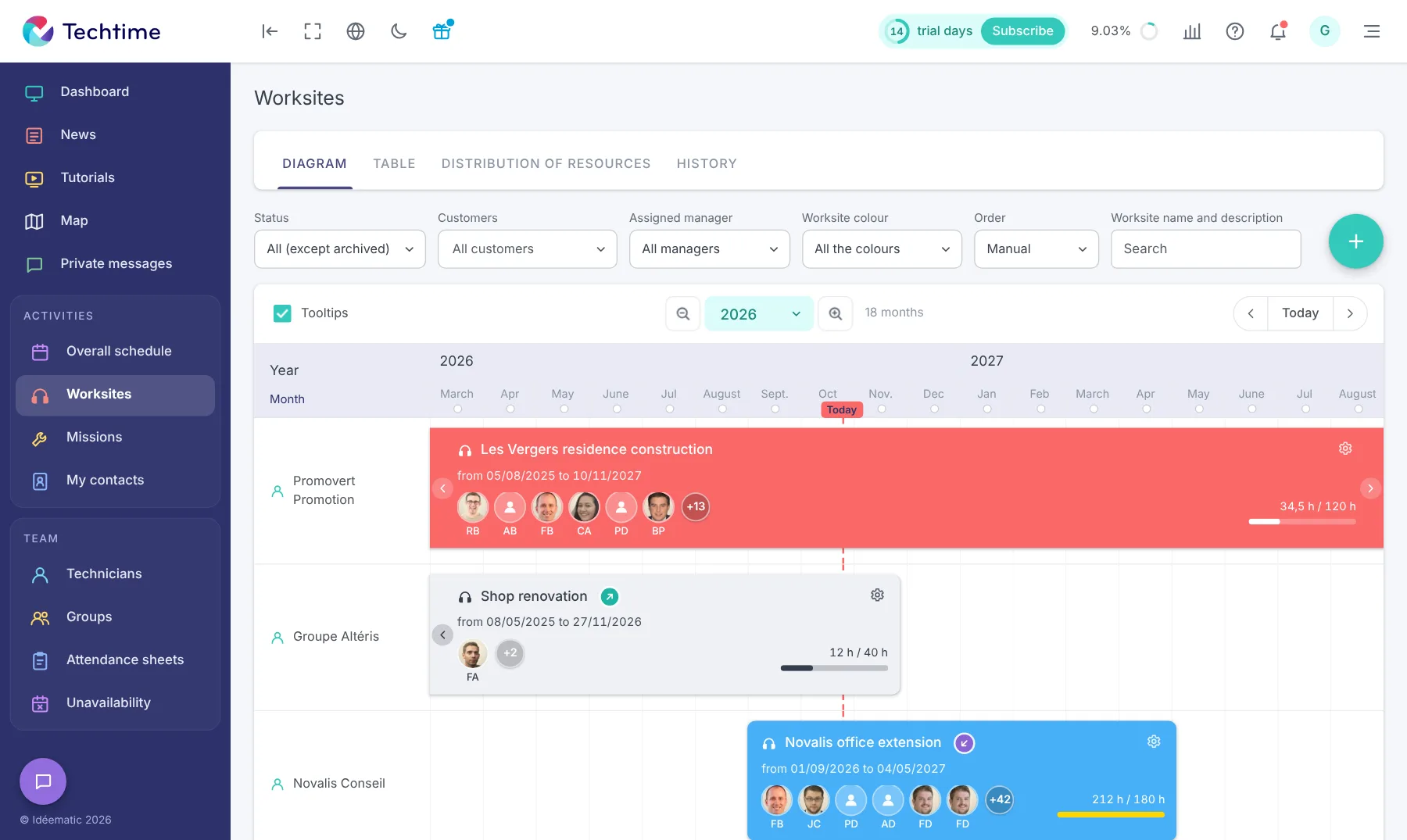
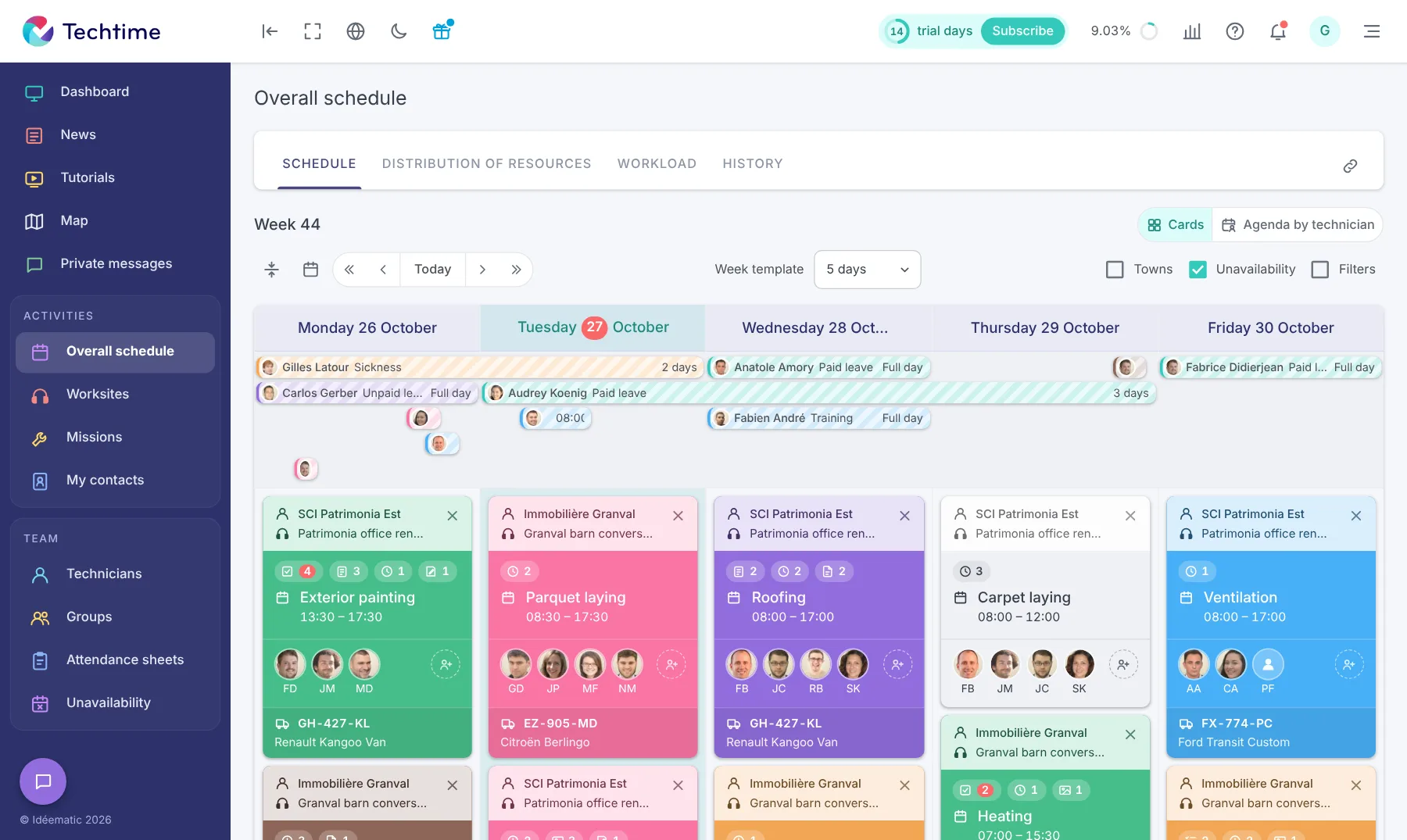
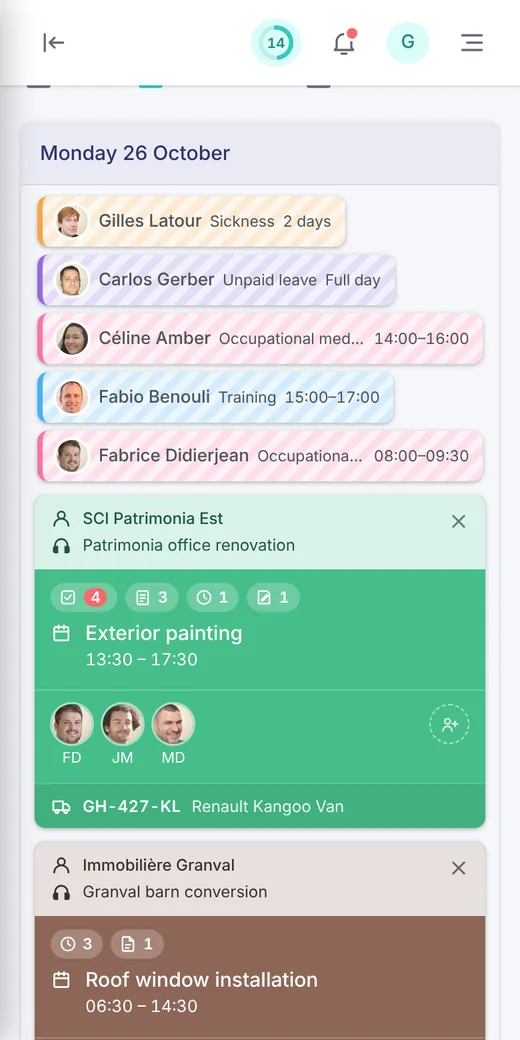
An essential construction trade, plumbing offers many opportunities, whether as an employee or self-employed. Working conditions are demanding and safety measures are a must. However, demand for skilled plumbers keeps growing, thanks to energy renovation and the rise of new technologies (connected plumbing). To cope with the many worksites ahead of you, subscribe to Techtime, your worksite management software, without delay.
Frequently asked questions
What training do you need to become a plumber?
In France, the CAP in sanitary installations, prepared in two years, or in a few months for career changers. It can be supplemented by a vocational baccalaureate, a brevet professionnel or a titre professionnel in heating, air conditioning or HVAC engineering.
Are gas certifications mandatory for a plumber?
The PGN (natural gas professional) and PGP (propane gas professional) certifications are required only for working on gas installations. A plumber can work without them if they don’t work on that equipment.
How much does a plumber earn?
In 2025, Batiactu estimated the average gross salary of a plumber in France at €22,560 a year. It varies by region, experience and speciality.