


Please note: this article refers to French regulations and standards.
The handover of works is an important milestone in the life of a worksite. Closing out a project is not just about clearing snags or signing the handover report. The as-built file (DOE) is often decisive in finalising the contract.
Too often put together in a rush a few days before handover, the DOE is nevertheless central to handing the building over to the client (TP Demain). It gathers the information needed to operate, maintain and carry out future work on the building. An incomplete file can lead to requests for additional documents, delay the administrative sign-off of the worksite or postpone payment of the balance due under the contract.
That is why planning how to compile it from the start of the works helps avoid these difficulties and secures the end of the worksite.
In brief
The DOE is the file handed over at the end of the worksite to describe the works actually carried out. It is mandatory in French public contracts that refer to the General Administrative Clauses for Works (CCAG Travaux), under the order of 30 March 2021, and may be required in private contracts by the contract documents.
Each company must include the documents for its work package: as-built drawings, manuals, data sheets, warranties, test reports or maintenance documents, depending on the contract requirements.
An incomplete DOE can lead to requests for additional documents, delay sign-off of the end-of-worksite file and postpone payment of the balance due under the contract. The earlier it is prepared, the lower the risk of omissions at the end of the worksite.
1What is a DOE and why is it essential for closing out a worksite?
The DOE is the technical memory of the building. Thanks to it, the client and future operators have an accurate picture of the works actually carried out.
Identifying the works actually carried out
The as-built file gathers all the documents describing the works as they were carried out on site. Unlike the drawings produced at design stage, it includes the adjustments made during the works. This applies to rerouting a network, changing a piece of equipment or adjusting an installation in response to site conditions.
The DOE is built throughout the worksite. Site meeting reports, revised drawings and technical documents keep a record of the work carried out.
Case study
A company has to create a new service shaft to house additional equipment. The job concerns a commercial building handed over to the client five years earlier. Thanks to the DOE, it quickly locates the existing networks and identifies the available areas. Without these centralised documents, further investigations, sometimes destructive, might have been needed before work could start.
Making future maintenance and operation easier
The value of the DOE shows mainly after handover. As Batiscript points out, maintenance teams rely on this file to find the specifications of the installed equipment. They consult the manufacturer’s manuals and plan servicing and repairs for the building’s various components.
The same information is also valuable to insurance experts in the event of a claim (leak, fire). Like the technical teams, they can understand how the building is organised and quickly identify the source of the problem. The DOE can also provide useful traceability in the event of a dispute, expert assessment or claim, by specifying the works and equipment actually installed by the company.
Finally, the DOE also makes future renovation or extension work easier. This helps enhance the value of the building when it is sold or let. Future buyers or tenants feel more confident in their decisions if the file is sufficiently reliable.
2What are the legal and contractual obligations for the DOE?
The obligations applying to the DOE differ depending on whether it is a public or a private contract.
Public contracts and Article 40 of the CCAG Travaux 2021
In public contracts referring to the CCAG Travaux 2021, handing over the DOE is a clearly defined contractual obligation.
Article 40 specifies that the file must include in particular the as-built drawings, operating manuals and the maintenance instructions needed to operate the building.
The documents must be submitted with the request for handover of the works. This requirement makes preparing ahead throughout the worksite all the more important.
Good to know: on projects split into work packages, each company must supply the items for its own package so that the final file can be compiled.
Private contracts and the NF P 03-001 standard
In private contracts, the DOE is not generally imposed by a single text. It becomes contractually required when provided for in the contract documents: quote, contract, CCAP, CCTP or a reference to the NF P 03-001 standard.
For anchor devices (lifelines, anchor points), documentation booklet FD S71-522 is a recent technical reference on the design, installation and inspection of anchor systems. The companies concerned should therefore check the documentation requirements set out in the contract, the manufacturers’ manuals and the applicable standards. Other documents may be included in the file so that the devices can be used, inspected and maintained safely, such as:
- The specifications of the installed system;
- Layout drawings;
- User manuals;
- Maintenance instructions;
- Checks carried out before commissioning.
Companies should therefore check the applicable documentation requirements as early as the contract analysis. This vigilance helps avoid end-of-worksite disputes and financial retentions linked to missing documents.
- Handing over the DOE: a contractual obligation
- Documents submitted with the request for handover
- Each company supplies the items for its work package
- Not generally imposed by a single text
- Required when provided for in the contract documents
- Reference: NF P 03-001 standard
3Key points
In public contracts subject to the CCAG Travaux 2021, the DOE documents must be available with the request for handover. Waiting until the end of the worksite to compile the file exposes the company to administrative and financial delays.
4Why can an incomplete DOE delay the end of the worksite?
In many contracts, the balance is paid after the end-of-worksite documents have been checked. The law firm Occi-Avocats states that the balance still to be paid at the end of a project frequently represents between 5 and 15% of the contract value. This proportion may vary depending on the contract terms.
Yet an incomplete DOE generally leads to requests for additional documents. Until the expected documents are handed over, sign-off of the file may be delayed. This leads to the final payment being postponed or to penalties provided for in the contract.
For example, a company specialising in the renovation of an office building finishes its work on time. When the DOE is checked, several technical manuals and test reports are missing. The project manager then asks for additional documents before approving the file. Even though the works have actually been handed over, part of the balance remains withheld until the missing documents are provided.
Be careful not to confuse the balance still to be paid with the retention. The retention follows its own rules and only applies if it is provided for in the contract.
5What should a complete as-built file contain?
The exact content of the DOE depends on the contract requirements, the work package concerned and the nature of the works. Some documents nonetheless come up regularly in the files handed over at the end of a worksite.
Checklist of documents to include in a DOE
In public contracts subject to the CCAG Travaux 2021, the content of the DOE is specified in the contract’s particular documents. It includes at least the as-built drawings, operating manuals and the maintenance instructions needed to operate the building.
Depending on the work package, the nature of the works and the contractual requirements, the DOE may also include:
- as-built network survey drawings;
- data sheets for the materials and equipment installed;
- user manuals;
- maintenance manuals and instructions;
- manufacturers’ servicing instructions;
- certificates or attestations of conformity;
- test reports;
- inspection reports;
- warranties for the equipment installed;
- installation specifications;
- waste removal records when the contract requires them;
- the documents needed to draw up the DIUO, where the worksite is concerned.
The company must therefore check, from the start of the worksite, which documents are expected for its work package, so that it can collect them as the works progress.
These documents are part of the works handover process. The works handover report records the findings and any snags. They then serve as a reference throughout the building’s life. The better structured the file, the easier its future use for the client, the operators and the companies called on to work there later.
What is the difference between the DOE and the DIUO?
The DOE and the DIUO (file for subsequent work on the structure) serve two different purposes.
The DOE describes the works carried out and gathers the information needed to operate and maintain them. The DIUO is drawn up by the SPS coordinator (health and safety protection) and handed to the client, as stated in Article R4532-97 of the French Labour Code. It aims to protect the safety of people who will later work on the building for servicing, maintenance or renovation.
The DOE therefore follows a technical operation logic, while the DIUO follows a risk prevention logic for future work on the structure. The two files complement each other but must not be confused.
- Describes the works actually carried out
- Information useful for operation and maintenance
- Each company supplies the documents for its work package
- Drawn up by the SPS coordinator
- Prepares future work on the structure
6Who is responsible for compiling the DOE?
Compiling the DOE involves several stakeholders who step in at different times during the worksite. Each company is responsible for the documents relating to its work package (drawings, data sheets, manuals, certificates, test reports). Depending on how the worksite is organised, these items are passed to the project manager, the main contractor or directly to the client. On projects split into work packages, each contractor must supply the DOE for its own package.
7How do you compile your DOE without stress?
The CCAG Travaux 2021 has made planning ahead more demanding: the DOE documents must be handed over with the request for handover, not pieced together afterwards. To avoid hold-ups, we recommend adopting these two habits from the start of the project.
Building the DOE as you go
Compiling the DOE is generally easier when documents are collected as you go, at the moment they are produced:
- manuals, warranties and data sheets when a piece of equipment is installed;
- drawing updates as soon as a change is approved;
- keeping successive versions to ensure traceability.
A document tracking table or a document management solution then centralises this information. It lists the expected documents, the people responsible, the submission dates and the approvals given. This organisation limits omissions and reduces last-minute searches before the worksite handover.
Centralising documents in your worksite tracking app
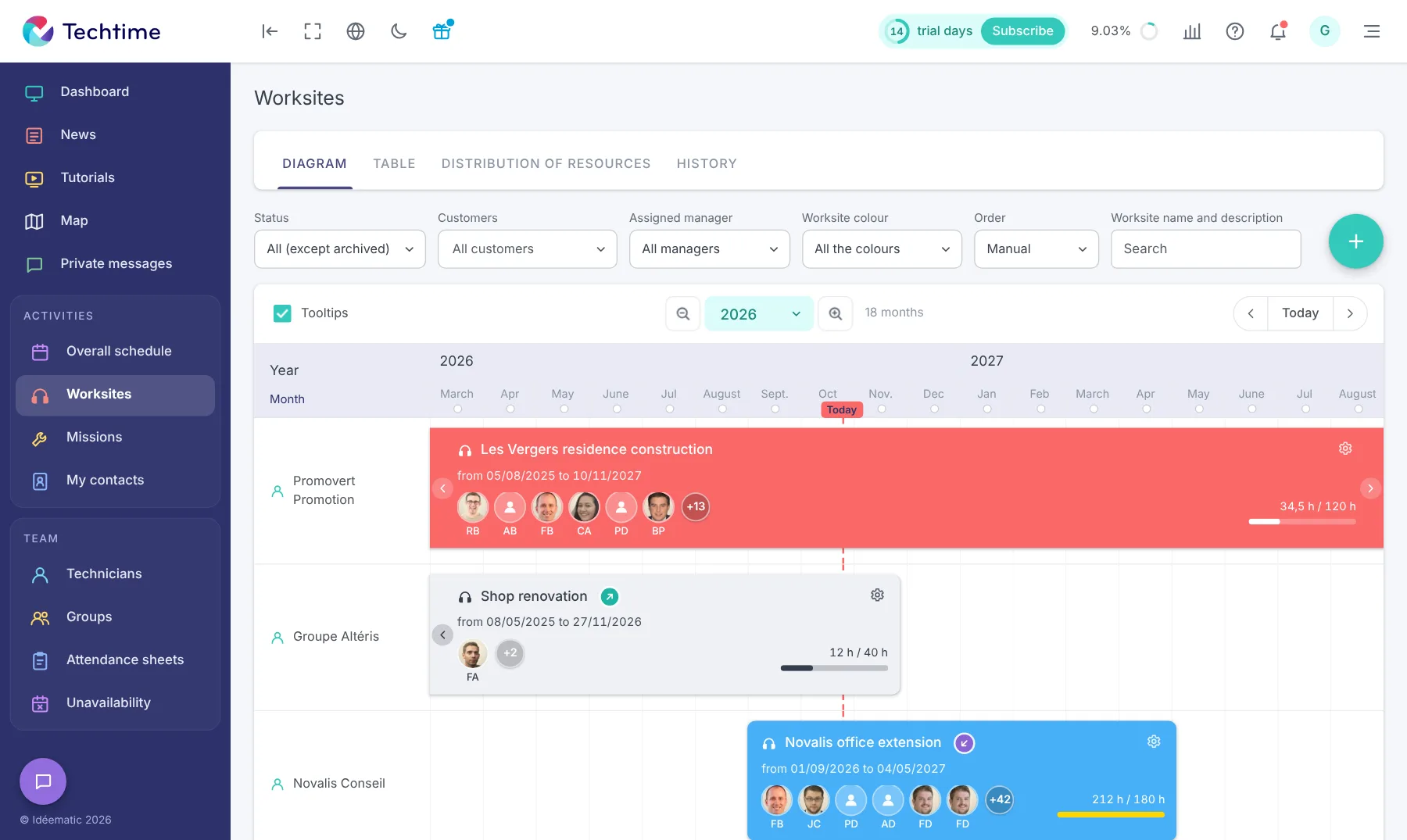
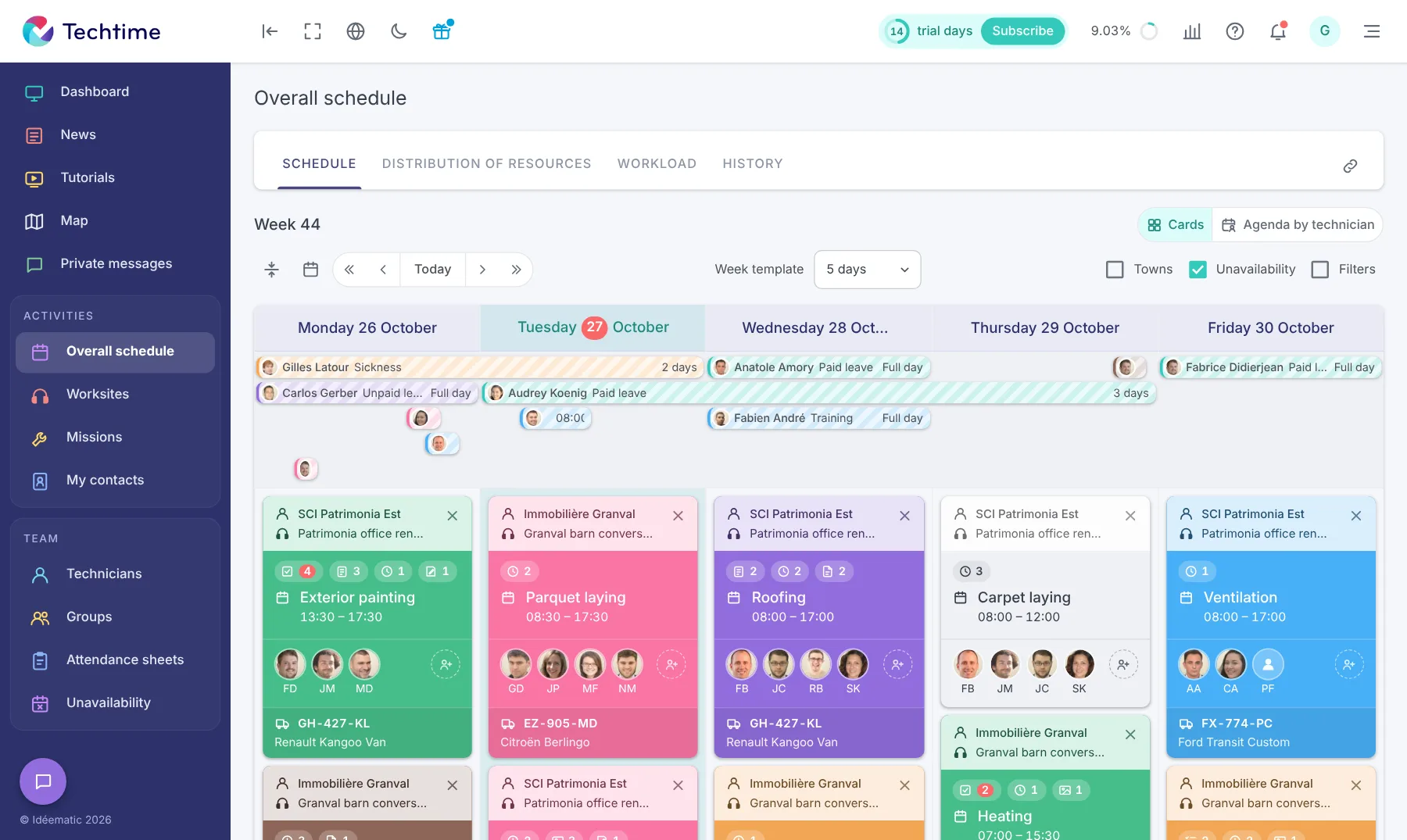
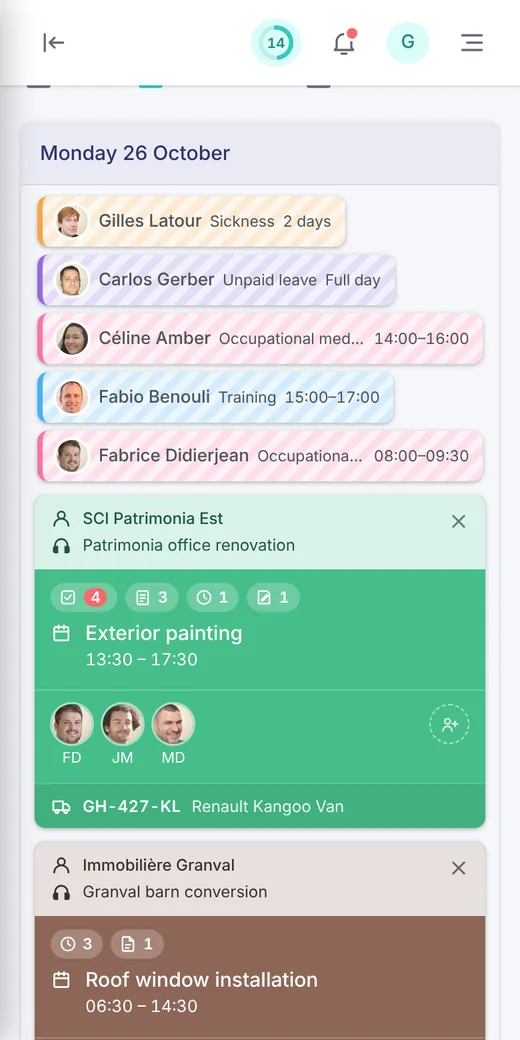
A digital worksite tracking solution centralises the documents needed for the DOE: photos, reports, manuals, drawings, technical documents and other files sent by the site teams. With centralised worksite documents, files stay accessible in the right place, communication is better organised and the risk of losing documents is reduced.
This approach is in line with the principles of digital sobriety applied to the construction sector: simplifying processes without adding to the site teams’ daily workload.
- 1Contract analysisdocuments expected for your work package
- 2Equipment installationmanuals, warranties, data sheets
- 3Approved changeupdated drawings
- 4Document trackingexpected documents and owners
- 5Request for handovercomplete DOE handed over
8Mistakes to avoid when preparing a DOE
Some mistakes come up regularly on construction and renovation projects:
- Waiting until the end of the worksite: documents are harder to find and the risk of omissions rises sharply.
- Forgetting the manufacturers’ manuals: the DOE becomes incomplete and future operators have less information to maintain the equipment.
- Not updating the drawings: the documents handed over no longer reflect the reality of the worksite, complicating future work.
- Neglecting the maintenance documents: information useful for servicing the building risks being lost after handover.
- Skipping a final check: requests for additional documents multiply and can delay sign-off of the file.
9Digital DOE and BIM: what changes for complex worksites?
For most tradespeople, the priority is first to produce a digital DOE that is clear, complete and well organised. On more complex projects, this approach can go further with BIM DOE.
In a BIM DOE approach, the information in the file can be integrated directly into the digital model. Equipment is linked to its technical specifications, user manuals and maintenance instructions. Operators can access the data they need more quickly to manage the building, plan servicing or prepare future works.
This approach improves the traceability of information and makes asset management easier. Social housing projects, such as those carried out by Logirep, illustrate this shift towards operation based on technical data rather than on paper documentation alone.
Conclusion
The DOE plays an essential role in closing out a worksite. It makes operating and maintaining the building easier, while contributing to the handover of the works and the payment of the contract balance.
To avoid delays and requests for additional documents, its preparation should be planned from the start of the works. A solution such as Techtime helps centralise worksite documents and find them more easily when preparing the DOE. Book a demo to discover its features.
FAQ
Have questions? We answer the main ones…
Who must supply the DOE on a worksite?
Each company supplies the documents for its work package. Depending on how the worksite is organised, these items are passed to the project manager, the main contractor or directly to the client.
Is the DOE mandatory for a tradesperson?
Yes, when it is provided for in the contract. This is the case in public contracts that refer to the CCAG Travaux, and in private contracts when the contract documents require it.
In what format should a DOE be handed over?
The format is specified in the contract documents. In public contracts subject to the CCAG Travaux 2021, the DOE is handed over in digital format in line with the requirements of the contract’s particular documents. In private contracts, the expected format should be checked in the quote, contract, CCAP or CCTP.
Should the DOE be updated after handover?
Work carried out after handover does not automatically change the original DOE. When it concerns major equipment or structures, it is advisable to update the documentation to keep reliable traceability of the building.
How long should DOE documents be kept?
The DOE is meant to accompany the building throughout its operating life. It remains useful for maintenance, renovations, technical assessments or property transactions, sometimes several decades after handover.