


Please note: this article refers to French regulations and standards.
The number of delays in delivering new homes has kept rising in France since 2020. The causes vary: rising materials prices, failing construction companies or the impact of the weather. The consumer association UFC-Que Choisir reports an average delay of five months for 30% of building programmes (source). That is why using a worksite OPC (scheduling, management and coordination) is becoming necessary to avoid paying late penalties. Discover what this unusual role involves.
In brief
The OPC (scheduling, management and coordination) makes sure the works run on time and on budget: they draw up the worksite schedule, harmonise interventions in time and space and coordinate the teams. The role, generally entrusted to the project manager by the client, follows the worksite from the study phase to snag clearance. It is not mandatory but reduces the risk of delays and unexpected costs. The job requires 3 to 5 years’ experience and at least a bachelor’s-level degree.
1What is a worksite OPC?
The OPC (scheduling, management and coordination) is a professional who ensures the worksite is well organised throughout. Their role starts in the project preparation phase and ends when the client clears their snag list.
Their aim is to do everything possible to ensure the works are carried out on time and on budget. To do this, they carry out the following tasks:
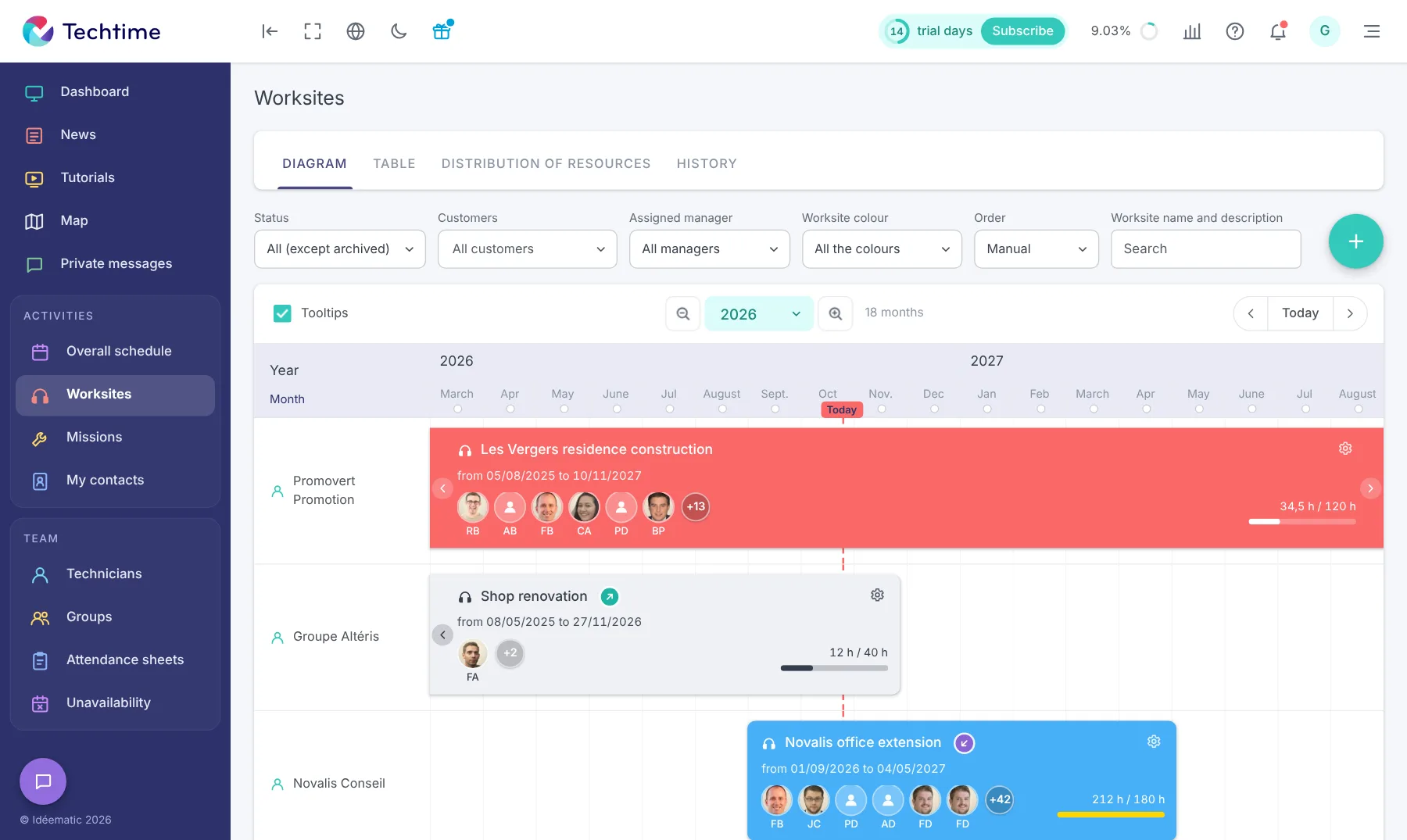
- Drawing up the worksite schedule from a study of the constraints and tasks to be completed (scheduling).
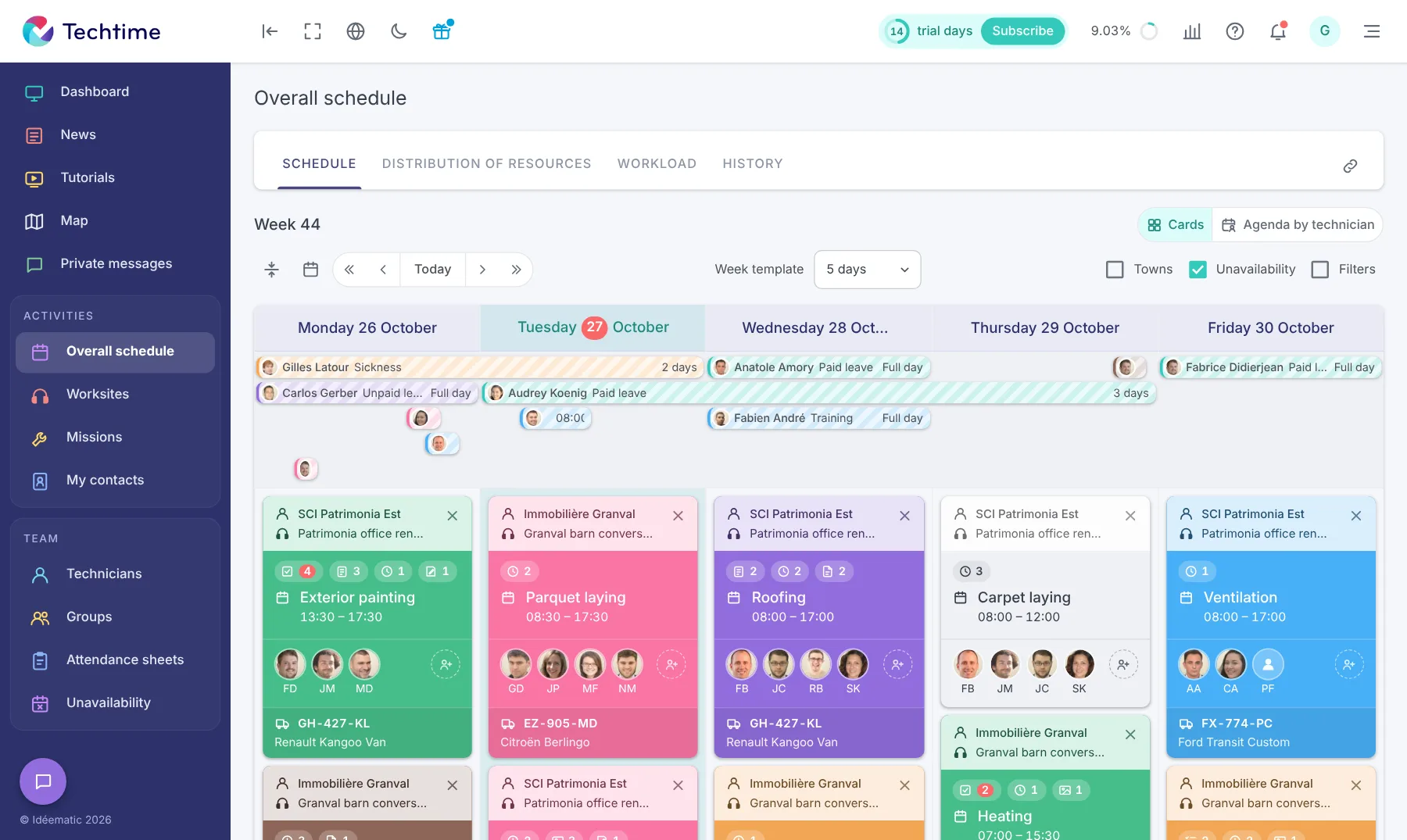
- Harmonising actions in time and space (management).
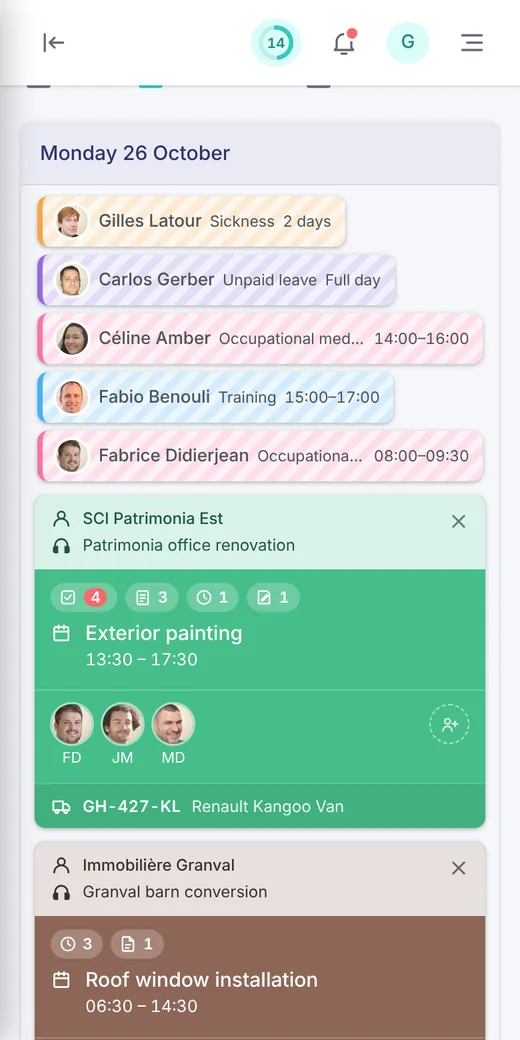
- Coordinating teams of employees or construction subcontractors by setting up good communication and organising site visits (coordination). For example, electricians cannot start work if the bricklayers have not finished the walls on time (source)
Draw up the worksite schedule from constraints and tasks
Harmonise actions in time and space
Get teams talking and organise site visits
Unlike a DET (works execution manager), the OPC only deals with planning the construction project. They are not concerned with whether the worksite complies with the drawings and building standards (source).
2Who coordinates the OPC role on a construction project?
Normally, the project manager takes on the OPC role when appointed by the client. A contract must be signed between the two parties (source). The French MOP law (public project ownership) of 1985, repealed by ordinance no. 2018-1074 (source), specified that OPC tasks are separate from the other project management functions. However, the AFNOR NF P03-001 standard of October 2017 (source) allows the OPC role to be given to an architect, an engineering firm or an outside company.
The OPC’s role in worksite prevention and safety
The OPC’s responsibilities are heavy. As well as managing project deadlines, they also handle worksite safety through prevention measures. They help draw up the general health and safety coordination plan (PGCSPS) to assess the various risks. These relate to equipment fleet management, chemicals, electrical installations or work at height (scaffolding, etc.). The resulting measures are built into the worksite schedule or displayed on site as safety instructions and rules (source).
The laws governing the worksite OPC’s role
Since the repeal of the 1985 MOP law, the OPC’s tasks have been set out in the French Public Procurement Code (Articles R2431-1; R2431-17). In private contracts, a worksite OPC is not mandatory. In public contracts, the role becomes essential where contracts are split into separate packages; indeed, an OPC manager can handle several worksites at the same time.
To protect against construction defects or missed delivery deadlines, ten-year liability insurance is mandatory. The OPC’s instructions are recorded in the special technical clauses (CCTP). In the event of a claim following their instruction, they bear civil liability for it.
3How does the OPC work on the worksite?
The OPC’s involvement runs in parallel with the progress of the works. First, they analyse the project’s technical documents during the study phase. Their attention focuses on the contract constraints in order to assess the feasibility of the construction. Then they move on to the preparatory phase, where they draw up the most accurate worksite schedule possible. In particular, they plan the involvement of the various construction trades and the programme for material deliveries.
During the execution phase, they organise weekly site meetings to check the works comply and deadlines are met. They record their visits in minutes, which must be issued within forty-eight hours of the meeting. In the event of contingencies, such as delivery delays or bad weather, they adjust the works schedule. They can impose penalties on companies on the worksite that fall seriously short (source).
At the end of the worksite, the OPC checks that the work complies through pre-handover inspections. This step is essential to avoid remedial work. Once snags have been cleared, they record this in the handover report to trigger the completion guarantee. At the same time, they draw up the final account (DGD) for final payment of the services.
- 1Studiesanalysis of documents and constraints
- 2Executionweekly site meetings
- 3Pre-handovercompliance inspections
- 4Snag clearancerecorded by the OPC
4Why use an OPC manager?
Even though their presence is not mandatory, the worksite OPC plays a strategic role in optimising your construction project. As they handle it from start to finish to meet deadlines, the benefits for your company are many:
- Thanks to optimal responsiveness and flexibility, you reduce the risk of delay. Your site team members feel all the more at ease.
- Rigorous resource planning before execution leaves little room for unexpected costs. You keep better control of your budget.
- Thanks to their regular inspections, the work gains in quality and durability.
Smooth communication between your staff, together with stronger safety measures, reduces stress and the risk of accidents. With a full team, you improve productivity.
5How do you become a worksite OPC?
Becoming an OPC manager is no small feat. You need 3 to 5 years’ professional experience to obtain a long-term position (source). The university routes into this construction job are as follows:
- a bachelor’s degree in civil engineering, followed by sufficient professional experience;
- a master’s in engineering, production management or logistics;
- a degree in architecture or construction economics, with in-depth knowledge of the building sector.
The skills needed to become a worksite OPC
A worksite OPC must have the following qualities and skills:
- Precise, rigorous and logical.
- Responsible and organised.
- Know all the building trades.
- Communicate and manage conflicts diplomatically.
- Keep a cool head under pressure and stress.
- Adapt and stay flexible to react to the unexpected.
- Write well to produce minutes or progress reports.
- Be mobile if you have to manage several worksites.
A worksite OPC’s salary
The pay of a building OPC varies with the region, their qualifications and previous experience. Nevertheless, in France a beginner can start their career on a gross annual salary of at least €30,000. After around ten years in the job, this salary can rise to more than €40,000 a year (source).
If they travel frequently, the OPC manager may receive a meal allowance. This amounts to up to €9 a day depending on the region where they work. It can rise to €18 if the professional can only eat in a restaurant.
A worksite OPC plans the works, coordinates the various trades and makes sure deadlines are met. When several companies work on the same project, Techtime gives them access to a shared worksite while each keeps its own working environment. Discover our worksite sharing between companies solution to make coordination and the flow of information between contractors easier.
Frequently asked questions
What is the role of a worksite OPC?
They draw up the worksite schedule from constraints and tasks (scheduling), harmonise actions in time and space (management) and get teams talking (coordination), so that the works meet deadlines and budget.
What is the difference between an OPC and a DET?
The OPC only deals with planning the project, whereas the works execution manager (DET) supervises the execution of the works themselves.
How do you become a worksite OPC?
You need 3 to 5 years’ experience and a qualification: a bachelor’s in civil engineering, a master’s in engineering, production management or logistics, or a degree in architecture or construction economics.